
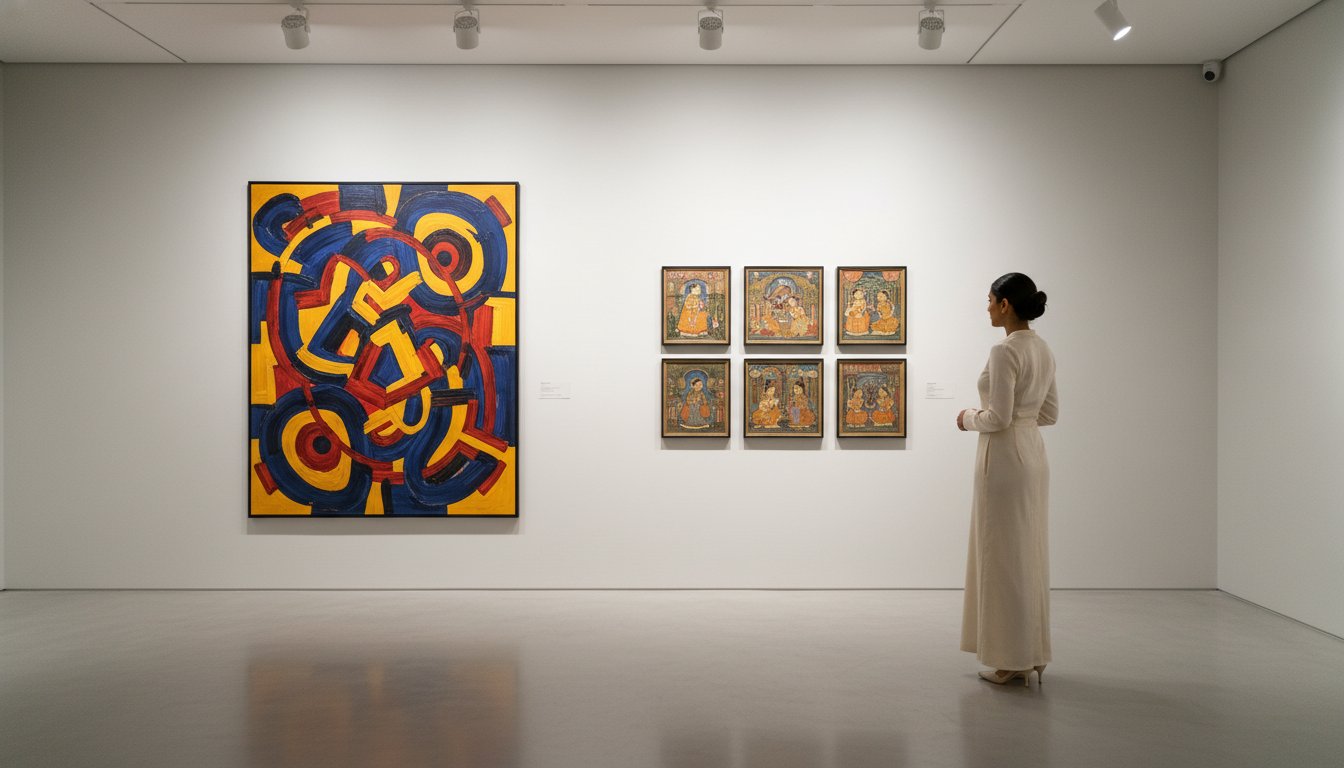
Have you ever been captivated by the vibrant energy of Indian art, only to feel lost in a sea of names and styles? It’s a world rich with history, but knowing where to begin your collection can feel overwhelming. The landscape of famous Indian artists is vast, stretching from legendary masters to bold contemporary innovators, and it’s easy to feel unsure of where to start. You’re not alone in wondering which names are significant or how to distinguish timeless tradition from modern cool.
Consider this your personal invitation to clarity and celebration. This guide is your curated journey into the heart of Indian creativity. We will unveil the masters who shaped a nation’s identity and introduce you to the rising stars defining its future. Get ready to discover the stories and styles that resonate with you personally. It’s time to gain the confidence to select your first piece and transform your space with art that is authentic, beautiful, and full of life.
The Vibrant World of Indian Art: A Journey Through Time
Step into the vibrant world of Indian art, a dazzling tapestry woven through millennia. This incredible legacy stretches from ancient rock carvings to the dynamic digital art of today. It’s a story of dynasties, spirituality, and revolution, all told through color and form. For an aspiring collector, embarking on A Journey Through Indian Art is to discover a universe of profound beauty and cultural depth. Today, the global art scene is celebrating this heritage, with collectors and galleries alike recognizing the unique vision and powerful narratives that define this creative landscape.
Why Collect Indian Art Today?
Collecting Indian art is an investment in beauty, culture, and legacy. The reasons are as diverse and compelling as the art itself:
- Aesthetic Splendor: Celebrate your space with art defined by rich, jewel-toned palettes, intricate details, and powerful storytelling that captivates the eye and soul.
- Cultural Connection: To own a piece of Indian art is to hold a fragment of a deep and ancient heritage, a timeless connection to centuries of tradition and innovation.
- Investment Potential: The market is buzzing. The works of both established masters and emerging indian artists are showing significant growth, making it an exciting time to invest in a piece of the future.
Understanding the Key Eras
To truly appreciate the artists of today, it helps to understand the shoulders they stand on. The evolution of Indian art can be seen across three pivotal periods:
- Pre-Independence: This era is a rich fusion of ancient folk traditions, like the devotional Pichwai paintings, and the structured, academic styles introduced by colonial art schools.
- The Modernists: Following independence, pioneering artists forged a new, distinctly Indian identity. They broke from convention, blending indigenous themes with global modernist movements to create a new visual language.
- The Contemporary Scene: Today’s indian artists are part of a global dialogue. They use every medium imaginable-from paint and sculpture to video and digital installations-to explore complex themes of identity, society, and globalization.
The Modern Masters: Pioneers of Indian Art
To understand today’s vibrant art landscape, we must celebrate the pioneers who forged its path. The 20th century saw a revolutionary shift as a group of visionary Indian artists broke free from the rigid, colonial-era academic styles. They created a new, modern visual language that was unapologetically Indian. Their work is not just historically significant; it represents a blue-chip investment for serious collectors, and their timeless legacy continues to inspire generations.
M.F. Husain: The ‘Picasso of India’
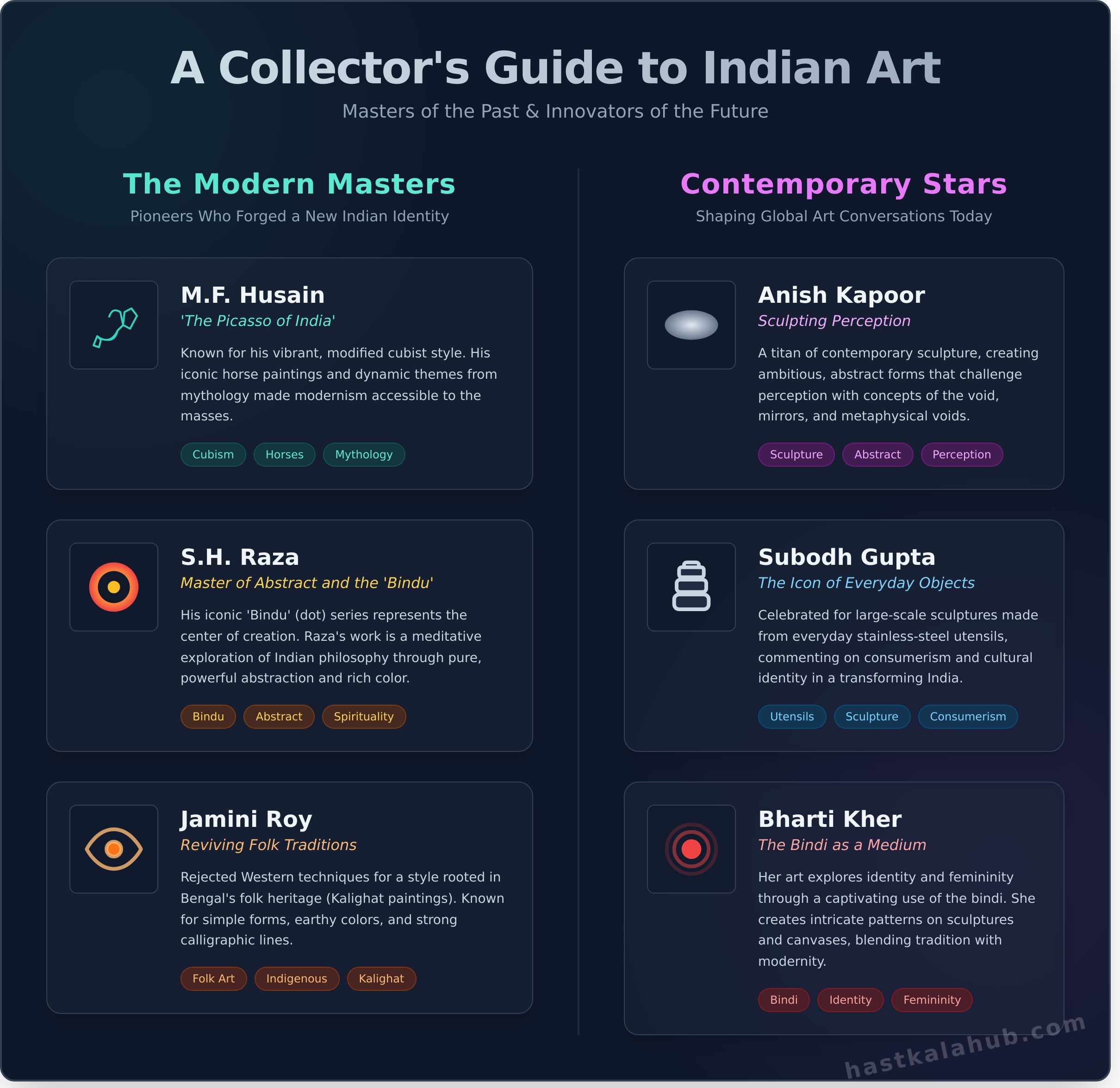
Often celebrated as the ‘Picasso of India,’ Maqbool Fida Husain brought an explosive energy to the canvas. His work is instantly recognizable for its bold, modified cubist style and a vibrant palette that captures the spirit of India. From the raw power of his iconic horse paintings to his dynamic interpretations of mythology and daily life, Husain’s art made modernism accessible and exciting for the masses, forever changing the public’s relationship with art.
S.H. Raza: Master of Abstract and the ‘Bindu’
Syed Haider Raza’s artistic journey was one of profound spiritual discovery. After years in France mastering European modernism, he returned to his roots, culminating in his iconic ‘Bindu’ series. For Raza, the ‘Bindu’ (dot) was not just a geometric shape but the center of creation and a gateway to cosmic energy. His canvases are meditative explorations of Indian philosophy, using rich, symbolic colors to translate spiritual concepts into pure, powerful abstraction.
Jamini Roy: Reviving Folk Traditions
A true trailblazer, Jamini Roy consciously rejected Western techniques to create a style rooted in Bengal’s folk heritage. Drawing inspiration from Kalighat paintings and village crafts, he developed a signature aesthetic of simple forms, flat, earthy colors, and strong, calligraphic outlines. His deliberate turn towards indigenous forms was a powerful statement, creating a visual language celebrated by institutions like India’s National Academy of Art for its authenticity. Roy proved that modernity could be found by looking inward, not outward.
Contemporary Stars on the Global Stage
The global art world is buzzing with the vibrant energy of contemporary Indian artists. These trailblazers are not just exhibiting internationally; they are shaping global conversations on identity, globalization, and technology. Their work, a dazzling fusion of heritage and modernity, has captivated audiences from London to New York. This ascent builds on a powerful legacy, which you can explore in The Metropolitan Museum of Art’s Modern Indian Art Overview. Today’s stars command attention through a stunning diversity of media, from monumental sculptures to intricate digital installations. While their original masterpieces are high-value investments, many offer limited-edition prints, making their celebrated vision accessible to new and aspiring collectors.
Anish Kapoor: Sculpting Perception
Sir Anish Kapoor is a titan of contemporary sculpture, world-renowned for his ambitious and abstract forms. His iconic works, like the reflective ‘Cloud Gate’ in Chicago, challenge our perception of space and self. Kapoor masterfully plays with concepts of the void, mirrors, and the metaphysical, creating deeply immersive experiences that are both monumental in scale and intensely personal. His art invites you to look beyond the surface and question reality itself.
Subodh Gupta: The Icon of Everyday Objects
Subodh Gupta elevates the mundane into the magnificent. He is celebrated for his large-scale sculptures crafted from everyday Indian items, particularly stainless-steel utensils like tiffins, thalis, and buckets. Through these familiar objects, Gupta offers a powerful commentary on India’s rapid economic transformation, consumerism, and migration. His work is a brilliant celebration of commonality, transforming symbols of domestic life into iconic statements of cultural identity.
Bharti Kher: The Bindi as a Medium
Bharti Kher’s art is a captivating exploration of identity, femininity, and the dynamic between tradition and modernity. Her signature medium is the bindi, the traditional forehead decoration worn by women in India. In her hands, thousands of these tiny dots are meticulously arranged to create mesmerizing, textured surfaces on paintings and sculptures. Each bindi becomes a carrier of symbolic meaning, transforming her work into a rich tapestry of personal and cultural narratives.
Champions of Tradition: Reviving India’s Folk Art
Beyond the contemporary gallery scene lies the vibrant, beating heart of India’s artistic legacy: its folk and tribal art. These timeless traditions, often passed down through generations within a family or community, offer a direct connection to the cultural soul of the nation. For new collectors, this is perhaps the most exciting and accessible entry point into the art world. Each piece is a unique, handmade story, celebrating a rich heritage. The incredible skill of these indian artists ensures that ancient techniques not only survive but thrive in the modern era.
Madhubani Artists: The Women’s Art of Bihar
Originating in the Mithila region of Bihar, Madhubani painting is a stunning art form traditionally practiced by women. It is defined by its intricate line work, geometric patterns, and the use of bold, natural pigments. Artists like the legendary Jagdamba Devi and Sita Devi brought this domestic ritual to global fame, depicting timeless themes of mythology, nature, and community life. Their work established a powerful visual language that continues to inspire artists today.
Pichwai Painters: Devotional Art from Rajasthan
Pichwai paintings are elaborate, devotional masterpieces on cloth that celebrate the tales of Lord Krishna. Created in Nathdwara, Rajasthan, these works are rich with symbolic detail, from lush landscapes representing Vrindavan to ornate borders and depictions of divine events. Contemporary artists are now brilliantly adapting this intricate style for modern interiors, transforming large-scale tapestries into stunning focal points that blend devotion with decor. This fusion of heritage and trend is truly captivating.
Gond Art Masters: The Magic of Tribal Patterns
The enchanting art of the Gond tribe from central India is a mesmerizing world of dots and dashes. Each artwork is filled with intricate patterns that give life to vibrant depictions of animals, trees, and tribal folklore. The visionary artist Jangarh Singh Shyam is credited with elevating this art form to the global stage, and his legacy is carried forward by masters like Bhajju Shyam. Gond art is a powerful reminder of the connection between humanity and nature.
These folk traditions represent more than just art; they are a celebration of community, faith, and a deep connection to the land. They offer a unique opportunity to own a piece of living history, made with passion and incredible skill. At Hast Kala Hub, we are proud to champion the work of these traditional indian artists, bringing their timeless creations into your home. Discover elegant, handcrafted pieces that tell a story.
Explore our curated collection of traditional art and textiles at hastkalahub.com and celebrate a legacy of style.
How to Begin Your Indian Art Collection
Starting an art collection is a thrilling journey of self-expression and cultural discovery. It’s not about massive investments or exclusive galleries; it’s about finding pieces that speak to you and celebrating the vibrant soul of India in your own home. The most important rule is simple: buy what you love. Each piece you choose becomes a reflection of your personal style, a daily source of joy, and a story you’ll cherish for years. Let’s demystify the process and empower you to confidently bring home your first piece of authentic Indian art.
Find Your Style and Set a Budget
The first step is a delightful exploration. Immerse yourself in the rich tapestry of Indian art to find what truly resonates with your aesthetic. Do you connect with:
- Modern & Abstract: Bold colors and contemporary forms that make a stylish statement.
- Folk & Tribal: Earthy, narrative-driven styles like Gond or Warli art, rooted in tradition.
- Devotional & Traditional: Intricate and spiritual works like Pichwai or Tanjore paintings that exude elegance.
Think about the space where your new art will live. A large, dramatic canvas can anchor a living room, while a smaller, detailed work can create an intimate moment in a study. Finally, set a budget that feels comfortable. You don’t need a fortune to start; a small, beautiful piece is the perfect beginning to a lifelong passion.
Where to Buy Authentic Indian Art
Finding authentic work from established and emerging indian artists is easier than ever. Reputable online galleries and curated marketplaces like hastkalahub.com are excellent starting points. They offer access to a wide range of styles while providing the context and story behind each creation. A trustworthy platform will always provide detailed information about the art form, the materials used, and the artist’s background. Before purchasing, look for a certificate of authenticity and read customer reviews to ensure a transparent and secure experience. This diligence protects your purchase and honors the artist’s craft.
Ready to find your first masterpiece? Explore our curated collection of authentic Indian paintings. Each piece is selected with passion, connecting you directly to the heart of India’s rich artistic heritage.
Your Journey into Indian Art Begins Now
From the groundbreaking canvases of modern masters to the dynamic expressions of today’s rising stars, the world of Indian art is a vibrant tapestry of history, culture, and innovation. We’ve explored how these creators have shaped a global narrative and how traditional folk arts are being passionately revived. The key takeaway is clear: the legacy of indian artists offers a unique and compelling story for every collector, whether you are just beginning or expanding your gallery.
Now, it’s your turn to own a piece of this legacy. At Hast Kala Hub, we curate our collection from an ‘artisans-paradise,’ bringing you art that is ‘Made with passion’ and immense cultural pride. Discover vibrant pieces that masterfully blend rich heritage with chic, modern trends, designed to transform your space and celebrate your style. Each selection is more than decor; it’s a conversation starter.
Celebrate in Style. Discover Your Perfect Piece in Our Indian Art Collection.
Begin your collecting adventure today. Your masterpiece is waiting to tell its story.
Frequently Asked Questions
Who is considered the most famous Indian artist of all time?
While many masters have shaped India’s art history, M.F. Husain is often celebrated as one of the most famous figures of the 20th century. Known as the ‘Picasso of India,’ his bold, vibrant works captured the nation’s spirit. Artists like Amrita Sher-Gil, who brilliantly fused European modernism with Indian tradition, and Raja Ravi Varma, famed for his divine portraits, also hold iconic status. Discovering their work is a journey into the heart of Indian modernism.
What are the most popular styles of Indian painting for home decor?
For a touch of timeless elegance, Pichwai paintings are a stunning choice. These intricate, devotional artworks bring divine stories to life with rich color and detail. For a more graphic and earthy aesthetic, consider Madhubani or Warli art. Madhubani art is known for its vibrant geometric patterns, while the minimalist motifs of Warli art offer a chic, contemporary folk appeal. Each style adds a unique, celebratory story and a touch of heritage to your home.
Is buying art by emerging Indian artists a good investment?
Absolutely! Investing in emerging indian artists is a thrilling way to connect with the future of art. It offers a unique opportunity to acquire original works at an accessible price point before the artist gains wider recognition. More than just a financial investment, you are championing new creative voices and becoming part of their journey. Supporting emerging talent allows you to build a personal and distinctive collection that grows in both cultural and monetary value over time.
How can I tell if a piece of Indian folk art is authentic?
Authentic Indian folk art celebrates the beauty of handmade craftsmanship. Look for subtle imperfections that signify it wasn’t mass-produced, such as slight variations in line work or color. Reputable pieces often come with a certificate of authenticity or details about the artist or artisan community. Purchasing from trusted galleries or curated platforms ensures you are acquiring a genuine piece made with passion and traditional techniques, directly supporting the artisans who preserve these precious art forms.
What is the difference between modern and contemporary Indian art?
The key difference is the time period. Modern Indian art generally refers to the era from the early 1900s to around the 1980s, a time of breaking from academic traditions. Contemporary Indian art is what is being created now, from the late 20th century to today. It is incredibly diverse, often global in its themes, and uses a wide range of media beyond traditional painting. It is the living, breathing art of our current moment.
How do I care for a canvas or handmade painting?
To keep your artwork vibrant for years, proper care is simple but essential. Always display your painting away from direct sunlight, which can fade the colors over time. Also, avoid areas with high humidity or extreme temperature changes. For cleaning, gently dust the surface with a soft, dry, lint-free cloth. Never use water or chemical cleaning solutions, as they can permanently damage the canvas and paint of your cherished piece of art.



