
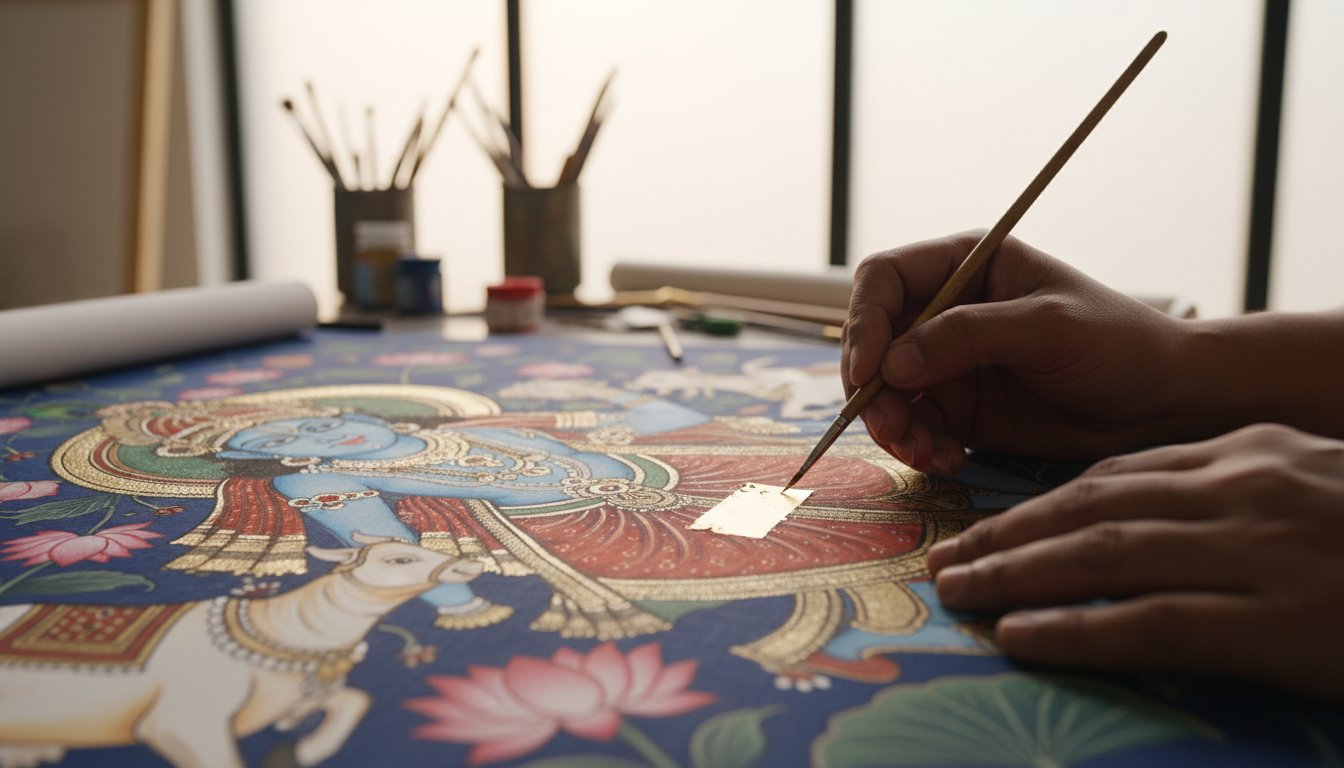
Step into a world of divine color and intricate detail. Have you ever gazed upon a magnificent Indian artwork, captivated by its beauty but unsure of the sacred stories it tells? Perhaps you’ve admired the timeless elegance of a pichwai painting but hesitated, wondering how such a traditional masterpiece could shine in your modern home. You’re not alone in wanting to connect with this rich heritage but feeling unsure where to begin.
This guide is your key to celebrating one of India’s most soulful art forms. Made with passion, each Pichwai is a story waiting to be understood. Here, you will discover the art’s 400-year-old history, decode the vibrant symbolism behind every brushstroke, and gain the confidence to identify authentic, handcrafted pieces. We’ll also share inspiring and practical ways to style these divine narratives, transforming your space with a touch of sacred elegance. Prepare to connect with a timeless tradition and bring its incredible story into your life.
What is Pichwai Painting? The Story Behind the Sacred Cloth
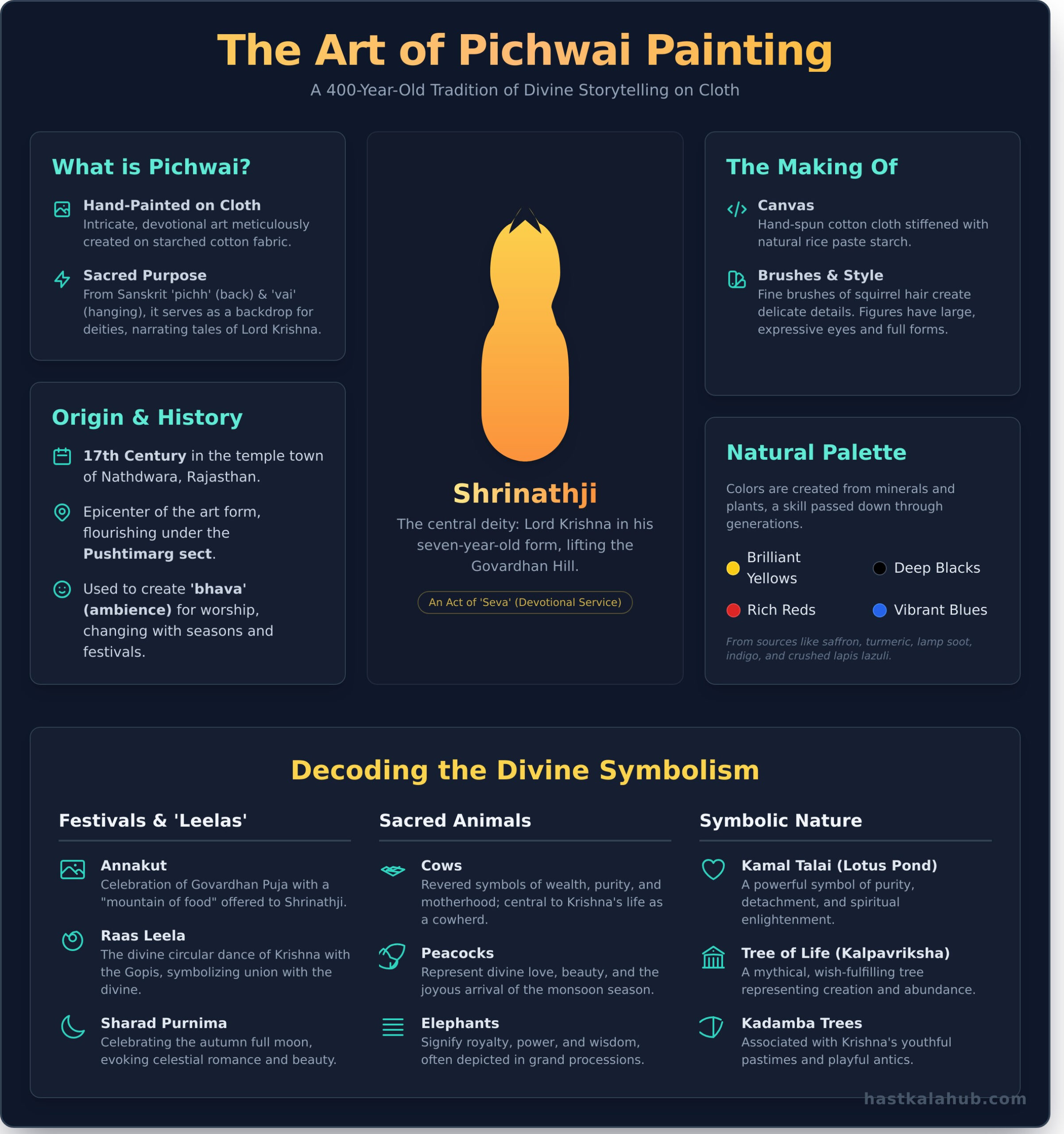
Step into the vibrant, devotional world of a timeless Indian art form. A pichwai painting is an intricate and visually stunning work of art, meticulously hand-painted on cloth. Its name offers a direct clue to its purpose, derived from the Sanskrit words ‘pichh’ (back) and ‘vai’ (textile hanging). Traditionally, these elaborate textiles are hung behind the main deity in a shrine to narrate the divine tales of Lord Krishna.
Born in the 17th century in the temple town of Nathdwara, Rajasthan, this art form is more than mere decoration. Each pichwai is a masterpiece of storytelling, a visual hymn celebrating the many legends and moods of Krishna. The rich details, from the lush landscapes of Vrindavan to the expressions of the gopis, create a sacred and celebratory atmosphere for worship.
The Heart of Pichwai: The Shrinathji Temple of Nathdwara
Nathdwara remains the undisputed epicenter of this devotional art. The tradition flourished under the patronage of the Pushtimarg sect, a Vaishnava denomination founded by Vallabhacharya. For them, these paintings were essential to worship, used to create a specific ambience (bhava) for the deity. The backdrops would change daily and seasonally, with specific pichwais for festivals like Janmashtami, Holi, and Sharad Purnima, enveloping the shrine in the appropriate spiritual mood.
Lord Krishna as Shrinathji: The Central Deity
The central figure in every pichwai painting is Shrinathji-Lord Krishna in his seven-year-old form. He is always depicted in an iconic pose: one arm raised, representing the moment he lifted the Govardhan Hill to protect his villagers from the wrath of Lord Indra. Creating a Pichhwai painting is considered an act of ‘seva’ or devotional service, an offering of love and skill to the divine, making each piece a profound expression of faith.
Decoding the Divine: Common Themes and Symbolism in Pichwai Art
A Pichwai painting is more than a decorative masterpiece; it is a visual scripture, a vibrant story waiting to be read. Every brushstroke carries deep symbolic weight, transforming the canvas into a celebration of divinity, nature, and the changing seasons. Learning to decode these elements unlocks a deeper appreciation for this ancient art form and helps you understand the rich narrative woven into every piece.
Celebrating Krishna’s Life: Festivals and ‘Leelas’
Central to any Pichwai is the glorification of Lord Krishna, depicted through his various leelas (divine plays) and festivals. These scenes are not just artistic representations but are tied to specific celebrations at the Nathdwara temple.
- Annakut: This theme depicts the offering of a symbolic “mountain of food” to Shrinathji, a vibrant celebration of Govardhan Puja.
- Raas Leela: A cherished theme showing the divine, circular dance of Krishna with the Gopis (milkmaids), symbolizing the spiritual union of the soul with the divine.
- Sharad Purnima: Celebrating the autumn full moon, these paintings often show Krishna under a luminous moon, surrounded by Gopis, evoking an atmosphere of celestial romance and beauty.
The Sacred Animals: Cows, Peacocks, and Elephants
The world of Shrinathji is alive with sacred fauna, each creature representing a divine quality. These animals are constant companions in Krishna’s pastoral life and add layers of meaning to the artwork.
- Cows: Revered as sacred, cows symbolize wealth, purity, and motherhood. They are a constant motif, celebrating Krishna’s life as a beloved cowherd in Vrindavan.
- Peacocks: With their iridescent plumage, peacocks represent divine love, beauty, and the joyous arrival of the monsoon season.
- Elephants: Often shown in stately processions, elephants signify royalty, power, and wisdom, adding a touch of grandeur to the scene.
Symbolism in Nature: The Lotus and the Tree of Life
Nature is not merely a backdrop in a pichwai painting; it is an active participant in the divine narrative. The flora depicted is lush, stylized, and profoundly symbolic.
- Kamal Talai (Lotus Pond): The lotus, which grows in mud but blossoms into a pristine flower, is a powerful symbol of purity, detachment, and spiritual enlightenment.
- The Tree of Life (Kalpavriksha): This mythical, wish-fulfilling tree represents creation, abundance, and the interconnectedness of all life.
- Kadamba Trees: These trees, with their unique ball-shaped flowers, are famously associated with Krishna’s youthful pastimes and playful antics.
The Making of a Masterpiece: Pichwai Techniques and Materials
A Pichwai is not merely painted; it is brought to life through devotion, patience, and generations of ancestral knowledge. Each stroke is a prayer, and every color tells a story. The creation of a pichwai painting is a meticulous ritual, a celebration of artistry where every material is chosen with purpose and every detail is infused with passion. This intricate process transforms a simple cloth into a divine narrative, making each piece a testament to timeless skill.
The Canvas and Colors: A Natural Foundation
The journey begins with the canvas itself-a hand-spun cotton cloth that is stiffened with a natural starch made from rice paste. This prepared surface, known as the pichhwai, provides the perfect, durable base for the vibrant drama that will unfold. The palette is a dazzling array of earth-given pigments, a skill passed down through generations of artisans who create their own colors from minerals and plants.
- Brilliant Yellows: Derived from saffron, turmeric, or yellow ochre stone.
- Deep Blacks: Created from the soot of burning oil lamps.
- Rich Reds and Oranges: Ground from local stones and flowers like the Palash.
- Vibrant Blues: Traditionally made from precious indigo or crushed lapis lazuli.
The Art of the Brush: Intricate Details and Gold Accents
The soul of a Pichwai lies in its intricate details. Using incredibly fine brushes, often made from squirrel hair, artists render delicate expressions, ornate jewelry, and lush landscapes. The figures are characterized by their large, expressive eyes, broad noses, and full forms, creating a powerful and devotional presence. This detailed work requires a steady hand and immense concentration, often taking weeks or even months to complete.
To elevate the divine narrative, real gold and silver are painstakingly applied as foil or paint. This shimmering embellishment highlights Lord Krishna’s ornaments, the rich textiles, and celestial elements, adding a layer of opulence and sacredness. It’s this fusion of humble, natural color with precious metals that gives each pichwai painting its truly luxurious and timeless appeal.
This profound artistic knowledge is a legacy, carefully preserved and passed from one generation of artists to the next. Owning a Pichwai is more than an aesthetic choice; it’s an appreciation for the incredible skill and devotion woven into its very fabric. Explore authentic, handcrafted pieces and bring this celebrated heritage into your home with Hast Kala Hub’s curated collection.
How to Style Pichwai Paintings in the Modern Home
Beyond its rich history and spiritual significance, a Pichwai is a stunning piece of decor waiting to transform your home. Moving from appreciation to application, you can celebrate this ancient art in a way that feels both timeless and perfectly on-trend. A pichwai painting is not just an artifact; it’s a versatile statement of elegance and cultural pride that can elevate any interior design style.
Creating a Statement: The Pichwai as a Focal Point
Let a large-scale Pichwai command the attention it deserves. Position it as the undeniable centerpiece in a living room, above a minimalist sofa, or in a dining area where it can spark conversation. This creates an immediate sense of luxury and intention. To build a cohesive look, pull key colors from the artwork-like deep indigo, lotus pink, or marigold yellow-and echo them in your cushions, throws, or a statement rug. This simple technique creates a harmonious and professionally styled space centered around your magnificent art piece.
Balancing Tradition and Modernity
The magic of Pichwai lies in its ability to bridge worlds. Create a captivating dialogue between old and new by hanging a vibrant, intricate Pichwai against a clean, neutral wall. The contrast allows the artwork’s detailed narrative and rich colors to truly shine. For an eclectic and personal touch, curate a gallery wall that mixes smaller Pichwai prints with contemporary abstract art, family photos, or modern graphics. A simple, elegant frame-like a slim black or natural wood finish-acts as the perfect bridge, seamlessly integrating traditional art into a modern aesthetic. Explore our collection of Pichwai paintings to find your perfect piece.
Caring for Your Pichwai Painting
Your artwork is a treasure made with passion. To ensure its beauty endures for generations, proper care is essential. Follow these simple guidelines to protect your investment and keep the colors brilliant.
- Frame with Care: Always frame your Pichwai under glass or acrylic. This protects the delicate natural pigments from dust, humidity, and accidental smudges.
- Avoid Direct Sunlight: Hang your painting where it will not be exposed to direct, harsh sunlight. UV rays can cause the vibrant, natural colors to fade over time.
- Gentle Cleaning: To clean, simply wipe the glass and frame with a soft, dry microfiber cloth. Avoid using chemical sprays directly on the surface, as moisture can seep behind the glass.
Celebrate Your Space with the Soul of Pichwai
More than just a decorative piece, a pichwai painting is a vibrant narrative of devotion, a masterpiece of meticulous artistry, and a timeless link to India’s cultural heritage. From the sacred stories of Shrinathji to the intricate techniques passed down through generations, this divine art form transforms any modern home into a sanctuary of elegance and meaning. Each brushstroke tells a story, and every color sings a hymn of celebration.
Ready to bring this sacred tradition into your home? Our collection is authentic art ‘Made with passion’ by traditional artisans, ensuring every piece carries a legacy. Discover a vibrant collection featuring both classic and contemporary styles, perfect for any decor. With worldwide shipping, we bring this cherished Indian heritage directly to your doorstep.
Celebrate your space with a timeless Pichwai. Shop our handmade collection now!
Let your walls tell a story of timeless elegance and cultural pride.
Frequently Asked Questions About Pichwai Painting
What is the main difference between Pichwai and other Indian art forms like Madhubani or Tanjore?
The key difference lies in theme and technique. A Pichwai painting is a devotional textile art from Nathdwara, singularly celebrating the life of Lord Krishna. Its style is intricate and narrative-driven. In contrast, Madhubani art features folk themes and bold geometric patterns, while opulent Tanjore paintings are known for their use of gold foil, gemstones, and raised gesso work to depict a wider range of Hindu deities. Each art form tells a unique cultural story.
Are Pichwai paintings considered a good investment?
Absolutely. A genuine Pichwai is more than just stunning decor; it is an appreciating piece of cultural heritage. Their value is rooted in the meticulous handwork, the use of traditional natural pigments, and the centuries of history they represent. Acquiring a piece from a skilled artisan is an investment in timeless elegance and a legacy of masterful Indian craftsmanship. Authentic, signed works hold the most significant long-term value for collectors and art lovers alike.
How can I identify an authentic, handmade Pichwai painting from a machine-printed copy?
Look closely at the details. A handmade Pichwai will have visible, delicate brushstrokes and a rich texture on the cotton cloth. The natural pigments create an earthy, matte finish with subtle variations in color. You might even see faint traces of color on the reverse side. In contrast, a machine print is perfectly flat, lacks texture, and often shows a uniform dot pattern under magnification. True artistry lies in these perfect imperfections.
Do you need to be a follower of Hinduism to appreciate Pichwai art?
Not at all! While its origins are devotional, the appeal of Pichwai art is universal. Art connoisseurs worldwide are captivated by its vibrant color palettes, exquisite detailing, and the sheer skill of the artists. These paintings are a magnificent celebration of culture, storytelling, and timeless aesthetic beauty. Anyone with an eye for masterful craftsmanship and rich artistic traditions can find joy and inspiration in a Pichwai masterpiece. It’s an art form for everyone.
What do the cow motifs in Pichwai paintings signify?
Cows are a cherished and central motif in Pichwai art, deeply connected to Lord Krishna’s life as a cowherd. They symbolize divinity, purity, maternal love, and selfless giving. Far from being simple livestock, they are depicted as Krishna’s divine companions in the idyllic setting of Vrindavan. Their presence enriches the narrative, representing a sacred bond between the deity, nature, and all living creatures. They are essential to the story.
How long does it typically take for an artist to create a Pichwai painting?
Creating a Pichwai painting is a testament to an artist’s patience and passion. A smaller, simpler piece may take one to two weeks to complete. However, a large, intricate masterpiece filled with detailed figures, lush landscapes, and ornate borders can demand anywhere from two to six months of dedicated, meticulous work. This immense investment of time and skill is what makes each authentic Pichwai a truly unique and treasured work of art.



