
Does the art world feel like a distant gallery, filled with intimidating price tags and names you’re supposed to know? Many believe that learning how to invest in art is a secret reserved for the ultra-wealthy. We believe it’s an act of celebration. It’s about discovering a piece that speaks to your soul, expresses your style, and brings a vibrant new energy into your home. It’s about finding passion you can hang on your wall-a treasure that enriches your life and may even grow in value over time.
Forget the fear of overpaying or not knowing where to start. This guide is your personal invitation to the world of collecting. We will demystify the process, showing you how to confidently buy your first piece, discover brilliant emerging artists, and build a collection that is a true reflection of you. Get ready to turn your appreciation for beauty into a meaningful collection, made with passion and curated by you. Let’s begin this exciting journey together.
Key Takeaways
- Discover how to build a collection that reflects your personal style and brings you daily joy, the most important return on any art investment.
- Uncover the best online platforms and galleries for discovering unique pieces from the next generation of celebrated artists.
- Understand the key factors that determine an artwork’s value so you know how to invest in art with confidence and style.
- Learn simple techniques to care for your collection, protecting your pieces and preserving their vibrant beauty for years to come.
What Does Investing in Art *Really* Mean?
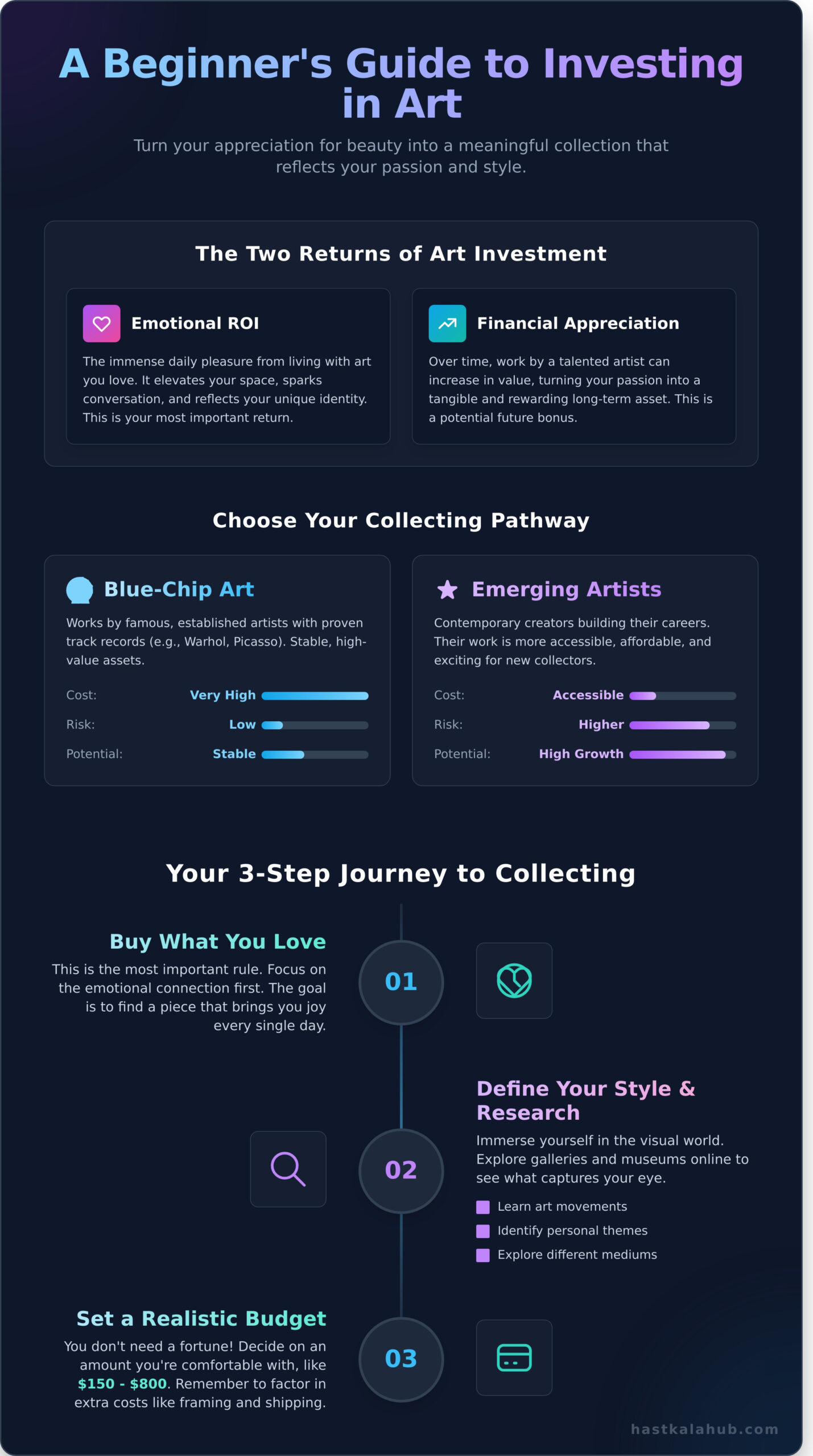
Investing in art is a unique journey, a beautiful blend of passion, personal style, and financial potential. It’s about celebrating creativity and bringing a story into your home. Unlike traditional assets, art offers a dual return: it enriches your life with daily inspiration while holding the promise of future growth. The first step in understanding how to invest in art is recognizing that you are acquiring more than an object-you are becoming the guardian of a piece of culture.
The most fulfilling approach balances two distinct rewards:
- Emotional ROI: This is the immense daily pleasure you get from living with a piece you truly love. It elevates your space, sparks conversation, and reflects your unique identity.
- Financial Appreciation: Over time, the work of a talented artist can increase in value, turning your passion into a tangible and rewarding asset.
While some may speculate on market trends, the most sustainable strategy begins with your own taste. Focus on acquiring pieces that resonate with you. It’s important to set realistic expectations: art is a long-term, illiquid asset. It is meant to be cherished for years, not flipped for a quick profit.
Blue-Chip Art vs. Emerging Artists
The art world offers two exciting pathways. Blue-chip art refers to works by famous, established artists (think Warhol or Picasso) with proven track records and stable, high values. In contrast, emerging artists are contemporary creators building their careers. Their work is more accessible and affordable, offering a higher risk but also a thrilling potential for significant appreciation. For new collectors, emerging art is the perfect starting point to discover vibrant new voices and make a direct impact on an artist’s career.
Original Paintings, Prints, and Digital Art
The format of the artwork is crucial to its value. An original painting or sculpture is a one-of-a-kind treasure, offering the highest potential for appreciation. However, limited edition prints, which are signed and numbered by the artist, provide a more affordable entry point to own work from celebrated names. Understanding that uniqueness is one of the core Factors That Determine an Artwork’s Value is key to making an informed decision. This distinction helps you build a diverse collection that is both personally meaningful and financially smart.
Your First Steps: How to Start Investing on Any Budget
The journey into art collecting is a celebration of passion and personal expression. The most important rule when learning how to invest in art is delightfully simple: buy what you truly love. An artwork will live in your home, becoming part of your daily life and personal story. Before you ever consider monetary appreciation, focus on the emotional value. The goal is to acquire a piece that resonates with you, something that brings you joy every time you see it. Think of this as starting a meaningful collection of one, not building a gallery overnight.
Define Your Style and Do Your Research
Discovering your aesthetic is the most exciting part of the process! Immerse yourself in the visual world. Spend time exploring online galleries, virtual museum tours, and even art-focused Instagram accounts to see what captures your eye and sparks your curiosity. As you browse, start to notice patterns in what you save or admire.
- Learn the language: Get familiar with different art movements, from the intricate detail of Pichwai to the bold colors of Abstract Expressionism.
- Identify your themes: Are you drawn to serene landscapes, powerful figurative work, minimalist compositions, or vibrant cultural motifs?
- Explore mediums: Do you prefer the rich texture of an oil painting, the delicate nature of a watercolor, or the sharp lines of a block print?
To begin this vibrant journey of discovery, explore vibrant Indian art styles and see what unique traditions and modern interpretations speak to you.
Set a Realistic Art-Buying Budget
You don’t need a fortune to become a collector. Start by setting a clear, manageable budget for your first acquisition. Decide on an amount you are completely comfortable with, whether it’s $150 or $800. Remember, you are not just buying a decoration; you are supporting an artist and participating in a rich cultural economy. In fact, the National Endowment for the Arts reports that arts and culture are a significant economic sector, and your purchase is a valuable part of that ecosystem. Be sure to factor in potential additional costs like framing, shipping, or insurance. You can find incredible, original art for under $500, so never feel pressured to overspend to be considered a ‘collector’.
Where to Find Investment-Worthy Art (Without an Auction Paddle)
The exclusive, intimidating world of art collecting is a thing of the past. Today, the market is more vibrant and accessible than ever, offering incredible opportunities to own a piece of culture without needing an auction paddle. The secret to success lies in knowing where to look. A fundamental part of how to invest in art on a budget is focusing on emerging artists and unique platforms, turning your home into a gallery of personal style and potential growth.
Online Galleries and Marketplaces
Digital platforms have revolutionized art buying. Curated online stores offer a vetted selection of quality art, removing the guesswork and providing confidence in every purchase. Look for marketplaces that prioritize transparency with clear pricing, detailed artist information, and secure payment options. The convenience is unmatched-you can discover global artisans from your home. Our own handmade paintings collection celebrates this spirit, featuring unique works made with passion by skilled artisans.
Art Fairs and Student Shows
There’s nothing like the energy of an art fair. These events are treasure troves for discovering new talent and connecting with the creative community. Local fairs and university art shows are especially valuable, offering a chance to buy from the stars of tomorrow at accessible prices. While exploring these grassroots opportunities, it’s wise to understand the broader market; The Motley Fool’s guide to art investing offers excellent context on what drives value. More importantly, these shows allow you to engage directly with creators and hear the story behind their work.
Directly from the Artist’s Studio
For a truly personal connection, buy directly from the source. Many contemporary artists sell their work through personal websites or social media channels like Instagram. This is the most impactful way to support an artist’s career, ensuring they receive the full value for their craft. Follow artists you admire to get first access to new pieces and studio sales. It’s a modern and rewarding approach to building a meaningful collection that you can truly celebrate.
Key Factors That Determine an Artwork’s Value
To celebrate art is to understand its story. When you’re learning how to invest in art, grasping what gives a piece its value is the key to making confident, inspired choices. This isn’t just for multi-million dollar auctions; the same core principles apply whether you’re considering a $200 handcrafted print or a significant painting. Value is a vibrant blend of the artist’s journey, the artwork’s history, and its physical presence.
The Artist’s Reputation and Career
An artist’s story is woven into the value of their work. A rising star or an established master will command higher prices due to their track record. Look for artists who are actively building their careers. Key indicators of a strong reputation include:
- Exhibitions in reputable galleries or museums.
- A consistent and developing body of work over time.
- Awards, grants, or positive reviews from art critics.
Provenance and Documentation
An artwork’s history is as important as the image itself. Provenance is the documented history of ownership for a piece of art. A clear and complete provenance adds immense value and security to your investment. Always request a Certificate of Authenticity (COA) from the artist or gallery. Remember to keep every receipt and piece of correspondence-this documentation becomes part of the art’s ongoing story.
Condition, Medium, and Rarity
The physical state of an artwork is critical. A piece in pristine condition will always be more valuable than one with damage, fading, or poor restorations. The materials used, or medium, also play a significant role. Generally, unique oil or acrylic paintings are valued more highly than works on paper, like drawings or prints. Finally, consider rarity. Is it a one-of-a-kind masterpiece or part of a limited edition series? The fewer there are, the more desirable it becomes.
Asking the right questions is a fundamental part of how to invest in art successfully. By focusing on the artist, documentation, and the piece’s physical nature, you can build a collection you not only love but that also has the potential to grow in value. Discover collections with rich stories and verified authenticity, like the unique pieces celebrated at Hast Kala Hub.
Caring for Your Art: Protecting Your Investment
You’ve discovered a piece that speaks to you, a vibrant expression of artistry to elevate your space. But the journey of how to invest in art doesn’t end with the purchase; it truly begins. Protecting your new treasure is essential to preserving its beauty, story, and long-term value. Think of this not as a chore, but as the final, celebratory step in your investment. Simple, preventative measures are your best strategy, saving you from costly restoration and ensuring your collection continues to inspire for years to come.
Proper Framing and Display
Think of a frame as the perfect setting for your masterpiece-it should protect and enhance its elegance. Investing in the right display is non-negotiable for preserving your art’s timeless appeal.
- Choose Quality Materials: Always opt for archival-quality, acid-free mats and backing boards. This prevents the acidic materials found in standard frames from “burning” and discoloring your art over time.
- Guard Against Light: For works on paper, like prints or watercolors, UV-protective glass or acrylic is a must. It acts as a powerful shield, protecting vibrant colors from the fading effects of sunlight.
- Select the Right Spot: Location is everything. Never hang precious art in direct sunlight or in high-humidity areas like bathrooms or kitchens, as these environments can cause warping, mold, and irreversible damage.
Cleaning and Maintenance
A light, gentle touch is all it takes to keep your art looking pristine and magnificent. For paintings, a delicate dusting with a soft, dry, natural-bristle brush (like a sable brush) is usually sufficient. Never use chemical cleaners, solvents, or even water on a painting’s surface, as this can strip the varnish and damage the paint. If you notice any serious issues like flaking paint or discoloration, resist the urge to fix it yourself. Always consult a professional art restorer for an expert opinion and treatment.
Documentation and Insurance
An organized collector is a smart and confident investor. Keeping meticulous records is crucial for insurance purposes and potential resale. This simple habit elevates your collection from a hobby to a well-managed asset.
- Create a Visual Record: Photograph each piece in your collection from the front and back. Be sure to capture any signatures, labels, or unique details.
- Organize Your Paperwork: Keep all related documents-including the original receipt, bill of sale, and any Certificate of Authenticity (COA)-in a safe, organized file.
- Protect Your Assets: Contact your insurance agent to discuss adding a fine art rider or floater to your homeowner’s or renter’s policy. This provides specific coverage that standard policies often lack.
Caring for your art is an act of passion, ensuring the story and craftsmanship you fell in love with will last a lifetime. A well-maintained piece not only holds its financial value but continues to be a source of cultural pride in your home. Whether it’s a timeless Pichwai painting or a chic contemporary print, this final step is a crucial part of learning how to invest in art successfully.
Your Art Journey Begins Now
Embarking on your art investment journey is a thrilling fusion of passion and financial savvy. Remember, it’s not about a massive budget, but about discovering pieces that resonate with you and understanding what gives them lasting value. From finding your first piece to learning how to care for it, you now have the foundational knowledge for how to invest in art with confidence and style.
Ready to turn inspiration into acquisition? At Hast Kala Hub, we celebrate the vibrant stories told by talented artisans. Each piece is ‘Made with passion,’ bringing a unique and elegant spirit to your space. With secure payment, 100% risk-free shopping, and global shipping to bring art right to your doorstep, your first investment is just a click away. Discover unique handmade paintings to start your collection today. Start building a collection that not only grows in value but also enriches your life every single day.
Frequently Asked Questions
Can you really make money by investing in art?
Absolutely! The secret to how to invest in art successfully is to buy what you love. Art can offer significant financial returns over time, but its greatest value is the daily joy and cultural richness it brings to your home. Focus on works with strong provenance, skilled craftsmanship, and a compelling story. A well-chosen piece not only decorates a wall but can become a cherished and valuable asset for the future.
How much should I spend on my first piece of art as an investment?
There is no magic number! Start with a budget that feels exciting, not stressful, often between $100 and $500. This accessible range gives you access to stunning limited edition prints or original works from talented emerging artists. The most important rule is to only spend what you are comfortable with. Your collection is a journey that can grow with you over time. Celebrate your first stylish step into the art world!
Is it better to invest in an emerging or an established artist?
Both offer unique and elegant opportunities. Established artists provide more stability and a proven track record, but their work comes at a premium price. Investing in an emerging artist is a thrilling way to champion new talent, and your investment has a higher potential for significant growth. For new collectors, emerging artists often present a more accessible and exciting entry point to the market. Discover the next big name and be part of their story.
What’s the difference between an original painting and a limited edition print?
An original painting is a one-of-a-kind masterpiece, created directly by the artist’s hand, making it entirely unique. A limited edition print is a high-quality reproduction of an original, produced in a fixed, small number to maintain exclusivity. Each print is often signed and numbered by the artist, making it a collectible and more affordable way to own a beautiful piece of their vision. Both are wonderful ways to begin your collection.
How do I know if an online art gallery is reputable and the art is authentic?
A reputable gallery is transparent and customer-focused. Look for a certificate of authenticity offered with each piece, clear artist information, and detailed artwork descriptions. Check for secure payment options and a straightforward return policy-these are signs of a confident business. Positive customer reviews and a professional online presence also signal a trustworthy source, ensuring your purchase is a joyful and secure one.
Is Indian handicraft art a good investment?
Indian handicraft art is a vibrant and culturally rich investment. Pieces like Pichwai paintings or intricate textile art are legacies of heritage and skill, made with passion by artisans. As global appreciation for authentic, handmade crafts grows, their value can increase significantly. Collecting these works is an elegant way to diversify your portfolio with art that tells a powerful story of tradition and timeless style.



