
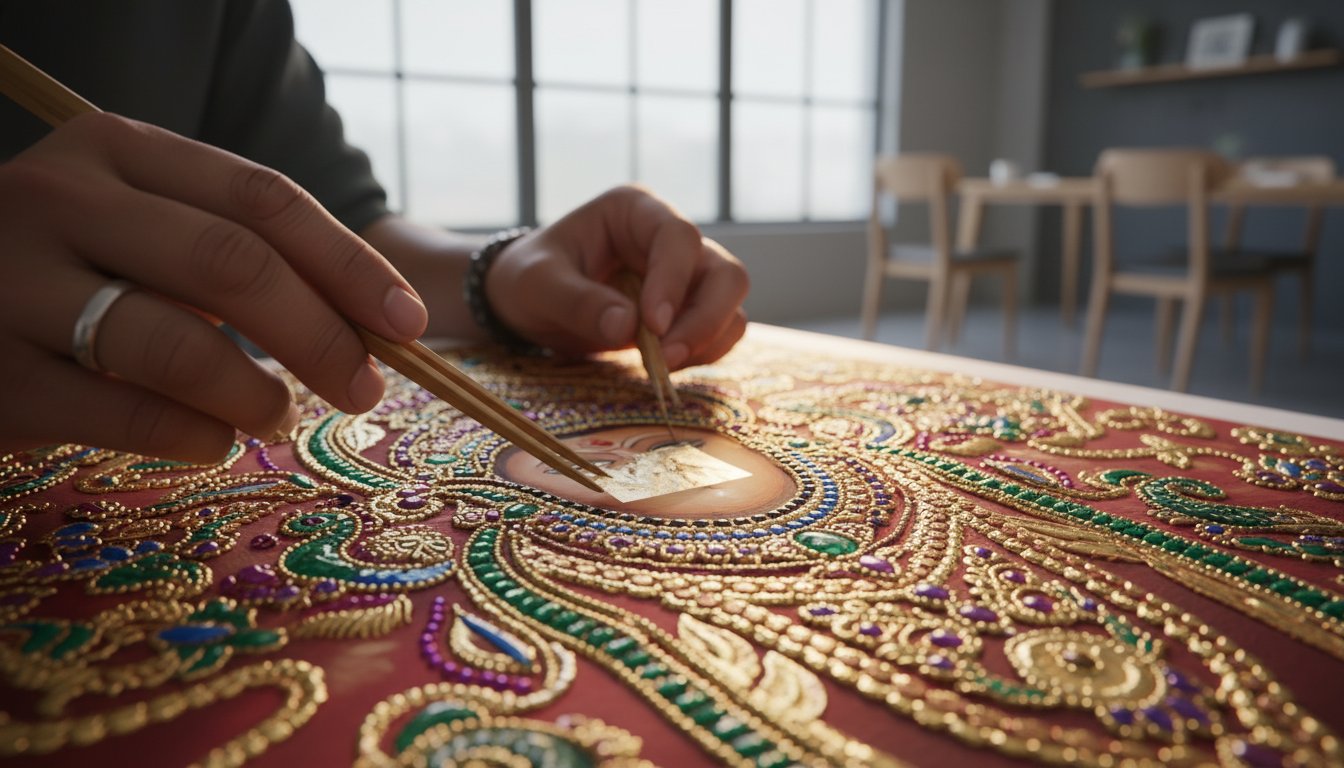
Have you ever been captivated by the divine glow of a South Indian artwork, with its rich colors and real gold foil, yet felt unsure of what truly makes it so special? This is the magic of the iconic tanjore painting, an art form where divine beauty meets dazzling craftsmanship. It’s more than just a picture; it’s a story of devotion, embossed in gold and shimmering with semi-precious stones. But in a world of replicas, how do you distinguish a genuine masterpiece from a clever imitation? How do you decode its sacred symbolism and choose a piece that resonates with you?
Get ready to discover timeless elegance. This complete guide is your exclusive pass into the world of Thanjavur’s most treasured art. We’ll unveil the secrets behind its creation, from its royal history to the intricate, multi-layered process. You will learn to confidently identify authentic, high-quality pieces, understand their spiritual significance, and find a stunning work of art to celebrate in your home. Let’s illuminate your world with tradition and style.
What is a Tanjore Painting? The Essence of a Divine Art Form
Step into a world of divine splendor with the Tanjore painting, a classical South Indian art form celebrated for its incredible richness and spiritual depth. Originating in the 16th century in the temple town of Thanjavur (formerly Tanjore), this art form blossomed under the royal patronage of the Nayaka and Maratha rulers, who nurtured it into the icon of cultural heritage it is today.
Each piece is a testament to meticulous craftsmanship, a legacy so unique that it has been awarded a Geographical Indication (GI) tag, protecting its authenticity and origin. This celebrated Thanjavur painting style is more than just art; it is a piece of history, a symbol of devotion, and an opulent celebration of South Indian culture.
Defining Characteristics: Gold, Gems, and Gods
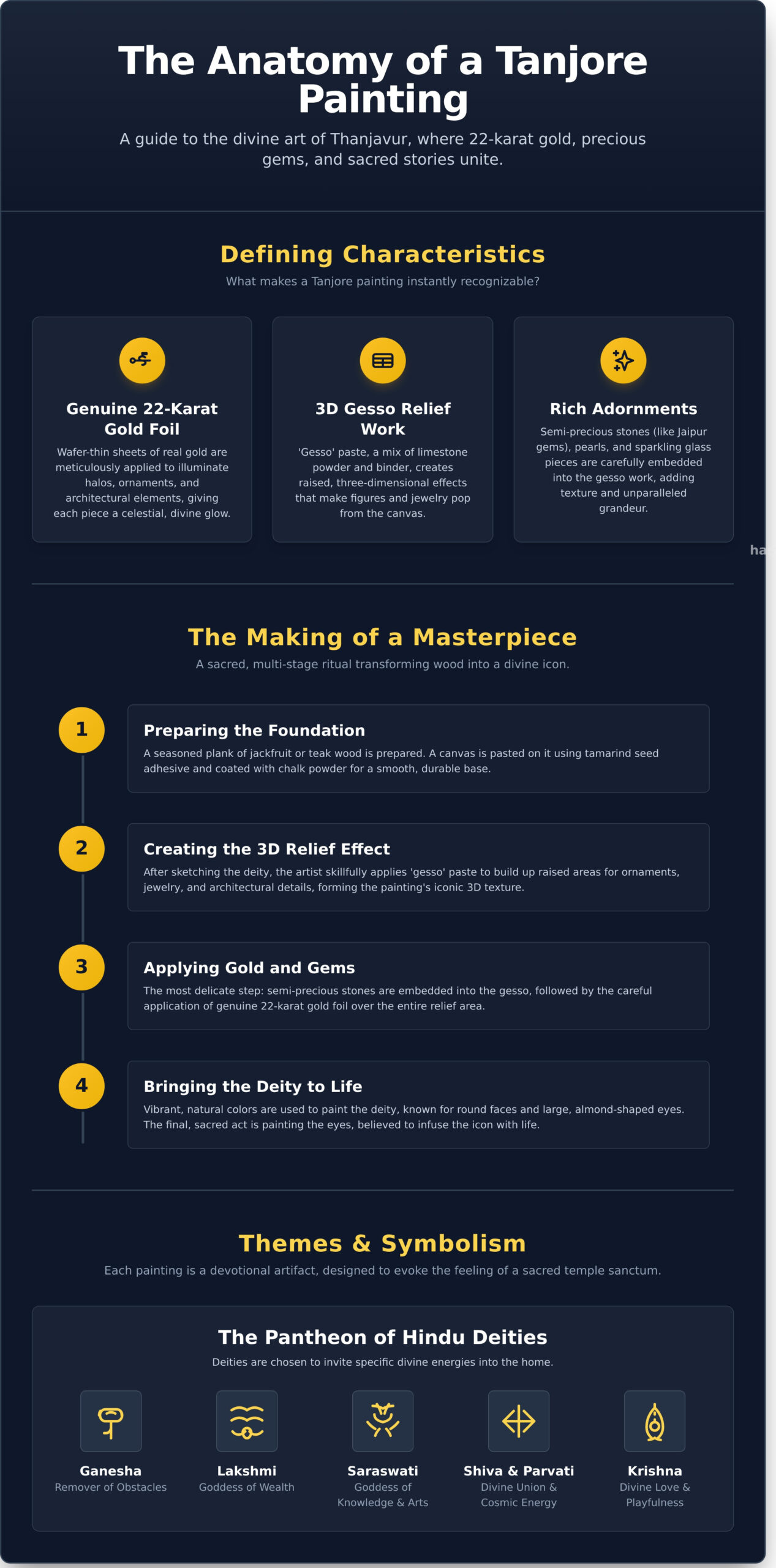
What makes a Tanjore painting instantly recognizable? It is a symphony of opulent materials and divine themes, creating a visual experience unlike any other. These artworks are known for their vibrant colors, dense compositions centered on deities, and a surface that glitters with life. The key elements include:
- Genuine Gold Foil: Sheets of 22-karat gold foil are delicately pasted onto the painting, illuminating halos, ornaments, and architectural details with a celestial glow.
- Rich Adornments: Semi-precious stones, pearls, and sparkling glass pieces are embedded into the artwork, adding texture and grandeur.
- 3D Relief Work: A special paste called ‘gesso’ (a mix of limestone powder and a binding agent) is used to create raised, three-dimensional effects, making the figures and ornaments pop from the surface.
How Tanjore Art Differs from Other Indian Paintings
While India is a treasure trove of diverse art forms, the Tanjore style stands apart with its unique grandeur. Unlike the delicate lines and subtle palettes of Mughal miniatures, which often depict courtly life, Tanjore art is bold, iconic, and deeply religious. It also contrasts sharply with the earthy, two-dimensional patterns of folk arts like Madhubani. Perhaps its closest cousin is the Mysore painting, but the key difference lies in the relief work; Tanjore paintings boast more pronounced, heavily embellished gesso work, while Mysore art features subtler, more delicate reliefs.
The Making of a Masterpiece: A Step-by-Step Creation Process
Creating a tanjore painting is not merely an art; it’s a sacred ritual. This celebrated art form transforms a simple wooden plank into a divine masterpiece through weeks, sometimes months, of painstaking dedication. Each step is a testament to the artisan’s skill and patience, a journey that honors centuries of tradition using only the finest natural materials. It is a process truly made with passion.
Step 1: Preparing the Foundation
The journey begins with a solid foundation. Artisans select seasoned planks of jackfruit or teak wood for their durability. A fine canvas is then meticulously pasted onto the wood using a natural adhesive made from tamarind seed paste. To create a smooth, resilient surface, the canvas is coated with multiple layers of chalk powder mixed with a binding agent, polished until it’s ready to hold a divine image.
Step 2: Creating the 3D Relief Effect
Next, the soul of the painting takes shape. The artist sketches the central deity, often a scene from Hindu mythology, directly onto the prepared board. The magic of the three-dimensional effect comes from a special paste called ‘gesso’-a thick mixture of chalk powder, limestone, and adhesive. This paste is skillfully applied to build up raised areas, creating intricate relief work for ornaments, jewelry, and architectural details.
Step 3: The Gleam of Divinity: Applying Gold and Gems
This is where the art form earns its legendary luminescence. Semi-precious stones, like Jaipur gems or even Swarovski crystals, are carefully embedded into the gesso work. Then, the most delicate step: applying wafer-thin sheets of genuine 22-karat gold foil over the entire relief area. This iconic gold work is a key reason for the official Geographical Indication for Tanjore Paintings, a status that protects its unique heritage and guarantees its authenticity.
Step 4: Bringing the Deities to Life
Finally, the deity is brought to life with a palette of vibrant, natural colors. The figures are rendered in the classic Thanjavur style, characterized by cherubic, round faces and large, expressive almond-shaped eyes that convey a sense of calm and grace. In a deeply spiritual tradition, the very last stroke is the painting of the deity’s eyes, a sacred act believed to infuse the icon with life and divine presence.
Themes and Symbolism: Understanding the Stories in the Art
More than just decorative art, a tanjore painting is a vibrant celebration of faith. At its heart, this art form is deeply devotional, created to bring a divine presence into the home. The central figure-always a deity-is depicted with a serene, compassionate expression and is the most prominent element, drawing the eye and the heart. This devotional focus is what makes each painting a powerful spiritual artifact, perfect for a puja (worship) room. The composition is often enclosed within ornate arches, curtains, and pillars, creating the sacred feeling of a shrine or temple sanctum right on your wall.
The Pantheon of Hindu Deities
Bring home divine blessings with art that resonates with your spirit. Lord Krishna is a beloved favorite, often captured in playful moments as a butter thief (Makhan Chor) or in divine romance with Radha. Each deity is chosen to invite specific energies into a space:
- Ganesha: The remover of obstacles, perfect for new beginnings.
- Lakshmi: The goddess of wealth and prosperity.
- Saraswati: The embodiment of knowledge, music, and the arts.
- Shiva & Parvati: Representing the divine union and cosmic energy.
Stories from Mythology and Epics
Every Tanjore painting tells a timeless story. Artists draw inspiration from a deep well of Hindu mythology, capturing pivotal moments from epics like the Ramayana and Mahabharata. Scenes of Lord Rama’s coronation or the divine avatars of Vishnu (Dashavatara) are popular themes. These artworks are not just static images; they are rich visual narratives of courage, love, and divine intervention, transforming your walls into a gallery of sacred lore.
Symbolism of Colors and Motifs
The vibrant palette of a Tanjore painting is rich with meaning, where each color is carefully chosen to convey a specific emotion or attribute. While shades can vary, the core symbolism remains consistent and adds layers of depth to the artwork.
- Red: Often used for backgrounds, this color symbolizes purity, passion, and auspiciousness.
- Green: Represents life, fertility, peace, and harmony with nature.
- White: Stands for serenity, purity, and ultimate knowledge.
How to Choose an Authentic Tanjore Painting for Your Home
Bringing a Tanjore painting into your home is more than an aesthetic choice; it’s an investment in a timeless piece of cultural heritage. Each authentic artwork is a celebration of devotion and meticulous skill, destined to become a cherished heirloom. Whether you are a seasoned collector or a new admirer, these tips will help you select a piece that radiates beauty and authenticity.
Signs of Authenticity and Quality Craftsmanship
A genuine Tanjore painting is a masterpiece of detail. Look for the hallmarks of superior quality that distinguish a true work of art from a mere decoration. An authentic piece will always showcase the artist’s dedication and skill in every element.
- Genuine Gold Foil: The artwork should use 22-carat gold foil, which lends a divine, lasting shimmer. Reputable artists and galleries often provide a certificate of authenticity for the gold used.
- Pronounced Gesso Work: The intricate, raised 3D effect, known as gesso or ‘muck’ work, should be neat, detailed, and flawlessly executed, especially around the outlines of figures and arches.
- Fine Facial Expressions: The heart of the painting lies in the divine figures. Their faces should be rendered with delicate, lifelike expressions, showcasing the artist’s mastery with fine brushstrokes.
Choosing a Theme That Resonates with You
Art should speak to your soul. Consider the energy you wish to cultivate in your space. Themes often revolve around Hindu deities, each embodying unique virtues. You might choose Goddess Lakshmi for prosperity, Lord Ganesha to bless new beginnings, or a depiction of Krishna that fills your home with joy. Ultimately, select a piece whose story and aesthetic you find personally beautiful and spiritually uplifting.
Styling Tanjore Art in a Modern Home
The timeless opulence of a Tanjore painting creates a stunning dialogue with contemporary interiors. Its rich colors and glittering gold can elevate any room, blending heritage with modern style seamlessly.
- Create a dramatic focal point by hanging a large piece above a sofa in your living room.
- Designate a serene meditation or prayer corner, with the painting as the sacred centerpiece.
- Contrast its traditional richness against a minimalist backdrop to let the artwork truly shine.
Ready to find the perfect masterpiece for your home? Explore our curated collection of authentic Tanjore art and discover a piece that celebrates timeless Indian craftsmanship.
Caring for Your Timeless Treasure: Maintenance and Preservation
A Tanjore painting is more than just art; it’s a vibrant heirloom, a piece of divine history that illuminates your home. Crafted with passion and precision, these masterpieces are remarkably durable. However, to preserve their iconic gold leaf, rich colors, and intricate details for generations, a little mindful care is essential. Rest assured, maintaining the splendor of your new treasure is a simple and rewarding act of love for this timeless art form.
Elevate Your Space: Proper Display and Handling
The perfect placement not only showcases your painting’s beauty but also protects its integrity. Think of it as choosing a throne for royalty. These pieces are sensitive to their environment, so location is key to long-term preservation and ensuring the artwork remains as stunning as the day it was created.
- Avoid Direct Sunlight: The brilliant, natural pigments used in a tanjore painting can fade under harsh UV rays. To keep the colors vibrant and true, choose a wall that receives indirect, ambient light throughout the day.
- Steer Clear of Moisture: High humidity is the enemy of the delicate gesso work and wood base. Avoid hanging your art in kitchens, bathrooms, or directly opposite air conditioning vents to prevent warping or damage to the gold foil.
- Handle with Care: When moving your painting, always hold it securely by its sturdy wooden frame. Touching the surface can transfer oils from your skin, which can tarnish the gold and dull the intricate details over time.
Preserving the Glow: Simple Cleaning and Dusting
Keeping your painting free from dust is the most important part of its upkeep. A clean surface allows the 22-karat gold and semi-precious stones to catch the light as intended, creating that signature, ethereal glow that makes this art so captivating.
- For Regular Dusting: A gentle sweep with a soft, completely dry microfiber cloth is all you need. Perform this light dusting every few weeks to prevent any buildup from dulling the surface.
- Absolutely No Liquids: Never use water, glass cleaner, or any chemical solutions. These liquids can permanently damage the delicate paintwork, dissolve the traditional adhesives, and corrode the precious gold leaf.
- For Intricate Areas: To clean around the edges of the stones and ornate gesso, use a new, very soft-bristled paintbrush. Its fine bristles can gently whisk away dust from crevices without causing any harm.
By following these straightforward steps, you become the proud custodian of a sacred tradition. Your masterpiece is a celebration of heritage, designed to last a lifetime and beyond. Ready to add another timeless treasure to your collection? Celebrate in style and explore our curated artworks at hastkalahub.com.
Bring Home a Legacy of Divine Artistry
A Tanjore painting is far more than a decorative piece; it is a vibrant heirloom steeped in centuries of devotion and history. We’ve journeyed through its divine essence, from the meticulous creation process involving delicate gesso work and semi-precious stones to the rich symbolism that gives each deity life. Understanding how to choose an authentic piece and care for it properly ensures that this timeless treasure doesn’t just adorn a wall-it illuminates your home with spiritual grace for generations to come.
Now, it’s your turn to embrace this magnificent tradition. At Hast Kala Hub, we celebrate the passion of the artists who bring these visions to life. Each masterpiece in our collection is meticulously handcrafted by skilled artisans, lavished with genuine 22-karat gold foil to create that iconic, luminous glow. With worldwide shipping on all our art, bringing this sacred heritage to your home has never been easier.
Celebrate tradition and artistry. Discover your perfect Tanjore Painting today!
Tanjore Painting: Your Questions Answered
Is real gold used in Tanjore paintings?
Absolutely. The defining feature of an authentic Tanjore painting is its use of genuine 22-karat gold foil. This is not gold paint, but thin sheets of real gold carefully applied over the gesso work. This luxurious material is what gives the artwork its divine, radiant shimmer that lasts for generations. The brilliant gold work, combined with vibrant colors, creates an opulent and timeless piece of art that truly elevates any space.
Why are Tanjore paintings so expensive?
The value of a Tanjore painting comes from its premium materials and the incredible skill involved. Each piece is a masterpiece made with 22-karat gold foil, semi-precious Jaipur stones, and a robust wooden board. The process is meticulous and time-consuming, requiring a master artisan to sculpt the gesso work, apply the gold, and paint the intricate details by hand. You are not just buying a painting; you are investing in a piece of cultural heritage.
How can I tell if a Tanjore painting is authentic?
An authentic Tanjore painting has distinct characteristics. Look for a pronounced 3D effect from the raised gesso work, especially on jewelry and pillars. The gold should be real foil with a brilliant luster, not a dull paint. The figures, particularly of deities, will have rounded faces and almond-shaped eyes, true to the traditional style. Finally, purchasing from a reputable gallery or artist who provides a certificate of authenticity is the best way to guarantee its genuineness.
What is the main difference between Tanjore and Mysore paintings?
The key difference lies in the relief work and materials. Tanjore paintings are celebrated for their bold, 3D gesso work, which is heavily embellished with thick gold foil and semi-precious stones. This creates a sculptural, opulent appearance. In contrast, Mysore paintings are more delicate and subtle. They do not use heavy relief work and instead employ thinner gold leaf for fine lines and details, emphasizing graceful brushstrokes and ethereal expressions over heavy ornamentation.
How do I clean my Tanjore painting without damaging it?
Caring for your artwork is simple but requires a gentle touch. Use a very soft, clean, and completely dry cloth (like a microfiber cloth) to lightly dust the surface. Never use water, chemical cleaners, or any abrasive materials, as they will permanently damage the delicate gold foil and paintwork. If your painting is behind glass, clean the glass with a suitable cleaner, ensuring no moisture seeps into the frame. Gentle care preserves its beauty for a lifetime.
What is the gesso work in a Tanjore painting?
Gesso work is the soul of a Tanjore painting’s iconic 3D effect. It is a meticulous process where the artist applies a thick paste, traditionally made of limestone powder and a binding agent, to create raised, embossed designs on the canvas. This relief work is typically used for ornaments, clothing, and architectural elements in the painting. Once dried and sculpted, it is covered with gold foil, giving the artwork its signature depth, texture, and regal dimension.



