
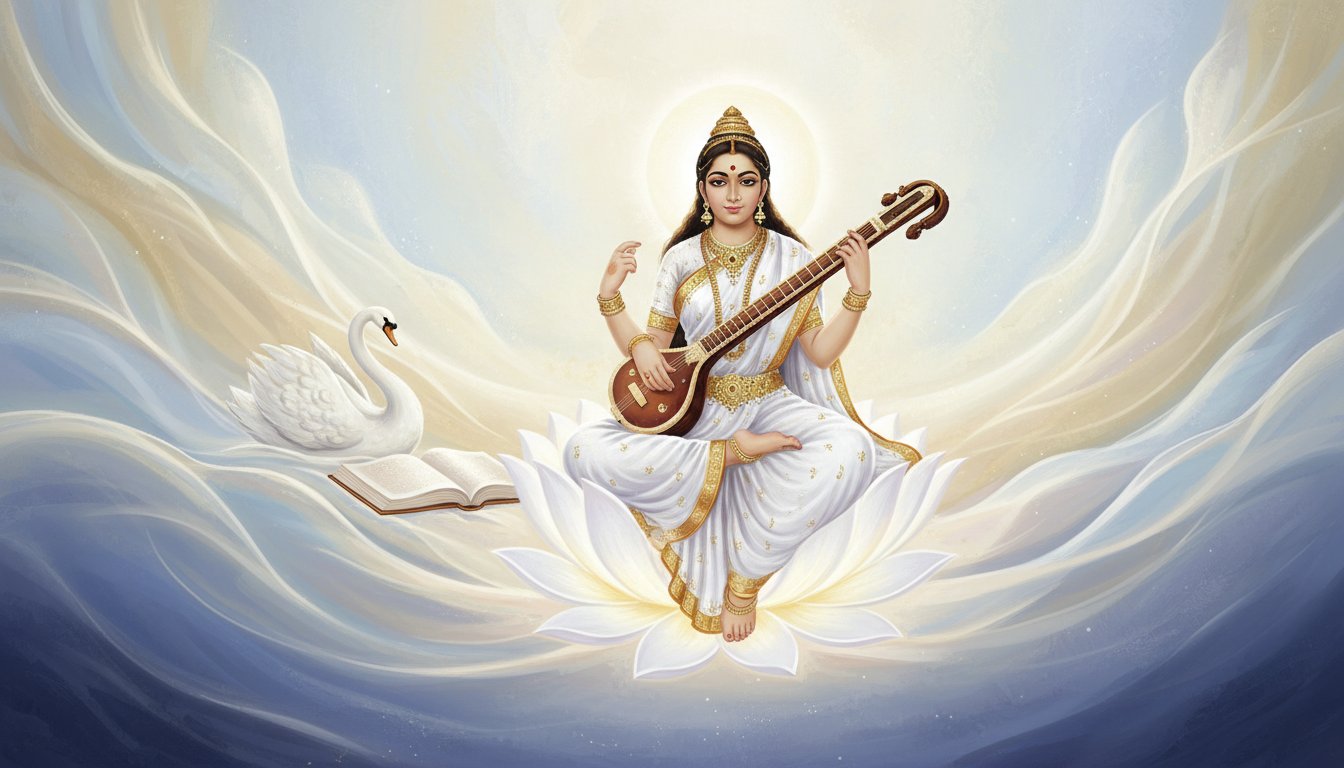
Are you searching for more than just decoration? Do you long for art that inspires, enlightens, and fills your space with purpose? This quest for meaningful beauty often leads to the divine image of Goddess Saraswati, the celestial muse of knowledge, music, and the arts. Her serene presence is a powerful symbol of creativity and wisdom, a vibrant beacon for students, artists, and anyone seeking clarity and inspiration in their daily life. She is more than a deity; she is the very essence of flowing consciousness and artistic grace.
But with so many beautiful depictions, choosing the perfect piece can feel daunting. What is the true meaning behind her swan or the veena she holds? Which room is best to welcome her energy? This guide is your answer. We will explore the profound symbolism behind every element of a Saraswati painting, from traditional styles to modern interpretations. Prepare to confidently select a masterpiece that resonates with your personal goals and transforms your home into a sanctuary of knowledge. Let’s find the divine inspiration waiting for you.
Who is Goddess Saraswati? The Source of Knowledge, Music, and Arts
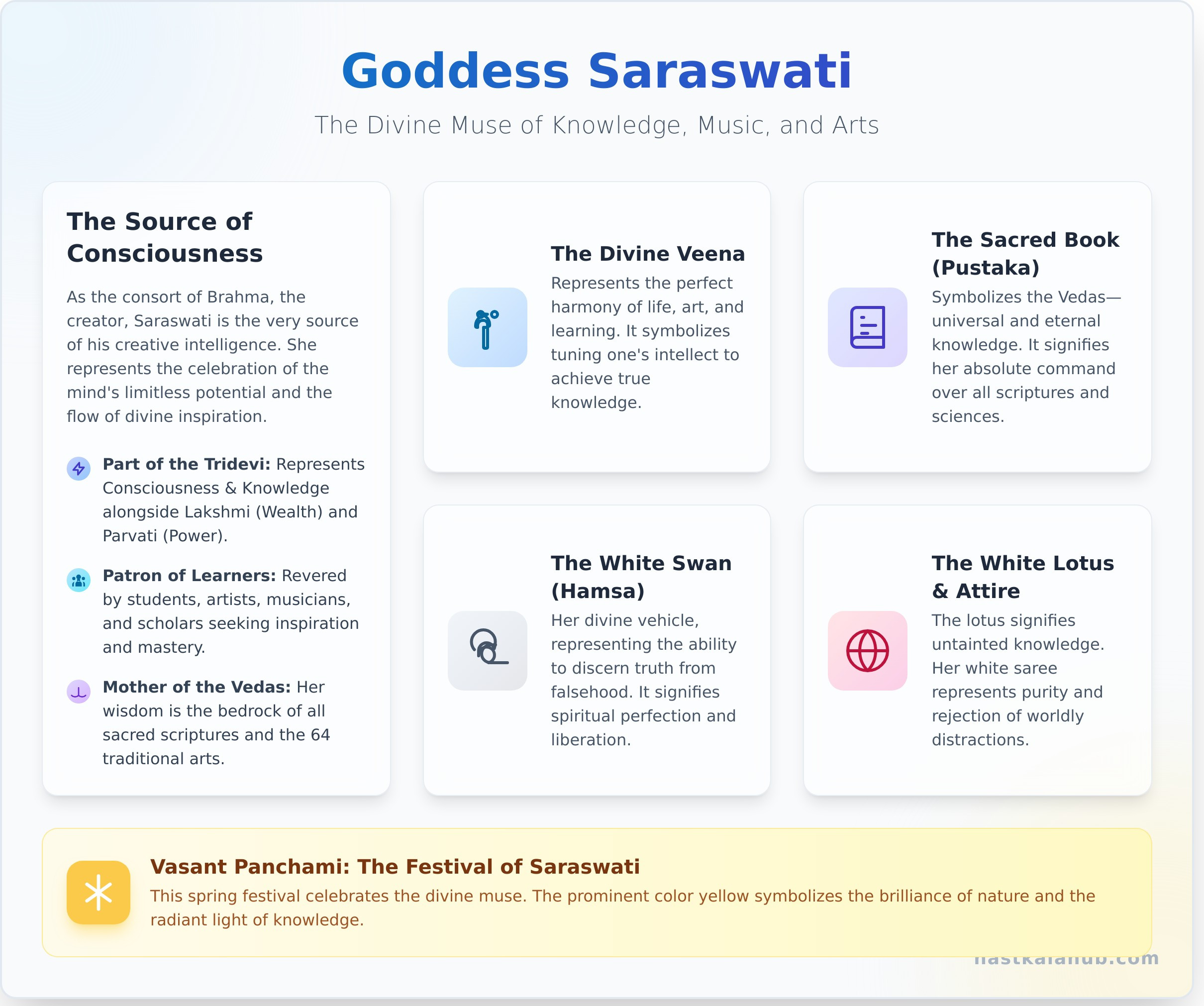
In the vibrant pantheon of Hindu deities, Goddess Saraswati shines as the divine embodiment of knowledge, wisdom, music, and the arts. She is a central figure in the Tridevi, the supreme trinity of goddesses, representing consciousness and knowledge alongside Lakshmi (wealth) and Parvati (power). As the consort of Brahma, the creator god, she is the very source of his creative intelligence. This foundational role in Hindu culture raises the question, Who is Goddess Saraswati? She is, in essence, the celebration of the mind’s limitless potential.
It is no wonder that students, artists, musicians, and scholars hold her in the highest reverence. From a young child learning their first letters to a seasoned musician composing a masterpiece, seekers of all kinds turn to her for blessings. They pray for inspiration, clarity of thought, and the grace to master their chosen craft, making her an essential guide on the journey of learning and creation.
The Patron of Learning and Creativity
Her domain is vast, encompassing every form of learning and creative expression. She governs the sciences, literature, arts, and all 64 traditional crafts. Revered as the mother of the Vedas, the foundational scriptures of Hinduism, her wisdom is considered the bedrock of all sacred knowledge. Invoking the goddess saraswati is believed to awaken one’s inner genius, removing obstacles to learning and filling the mind with divine inspiration and eloquence.
Vasant Panchami: The Festival of Saraswati
The arrival of spring is marked by Vasant Panchami, a joyous festival dedicated entirely to celebrating this divine muse. On this auspicious day, educational institutions come alive with prayers, and students place their books and instruments at her feet, seeking her blessings for the year ahead. The festival is famously awash in vibrant yellow, a color that symbolizes the brilliance of nature in bloom and the radiant light of knowledge and intellect.
Decoding the Symbolism: What Every Saraswati Painting Represents
A painting of Saraswati is a vibrant celebration of divine wisdom, where every brushstroke carries deep meaning. Far more than mere decoration, each element is a powerful symbol of knowledge, purity, and transcendence. Understanding this visual language allows you to not only appreciate the artistry but also to select a piece that resonates with the specific energy you wish to cultivate in your home or workspace.
The Divine Veena (Lute)
The veena in her hands is not just a musical instrument; it represents the perfect harmony of life, art, and learning. It symbolizes the need to tune one’s mind and intellect with precision to achieve true knowledge. Its melodious potential speaks to the creative vibrancy and rhythmic pulse of the entire cosmos, inspiring harmony within ourselves and our surroundings.
The Pustaka (Sacred Book)
Held in one of her hands, the Pustaka or sacred book symbolizes the Vedas-the embodiment of universal and eternal knowledge. This signifies her absolute command over all scriptures, sciences, and intellectual arts. It is a powerful reminder that true wisdom, when shared selflessly, has the power to illuminate the world and uplift humanity.
The White Swan (Hamsa) and Peacock
Goddess Saraswati is often depicted with a celestial white swan, or Hamsa. This elegant creature is her divine vehicle and represents the rare ability to discern truth from falsehood, good from evil. The rich Symbolism in Saraswati Paintings further explains that the swan signifies spiritual perfection and liberation (moksha). While less common, the peacock sometimes appears, representing worldly splendor, beauty, and the celebration of knowledge in its most magnificent form.
The White Lotus and Pure Attire
The pristine white lotus upon which she sits signifies supreme, untainted knowledge and purity. It grows in muddy waters yet remains untouched by them, symbolizing the ability to exist in the material world while striving for spiritual enlightenment. Her brilliant white saree complements this, representing her rejection of worldly distractions in favor of pure wisdom and embodying Sattva Guna-the quality of goodness, lucidity, and balance.
Saraswati in Different Indian Art Forms: From Traditional to Contemporary
As a timeless muse, the goddess Saraswati has been a source of endless inspiration for artists across India. Her divine form is not confined to a single style; instead, it is celebrated through a rich tapestry of regional art forms. Each tradition, from the classical to the contemporary, offers a unique visual language, allowing you to find a piece that resonates perfectly with your home’s aesthetic. These artworks are more than just decor-they are a testament to the skill and passion of artisans who have kept these traditions alive for generations.
Classic and Raja Ravi Varma Depictions
The image many hold of the goddess-serene, graceful, and draped in a white saree-is heavily influenced by the iconic paintings of Raja Ravi Varma and the calendar art he inspired. These depictions are celebrated for their soft realism and devotional tranquility. While these popular paintings evoke a deep sense of peace, they are part of a long artistic lineage. Historical examples of Saraswati in Traditional Indian Art, like ancient temple sculptures, often present a different but equally powerful vision of the deity. This classic style is perfect for creating a traditional, sacred atmosphere in your study or prayer room.
Vibrant Folk Interpretations
For a home that celebrates bold color and cultural heritage, folk interpretations offer an exuberant choice. Each style tells a story with its distinct character:
- Pichwai Style: Known for their rich, deep colors and intricate details, Pichwai paintings often place the goddess within a lush, decorative backdrop, creating a scene of divine opulence.
- Madhubani Style: Originating from Bihar, this art form is characterized by its complex geometric patterns, bold line work, and symbolic imagery, capturing the goddess’s essence in a vibrant, narrative form.
These folk styles add a splash of authentic, celebratory energy to any living space, making them a stunning focal point.
Modern and Abstract Renditions
Contemporary artists continue to reinterpret her divine form, translating her symbolism for the modern home. In these works, the focus often shifts from a literal depiction to the essence of her energy. You might find her represented through abstract elements-the elegant curve of a veena, the graceful form of a swan, or a flow of colors symbolizing knowledge. These pieces are ideal for those seeking spiritual art with a chic, minimalist aesthetic that complements a contemporary interior. Explore diverse styles in our Saraswati art collection.
How to Choose and Place a Saraswati Painting in Your Home
A painting of the goddess Saraswati is more than just beautiful decor; it is a powerful emblem of knowledge, creativity, and wisdom. Integrating this divine art into your home is a celebratory act. The right piece, chosen with intention and placed with care, can transform any room into a vibrant hub of inspiration and positive energy. To achieve this, it’s essential to balance stunning aesthetic appeal with the timeless principles of Vastu Shastra, creating a sanctuary that nurtures your highest aspirations.
Selecting Art by Intent and Location
Align your artwork with the primary function of the room to amplify its intended energy. Consider which attribute of the divine muse you wish to invoke in that specific space. This thoughtful approach ensures your art is not just seen, but felt.
- For a Study or Library: Choose a painting that prominently features the Pustaka (book) or ancient scriptures. This visual focus on written knowledge is believed to enhance concentration, deepen understanding, and support academic success.
- For a Music or Art Studio: A depiction highlighting the Veena is a perfect choice. This celebrates the artistic and musical attributes of the goddess, inspiring a free flow of creativity, passion, and masterful skill.
- For a Child’s Room: Select a simple, serene, and gentle image of the goddess. A calm and benevolent depiction can foster a peaceful and positive atmosphere that encourages curiosity and a love for learning.
Vastu Shastra: Ideal Placement for Positive Energy
Harness the ancient science of Vastu Shastra to channel divine energy for maximum benefit. The correct placement of your saraswati painting ensures it radiates positivity and harmony throughout your space, creating an environment conducive to growth.
- The West or Southwest direction is traditionally recommended for matters of knowledge, education, and skill development, making it the most auspicious zone for your painting.
- Ideally, position the art on a wall where you can face East while studying, working, or meditating. This direction is associated with illumination, new beginnings, and enlightenment.
- To maintain sanctity, avoid placing sacred art directly opposite a bathroom door, near a dustbin, or under a staircase, as these areas can carry disruptive or negative energies.
Complementing Your Interior Design
A magnificent piece of art should seamlessly elevate your home’s style. With their rich symbolism and elegant forms, these paintings can be a stunning addition to both traditional and contemporary interiors.
- Harmonize with Color: Select a painting with a color palette that complements your existing decor. Matching its dominant hues with your cushions, rugs, or curtains creates a cohesive and professionally styled look.
- Create a Focal Point: A large, vibrant canvas can serve as a breathtaking centerpiece in a living room or entryway. It will not only draw the eye but also spark meaningful conversation and admiration.
- Subtle Inspiration: For a more personal touch, a smaller, exquisitely framed piece works beautifully on a desk, bookshelf, or in a meditation nook, offering a private and constant source of inspiration.
Ready to invite grace and wisdom into your home? Explore our curated collection of divine art and find the piece that speaks to your soul.
Invite Divine Inspiration into Your Home
A Saraswati painting is far more than a decorative piece; it’s a profound symbol of knowledge, creativity, and the ceaseless flow of wisdom. As we’ve explored, understanding the rich symbolism-from her radiant white saree to the divine veena-allows you to connect deeply with the artwork’s spiritual essence. By choosing the right art form and placing it with intention in your home or workspace, you create a powerful sanctuary for learning, music, and artistic expression.
At Hast Kala Hub, we honor this sacred connection between art and divinity. Our collection features a beautiful fusion of sacred tradition and modern style. Discover vibrant, high-quality canvas and handmade paintings, each one an artisan-crafted piece made with true passion. These are not just paintings; they are invitations for inspiration to enter your life.
Celebrate wisdom and art. Discover your perfect Saraswati painting today!
Bring home a masterpiece that nurtures your mind and soul, and let the divine energy of creativity flourish in your home.
Frequently Asked Questions
What is the best mantra to chant for Goddess Saraswati?
The most revered mantra is “Om Aim Saraswatyai Namah.” This powerful chant invokes the divine energy of the Goddess, seeking her blessings for enhanced knowledge, creativity, and artistic expression. Chanting this mantra, especially before studying or engaging in creative work, is believed to clear the mind and foster deep concentration. It is a beautiful way to connect with the essence of wisdom and inspiration that the divine muse represents, bringing clarity to your endeavors.
Why is Goddess Saraswati always depicted wearing a white saree?
The pristine white saree worn by Goddess Saraswati is deeply symbolic. White represents purity, true knowledge, and enlightenment, free from ignorance or materialism. This color signifies the Sattva Guna-the quality of goodness, peace, and harmony. Her white attire beautifully illustrates that knowledge must be sought in its purest form. It serves as a constant reminder that wisdom is a serene and untainted pursuit, illuminating the path for all her devotees.
Can I gift a Saraswati painting to someone? What does it signify?
Gifting a Saraswati painting is a deeply thoughtful and auspicious gesture. It signifies your heartfelt wish for the recipient to be blessed with knowledge, wisdom, and success in their creative or academic pursuits. It is an elegant and perfect gift for students, artists, musicians, or anyone starting a new educational journey or career. This beautiful present conveys blessings for clarity of thought, artistic inspiration, and triumphant success in all their endeavors.
Is it appropriate to have a Saraswati painting in a business or office?
Yes, placing a Saraswati painting in an office or business is highly appropriate and beneficial. As the goddess of knowledge, arts, and communication, her presence is believed to foster an environment of innovation, creativity, and clear decision-making. It is especially ideal for businesses in creative fields, education, or consulting. An elegant painting of the divine muse can inspire teams, encourage learning, and promote harmonious and effective communication within the workplace.
How does the symbolism of Saraswati differ from that of Lakshmi?
While both are revered goddesses, their symbolism is distinct. Goddess Saraswati represents knowledge, wisdom, and the arts-the wealth of the mind and spirit. Her blessings are sought for intellectual and creative prowess. In contrast, Goddess Lakshmi represents material wealth, prosperity, and fortune. She is the bestower of tangible abundance and worldly success. Essentially, Saraswati governs internal treasures, while Lakshmi governs external prosperity, and both are vital for a balanced life.
What materials are used in the Saraswati paintings you offer?
Our exquisite Saraswati paintings are crafted with passion by skilled artisans. We use premium materials to ensure lasting beauty and elegance in your space. Each piece is meticulously hand-painted on high-quality canvas or traditional cloth, using vibrant, long-lasting natural pigments and mineral colors. Many of our pieces follow revered art styles like Pichwai, celebrated for its intricate details and rich cultural heritage, bringing a touch of timeless tradition to your home.



