
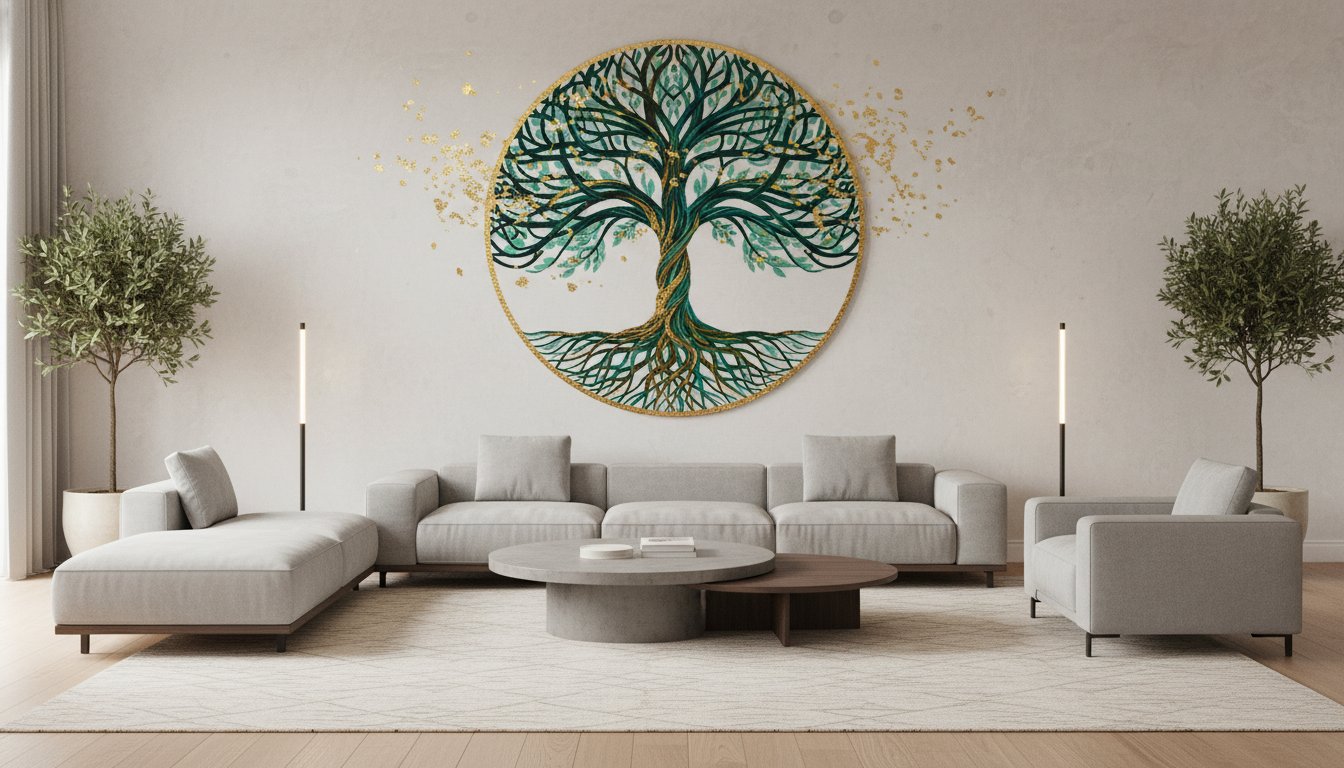
Have you ever been captivated by the intricate branches of a stunning artwork, only to feel overwhelmed by its complex symbolism? It’s a common story with one of the world’s most ancient and beautiful motifs. The powerful tree of life symbol isn’t just a historical artifact; it’s a vibrant celebration of connection, growth, and personal strength. But how do you bring its timeless elegance into a modern home without it feeling out of place, or worse, choosing a piece that doesn’t reflect its true, profound meaning?
Forget the confusion. This guide is your key to unlocking its universal message with confidence and style. We will journey through cultures to uncover its core symbolism, helping you feel a deep, personal connection to its story. Get ready to discover how to confidently select a Tree of Life painting that not only complements your decor but also celebrates your own values. It’s time to transform your space with art that is both chic and deeply meaningful.
Key Takeaways
- Understand the universal message of interconnectedness and grounding that the Tree of Life symbol represents across cultures.
- Explore how ancient civilizations, from Celtic traditions to Eastern philosophies, interpreted this powerful symbol of creation.
- Learn how to infuse your space with vibrant energy and personal meaning using elegant tree of life artwork.
- Find the perfect piece for your home by discovering how different artistic styles and colors can shape a room’s atmosphere.
What is the Tree of Life? A Universal Symbol of Connection
Few symbols possess the timeless elegance and profound meaning of the Tree of Life. It is a universal archetype, a celebrated motif that transcends cultures, religions, and eras to tell a powerful story of connection. From ancient Celtic carvings to vibrant Indian artistry, the Tree of Life symbol has been explored for centuries as a sacred map of the cosmos. At its heart, it represents the fundamental idea that all life on Earth is intricately and beautifully interconnected.
This iconic image serves as an elegant reminder of our place in the universe, linking the heavens, the Earth, and the underworld. It celebrates strength, growth, and the unbreakable bonds that tie us to our past and our future.
The Anatomy of a Powerful Symbol
Every part of this stunning motif tells a story of balance and harmony. Its design is a masterclass in symbolism, where each element holds a special meaning that contributes to the whole.
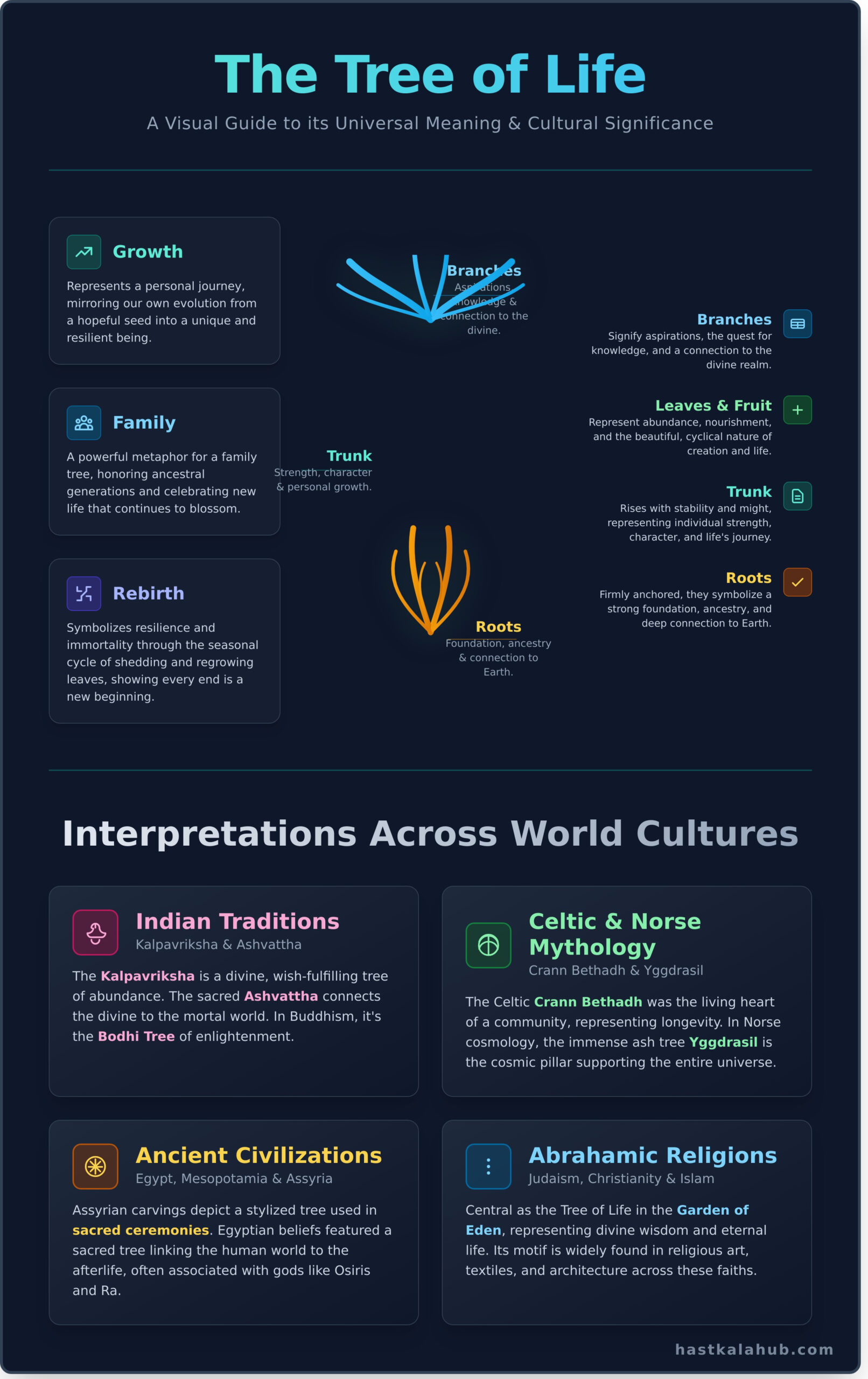
- Roots: Firmly anchored in the ground, they symbolize a strong foundation, ancestry, and our deep connection to Mother Earth.
- Trunk: Rising with stability and might, the trunk represents individual strength, character, and personal growth.
- Branches: Reaching outward and upward toward the sky, the branches signify our aspirations, the desire for knowledge, and a connection to the divine.
- Leaves & Fruit: These represent abundance, nourishment, and the beautiful, cyclical nature of creation and life.
Key Themes: Growth, Family, and Immortality
The tree of life is a vibrant celebration of your personal journey. It beautifully mirrors our own growth from a hopeful seed into a unique and resilient being. Its sprawling, interconnected branches serve as a powerful metaphor for a family tree, honoring the generations that came before and the new life that continues to blossom. Through the seasonal cycle of shedding and regrowing its leaves, the tree becomes a potent symbol of rebirth, resilience, and immortality, reminding us that every ending is simply a new beginning.
The Tree of Life Across World Cultures and Mythologies
From ancient tapestries to modern art, the tree of life is a timeless symbol that has taken root in nearly every global culture. More than just a decorative motif, it represents a profound map of spirituality, creation, and our connection to the universe. Its branches reach for the heavens while its roots dig deep into the earth, elegantly bridging the gap between the spiritual and the physical.
Indian Traditions: The Kalpavriksha and Ashvattha
In the heart of Indian traditions, this symbol blossoms with vibrant meaning. The Kalpavriksha is the divine, wish-fulfilling tree, a celebrated icon of abundance and prosperity. Meanwhile, the sacred Ashvattha (Peepal tree) is revered for its inverted form-with roots in heaven and branches on earth-connecting the divine to the mortal world. These sacred concepts are beautifully translated into traditional art forms like the intricate Pichwai paintings and the geometric elegance of Madhubani art. In Buddhist traditions, the symbol is embodied by the Bodhi Tree, under which enlightenment was attained.
Celtic and Norse Mythology
Journeying west, Celtic and Norse mythologies offer their own powerful interpretations. The Celtic Crann Bethadh was the living heart of a community, representing strength, longevity, and a sacred connection to ancestors. In Norse cosmology, the immense ash tree Yggdrasil is the cosmic pillar that supports the entire universe, its branches reaching the heavens and its roots delving deep into other worlds. These visions are captured in the endless loops of Celtic knots and the powerful carvings found on ancient artifacts.
Ancient Egypt, Mesopotamia, and Abrahamic Religions
The symbol’s roots run even deeper into ancient history. Assyrian carvings depict a stylized tree used in sacred ceremonies, while Egyptian beliefs featured a tree linking the human world to the afterlife. This powerful motif is central to Abrahamic religions as the Tree of Life in the Garden of Eden, representing divine wisdom and eternal life. Its enduring appeal is beautifully captured in historical artworks like The ‘Tree of Life’ Carpet from the Islamic world, which showcases the motif’s intricate and decorative power in textile art.
Bringing the Symbol Home: How to Decorate with Tree of Life Art
The Tree of Life is more than just an ancient symbol; it’s a timeless story of connection, growth, and heritage. While the Tree of Life archetype has deep roots in global cultures and spiritual traditions, its elegance has made it a celebrated choice in modern home decor. Introducing this powerful motif into your home is a beautiful way to set an intentional tone, creating spaces that feel grounded, vibrant, and deeply personal. Let’s explore how to style this iconic art to elevate your living spaces.
Creating a Focal Point in Your Living Room
Transform your living room into a sanctuary of connection. A large, statement-making tree of life canvas hung above a sofa or fireplace instantly becomes the heart of the room. It’s a natural conversation starter, inviting guests to ponder its meaning while serving as a daily reminder of your family’s own branching story. To create a harmonious look:
- Pair the artwork with earthy tones like terracotta, sage green, and warm beige.
- Incorporate natural wood furniture and decor to echo the tree’s organic form.
- Add lush indoor plants to bring the theme of life and growth into the physical space.
Fostering Serenity and Growth in the Bedroom
Your bedroom is a space for rest and renewal, making it the perfect setting for a more tranquil interpretation of this symbol. Choose artwork in calming palettes-think soft blues, gentle greens, or monochrome-to foster a restful atmosphere. Placing the art above your headboard acts as a beautiful visual metaphor for personal growth and dreams. Consider elegant styles like delicate watercolor paintings or minimalist line art for a chic, understated effect.
Inspiring Connection in Dining and Family Spaces
In areas where the family gathers, let this powerful symbol represent the nourishment, strength, and deep-rooted bonds you share. A vibrant, colorful piece can infuse a dining room or family area with a lively, welcoming energy, celebrating the joy of togetherness. Choose art that feels abundant and full of life to elevate every shared meal and moment. Find a piece that tells your family’s story.
Choosing Your Perfect Tree of Life Artwork: A Buyer’s Guide
Selecting a tree of life artwork is more than a design choice; it’s an invitation to bring a powerful story of connection, growth, and heritage into your home. This is your opportunity to choose a piece that truly resonates with your spirit and elevates your space. Let this guide empower you to select an artwork with confidence and intention, ensuring it becomes a cherished focal point for years to come.
Matching Style to Your Home’s Aesthetic
The beauty of this symbol is its incredible versatility. Celebrate your unique style by matching the art to your home’s personality.
- Traditional & Folk Art: Richly detailed pieces, like hand-painted Pichwai or Kalamkari art, bring an earthy, bohemian warmth to rustic or eclectic interiors. They tell a story of deep-rooted heritage.
- Modern & Abstract: For minimalist and contemporary spaces, choose art with clean lines, bold colors, or a stylized, abstract interpretation. It creates a chic, sophisticated statement.
- Intricate & Detailed: Exquisite threadwork, delicate beading, or fine-line metalwork adds a touch of undeniable luxury and elegance, perfect for creating a refined atmosphere.
The Language of Color and Material
Every element of your artwork contributes to the mood it creates. Handmade art, in particular, carries a unique energy, a piece of the artisan’s passion. Consider how different colors and textures speak to you:
- Color Symbolism: Vibrant greens evoke growth and renewal, shimmering golds suggest prosperity and wisdom, while tranquil blues and whites inspire calm and serenity.
- Canvas Paintings: Offer a dynamic and expressive medium, allowing for a vast range of styles from photorealistic to wildly abstract, all bursting with vibrant color.
- Handmade Textiles: A hand-embroidered or block-printed piece offers unparalleled texture and a story of craftsmanship in every stitch.
Considering Size and Placement
The right placement will transform your artwork from a simple decoration into a breathtaking centerpiece. Before you buy, think about the practical details. Measure your wall to ensure a harmonious fit-a large piece can anchor a room, while a smaller one can accent a cozy nook. For a dynamic, modern display, consider a triptych or a set of smaller panels. Finally, pay attention to lighting. A well-placed lamp can beautifully highlight the intricate details and rich colors of your chosen tree of life, allowing its symbolism to truly shine.
Ready to find the piece that speaks to you? Explore our curated collection and celebrate your home with art made with passion.
Embrace Your Story: The Timeless Connection of the Tree of Life
From ancient mythologies to modern homes, the tree of life stands as a powerful emblem of our shared connection-to the world, our heritage, and our own personal growth. This universal symbol beautifully illustrates how our deep roots provide the strength to reach for new heights. It’s not just a story from the past; it’s a vibrant, living piece of art that can bring profound meaning and elegant style into your personal space, telling a timeless tale of unity and strength.
Are you ready to celebrate this connection in your own home? Let your walls tell a story of heritage and hope. At Hast Kala Hub, our talented artisans pour passion into creating authentic designs that resonate. Explore vibrant, high-quality canvas and handmade art that masterfully blends rich cultural heritage with chic, modern style. Each piece is an invitation to elevate your decor and inspire your spirit.
Discover our vibrant collection of Tree of Life paintings. Choose the artwork that speaks to your journey and let your home bloom with meaning.
Frequently Asked Questions
Is the Tree of Life a religious symbol?
The Tree of Life is a celebrated symbol in many religions, including Christianity, Islam, and Buddhism, but it isn’t exclusive to any single one. Its meaning is beautifully universal, representing the connection between all living things, from the earth to the heavens. This timeless motif symbolizes growth, strength, and family-ideas that resonate deeply across all cultures and beliefs. It’s a powerful emblem of unity that anyone can appreciate and display with pride.
What is the difference between the Tree of Life and the Tree of Knowledge?
While often pictured together, these two trees carry distinct symbolic meanings. The Tree of Life represents unity, immortality, and the interconnectedness of all creation-a vibrant celebration of existence. In contrast, the Tree of Knowledge of Good and Evil, from the biblical story of Adam and Eve, symbolizes the concept of duality, moral consciousness, and the consequences of human choice. One is about connection, the other about consciousness.
Can I have a Tree of Life in my home if I’m not spiritual?
Absolutely! The beauty of the Tree of Life is its universal appeal. Beyond any spiritual context, it is a stunning decorative motif that celebrates family, personal growth, and a connection to nature. Displaying this elegant symbol in your home is a chic way to honor your family roots or simply bring a touch of timeless, nature-inspired art into your space. It’s a celebration of life itself, perfect for any home.
What does a Tree of Life painting symbolize as a gift?
Gifting a Tree of Life painting is a beautiful and deeply meaningful gesture. It symbolizes wishes for a long, healthy, and prosperous life for the recipient. It can represent the strong, deep roots of friendship or family, or celebrate a new beginning like a wedding or housewarming. It’s more than just decor; it’s a vibrant, artistic blessing that conveys hopes for strength, stability, and continued growth-an elegant and heartfelt gift for any occasion.
How do I care for my Tree of Life canvas painting?
To keep your canvas art vibrant, display it away from direct sunlight and areas of high humidity, which can cause fading or damage. Dust the surface gently with a soft, dry cloth or a feather duster. Never use water or chemical cleaning solutions, as they can ruin the paint and canvas material. With this simple care, your stunning piece will remain a cherished part of your home decor for years to come.
What Indian art forms frequently depict the Tree of Life?
The tree of life is a beloved and recurring motif in many of India’s treasured art forms. You will find stunning interpretations in Madhubani art from Bihar, with its intricate patterns and bold lines. It is also a central theme in Kalamkari, where artisans use pen-work to create detailed narratives on textiles. In Gond art, the symbol is often depicted with a unique, mystical quality, filled with vibrant colors and delicate patterns celebrating nature.



