
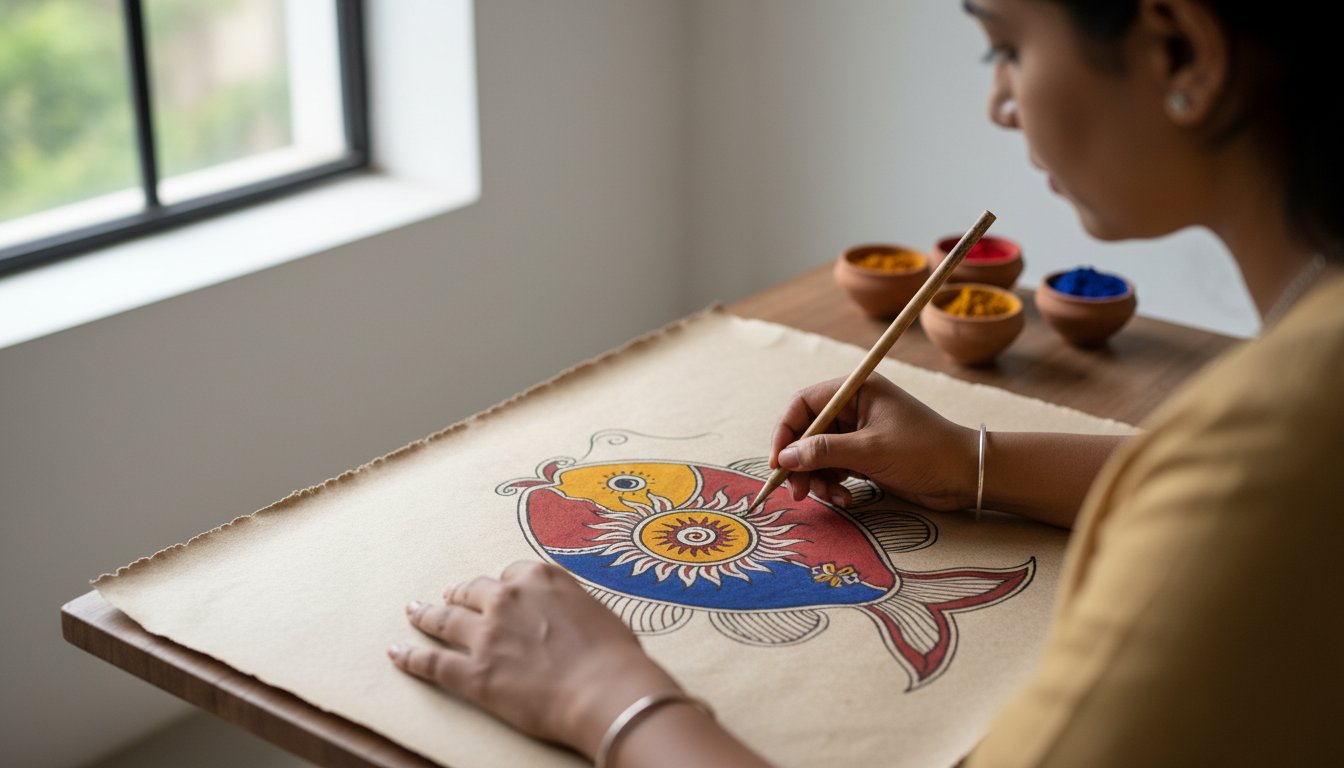
Have you ever been captivated by the intricate lines and vibrant, natural colors of a traditional Indian artwork? You’re drawn to the mythical figures, the symbolic fish, and the radiant sun, yet you wonder about the rich stories hidden within each stroke. This is the magic and mystery of a madhubani painting. You might find yourself asking: What do these ancient symbols mean? How can I distinguish a genuine, handmade treasure from a simple print? And how can I beautifully weave such a timeless piece into my modern home?
Get ready to celebrate one of India’s most cherished artistic traditions. This guide is your personal invitation into the world of Mithila art. We will journey through its fascinating history, demystify the five distinct styles like Bharni and Katchni, and decode the powerful symbolism painted with passion. By the end, you’ll not only understand this vibrant art form but will feel confident choosing an authentic piece that speaks to you and displaying it with chic, contemporary style. Let’s discover the perfect piece of heritage to elevate your space.
The Legend and History of Madhubani: Art from the Land of Sita
Rooted in the ancient kingdom of Mithila in Bihar, Madhubani art carries a story as vibrant as its colors. Legend tells us that King Janak, the father of Sita, commissioned artists to capture the divine wedding of his daughter to Lord Rama on the palace walls. This sacred celebration marked the birth of an art form meant to invoke blessings, prosperity, and love. For centuries, this skill was a closely guarded tradition, passed exclusively from mother to daughter. It was more than art; it was a visual language of storytelling and cultural identity, connecting generations of women within their community.
From Ritual to Recognition
Originally, this art was a private ritual, decorating the inner walls and floors of homes for sacred occasions. Intricate geometric and floral designs known as Kohbar were painted in marriage chambers to bless the newlywed couple with fertility and peace. Other motifs celebrated births, festivals, and harvests, making the home a living canvas of devotion. It remained a cherished but hidden tradition until a natural disaster-the 1934 Bihar earthquake-brought it to the world. A British colonial officer, William G. Archer, discovered the stunning murals on the broken walls of homes. This discovery sparked global interest, transforming a domestic tradition into a powerful source of income and empowerment for the women of Mithila, who began to translate their wall art onto paper.
The Natural Materials and Tools
The soul of every madhubani painting lies in its deep connection to nature. Authenticity is key, with artists traditionally creating their own vibrant palettes from the earth around them. This organic process ensures each piece is unique and eco-friendly. Key materials include:
- Natural Pigments: Soot and burnt charcoal for bold black lines, turmeric for brilliant yellow, indigo for deep blue, and various flowers and leaves for a spectrum of rich, earthy colors.
- Simple Tools: The art was brought to life not with fine brushes, but with everyday items like twigs, matchsticks, fingers, and handmade bamboo nib-pens, which give the lines their distinct, rustic texture.
While originally practiced on freshly plastered mud walls and floors, the art gracefully transitioned to handmade paper and canvas in the latter half of the 20th century. This evolution allowed artisans to share their stunning creations with a global audience, turning a sacred ritual into a celebrated and collectible art form.
The Visual Language: Characteristics and 5 Distinct Styles
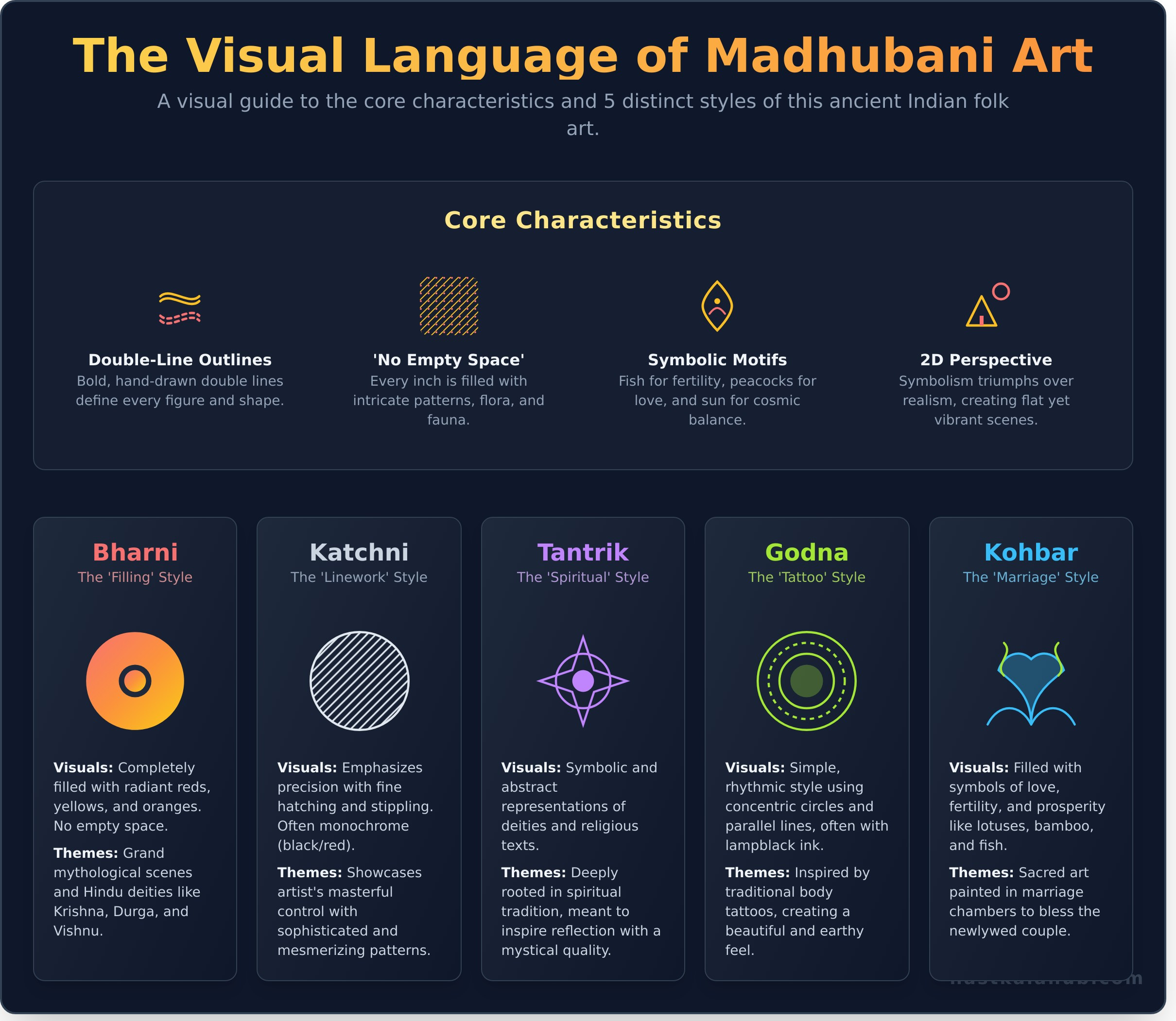
To truly appreciate a Madhubani painting is to understand its unique visual dialect. Every canvas is a celebration of life, defined by bold, double-line outlines and intricate geometric patterns that command attention. This art form follows a powerful ‘no empty space’ philosophy, where every inch of the canvas is joyfully filled with symbolic motifs-from fish representing fertility and peacocks signifying love to sun and moon motifs that evoke cosmic balance. These defining characteristics of Madhubani art create a flat, two-dimensional perspective where symbolism triumphs over realism. This vibrant language is expressed through five major traditional styles, each telling a different story.
Bharni: The ‘Filling’ Style
The name Bharni means ‘filling,’ and this style is a true festival of color. Dominated by radiant reds, yellows, and oranges, Bharni paintings are completely filled in, leaving no blank space. Traditionally practiced by upper-caste women, these artworks often depict grand mythological scenes and Hindu deities like Krishna, Durga, and Vishnu. This style brings divine stories to life with incredible energy and passion, making it one of the most recognized forms of this folk art.
Katchni: The ‘Linework’ Style
In stunning contrast, Katchni, or ‘linework,’ emphasizes precision and delicate detail. This style relies on intricate, fine hatching and stippling rather than bold color fills. Often created using just one or two colors-typically black and red from natural sources-Katchni art showcases the artist’s masterful control. The elaborate patterns and meticulously drawn figures create a sophisticated and mesmerizing aesthetic that feels both ancient and incredibly modern.
Tantrik, Godna, and Kohbar Styles
Beyond the two most famous styles, three other forms of Madhubani painting showcase the art’s diverse cultural roles:
- Tantrik: Rooted in spiritual tradition, this style features symbolic and abstract representations of Hindu deities and religious texts, often with a powerful, mystical quality meant to inspire deep reflection.
- Godna: Inspired by traditional body tattoos, Godna is a simpler style using concentric circles and parallel lines. It often uses bamboo pens and lampblack ink, creating a beautifully rhythmic and earthy feel.
- Kohbar: This is the sacred art of marriage. Painted in the nuptial chamber (kohbar ghar), it is filled with symbols of love, fertility, and prosperity-like lotuses, bamboo, and fish-to bless the newlywed couple.
Decoding the Canvas: Common Themes and Powerful Symbolism
A Madhubani painting is never just a decoration; it is a vibrant story, a heartfelt prayer, or a powerful blessing captured in bold lines and brilliant colors. Each piece celebrates the profound and harmonious relationship between humanity, nature, and the divine. The artists draw from a rich well of shared cultural narratives, translating ancient tales and daily rituals into a timeless visual language. By understanding these core themes, you can appreciate the deeper meaning behind every stroke.
The subjects are typically categorized into three main areas: mythology, nature, and scenes from daily life, each filled with its own unique set of powerful symbols.
Mythology and Divine Figures
Spirituality is the soul of this art form. The most cherished scenes are drawn from epic Hindu texts, especially the Ramayana. The wedding of Lord Rama and Sita is a recurring and beloved theme, symbolizing divine union and righteousness. You will also find enchanting depictions of Lord Krishna with Radha, representing eternal love, and powerful portrayals of Shiva-Parvati, Durga, Lakshmi, and the auspicious Lord Ganesha, each invoking blessings of power, prosperity, and protection.
Symbols of Nature and Prosperity
In the world of Madhubani, nature is alive with meaning. Every bird, fish, and flower is a symbol that adds layers of significance to the artwork. Understanding this symbolic vocabulary unlocks a new level of appreciation for each madhubani painting. The most common natural motifs include:
- Fish: A powerful symbol of fertility, abundance, and good luck. Its presence signifies the start of a prosperous new venture.
- Peacock: Representing divine love, beauty, and romance, the peacock is a celebratory figure often associated with Lord Krishna.
- Sun and Moon: These celestial bodies are depicted as divine sources of life and energy. The Sun symbolizes power and vitality, while the Moon represents calm and cosmic balance.
- Tree of Life: A central and intricate motif, this tree symbolizes life, growth, and the connection between heaven, earth, and the underworld.
By learning to read these visual cues, you can connect more deeply with the artist’s intention and the cultural heritage they wish to share. Discover pieces that tell these vibrant stories in our curated collection of authentic art.
How to Choose and Style Madhubani Art for the Modern Home
Bringing a piece of this timeless art into your home is more than a decor choice-it’s a celebration of culture, storytelling, and vibrant style. But how do you select the perfect piece and make it shine in a contemporary setting? Let this guide inspire you to find a madhubani painting that speaks to your soul and elevates your space with elegance and meaning.
Identifying Authentic Madhubani Paintings
An authentic, handmade painting carries the unique spirit of its creator. Unlike mass-produced digital prints, it has a distinct character that tells a story of tradition and skill. When choosing your art, look for these tell-tale signs of genuine craftsmanship:
- Embrace Imperfection: Tiny variations in line thickness or slight color bleeds are not flaws; they are the beautiful, human markers of a piece made entirely by hand.
- Intricate Details: True Madhubani art is renowned for its dense patterns (bharni and kachni). Look for delicate, double-lined borders and complex geometric fills that showcase the artist’s patience and precision.
- The Artist’s Mark: Many artisans sign their work, adding to the piece’s unique story and provenance.
Styling Tips for Your Space
Madhubani’s bold colors and rich symbolism integrate beautifully into various decor styles, from eclectic to minimalist. It’s all about creating balance and letting the art shine.
- Create a Focal Point: Let a large, dramatic painting be the star of your living room or entryway. Its vibrant energy will instantly draw the eye and spark conversation.
- Build a Gallery Wall: Group smaller, complementary pieces to create a stunning visual narrative. Mix themes like nature and mythology for a dynamic, curated display.
- Add a Minimalist Pop: In a neutral or minimalist room, a single Madhubani piece adds a powerful burst of color and cultural depth without overwhelming the serene aesthetic.
- Decorate with Intention: Choose symbols that align with the room’s energy. A painting of Lakshmi, the goddess of prosperity, is perfect for a home office, while a fish, a symbol of good luck, suits a family space.
Celebrate Tradition with Hast Kala Hub
At Hast Kala Hub, we are passionate about preserving heritage by connecting you with the artisans who create these masterpieces. Each madhubani painting in our collection is an authentic expression of devotion, made with passion and rooted in centuries of tradition. We curate pieces that blend timeless artistry with a modern aesthetic, ensuring you find more than just art-you find a story worth celebrating.
Explore our collection and find your perfect Madhubani painting today!
Celebrate Tradition: The Enduring Magic of Madhubani Art
From its mythical origins in the land of Sita to its vibrant presence in contemporary homes, the madhubani painting is a true celebration of life, nature, and devotion. Each piece tells a story through intricate lines, bold natural colors, and powerful symbolism, transforming a simple wall into a canvas of cultural heritage. Understanding its five distinct styles and rich visual language allows you to appreciate this art form not just for its beauty, but for the profound legacy it carries.
Are you ready to bring this timeless elegance into your space? We source our art directly from talented artisans who pour their hearts into every brushstroke. Our vibrant collection features a stunning array of themes and styles, ensuring you find the perfect piece to express your personality. Discover authentic Madhubani paintings, made with passion. Shop the collection!
Celebrate tradition and artistry in your home, and let your walls tell a story as vibrant as you are.
Frequently Asked Questions
What are the main colours used in Madhubani painting?
Celebrate the vibrant, earthy palette of Madhubani art! Traditionally, artists create a stunning spectrum from nature’s own gifts. The main colours are derived from organic sources: deep black from soot, brilliant yellow from turmeric, rich red from sandalwood, serene blue from indigo, and lush green from crushed leaves. This use of natural dyes gives each authentic madhubani painting its unique, soulful character and connects it directly to the earth.
How can you tell if a Madhubani painting is authentic?
Discover true artistry by observing the details. An authentic piece is typically created on handmade paper or cloth, not a smooth, machine-made surface. Look for the subtle imperfections and rich textures of natural dyes, rather than the flat, uniform finish of acrylics. Genuine works feature intricate, hand-drawn lines made with nibs or twigs, often showcasing the signature double-line border. These details reflect the passion and skill of the artisan.
Is Madhubani art expensive?
Investing in Madhubani art is an accessible luxury. The price of a piece varies widely based on its size, the intricacy of the design, the materials used, and the renown of the artist. You can find charming, smaller works that are quite affordable, making it easy to start a collection. Larger, more complex masterpieces by celebrated artists are considered valuable investments, reflecting the immense time and skill poured into their creation. There is a piece for every admirer.
Which paper is best for Madhubani painting?
The perfect canvas for this art form is traditionally handmade paper. Artisans cherish cotton rag paper for its slightly textured surface, which beautifully absorbs and holds natural dyes without bleeding. This material adds to the artwork’s authentic, rustic charm. For contemporary artists, high-quality, thick watercolor paper (300 GSM or higher) or even canvas boards are also excellent choices, offering durability and a superb foundation for the intricate linework and vibrant colours.
What is the difference between Madhubani art and Kalamkari art?
These are two distinct tales of Indian heritage. Madhubani, from Bihar, uses twigs, fingers, and nib-pens to create intricate geometric patterns and scenes from mythology and nature. Its style is characterized by bold outlines and flatly filled colours. Kalamkari, from Southern India, uses a bamboo “kalam” pen for free-flowing lines and dyeing. It often depicts epic narratives like the Ramayana in a continuous, detailed style, similar to a tapestry.
How do I care for my Madhubani painting?
Cherish your art for generations with simple, proper care. Always display your painting away from direct sunlight and high-humidity areas to prevent the natural colours from fading or damage. Framing the artwork behind UV-protective glass is the best way to shield it from dust and moisture. To clean, gently wipe the frame and glass with a soft, dry cloth. Never use water or chemical cleaners directly on the painting’s surface.



