
Have you ever been captivated by a painting of Lord Shiva, only to feel a bit lost in its rich, powerful symbolism? The world of Shiva and his divine representations is vast and beautiful, but it can also feel complex. Choosing a piece of art for your home is a deeply personal act, especially one that carries such profound energy. You want it to resonate, to elevate your space with style, but you might worry about selecting a depiction that doesn’t align with the harmony you wish to create. This uncertainty can hold you back from inviting this incredible spiritual artistry into your life.
Consider this your invitation to explore with confidence and celebrate tradition. We will journey through the elegant meanings behind Shiva’s most iconic symbols, from the mighty trident to the all-seeing third eye. You’ll discover the vibrant stories of his divine family-Parvati, Ganesha, and Kartikeya-and understand their sacred connections. By the end, you will feel inspired and empowered, ready to choose the perfect Shiva painting that not only beautifies your home but also fills it with a powerful, positive, and deeply personal energy.
Key Takeaways
- Discover Shiva’s multifaceted nature beyond a single identity, from the serene ascetic to the powerful Cosmic Dancer.
- Explore the sacred connection between Shiv and his consort Parvati to understand the perfect balance of universal energies.
- Learn to decode the rich symbolism in Shiva’s art, from his trident and serpent to the crescent moon on his head.
- Choose the right form of Shiva for your home to cultivate specific energies, whether you seek peace, focus, or family harmony.
Who is Shiva? Understanding the Destroyer, Ascetic, and Dancer
In the grand tapestry of Hindu spirituality, few deities command as much reverence and fascination as Shiva. As one of the three principal gods in the Trimurti-along with Brahma the creator and Vishnu the preserver-Shiva holds the powerful and complex role of the destroyer. But this destruction is not one of chaos; it is a vital, purifying force that dissolves illusion and ego to pave the way for new creation. For those asking the fundamental question, Who is Shiva?, he is a being of profound duality: the ultimate ascetic lost in meditation, yet also the cosmic dancer who animates the universe. The artistic depictions of Shiv and the divine energy he represents are a timeless source of inspiration and style.
The Supreme Ascetic: Shiva in Deep Meditation
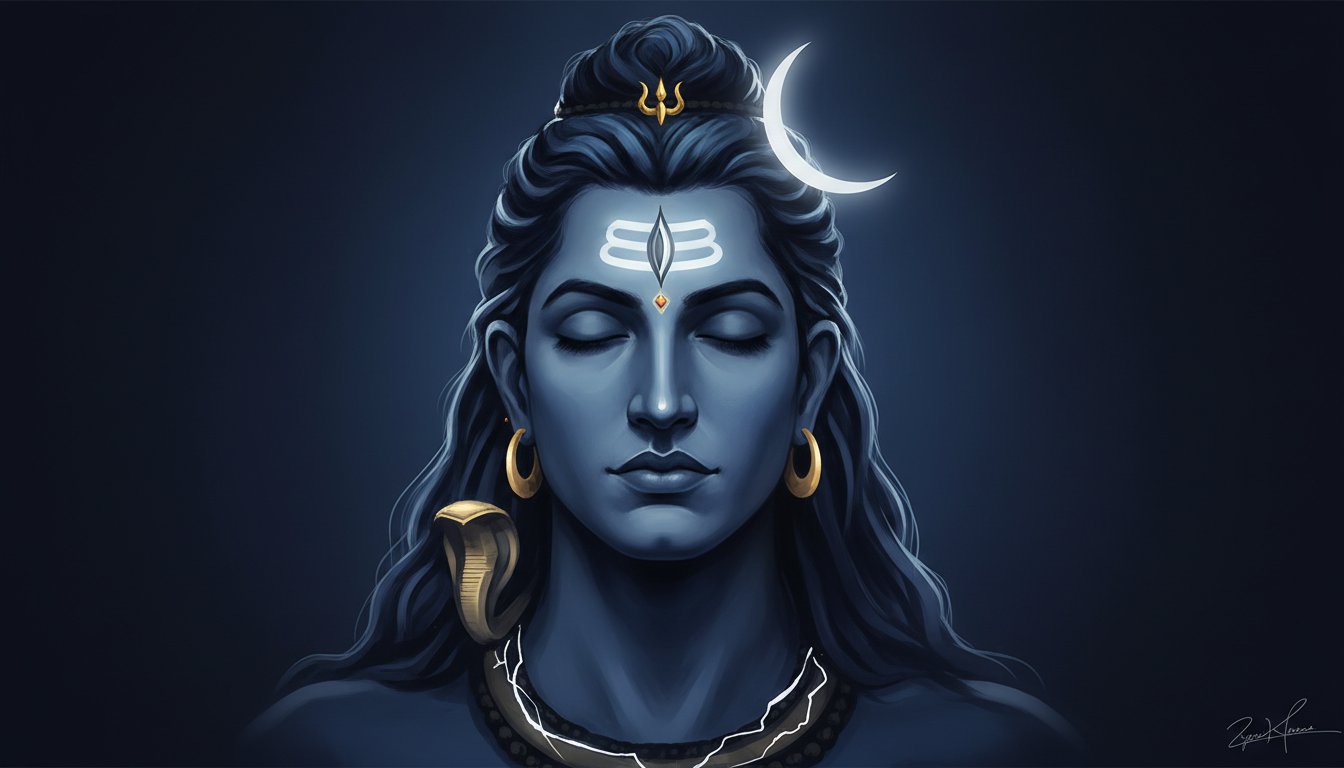
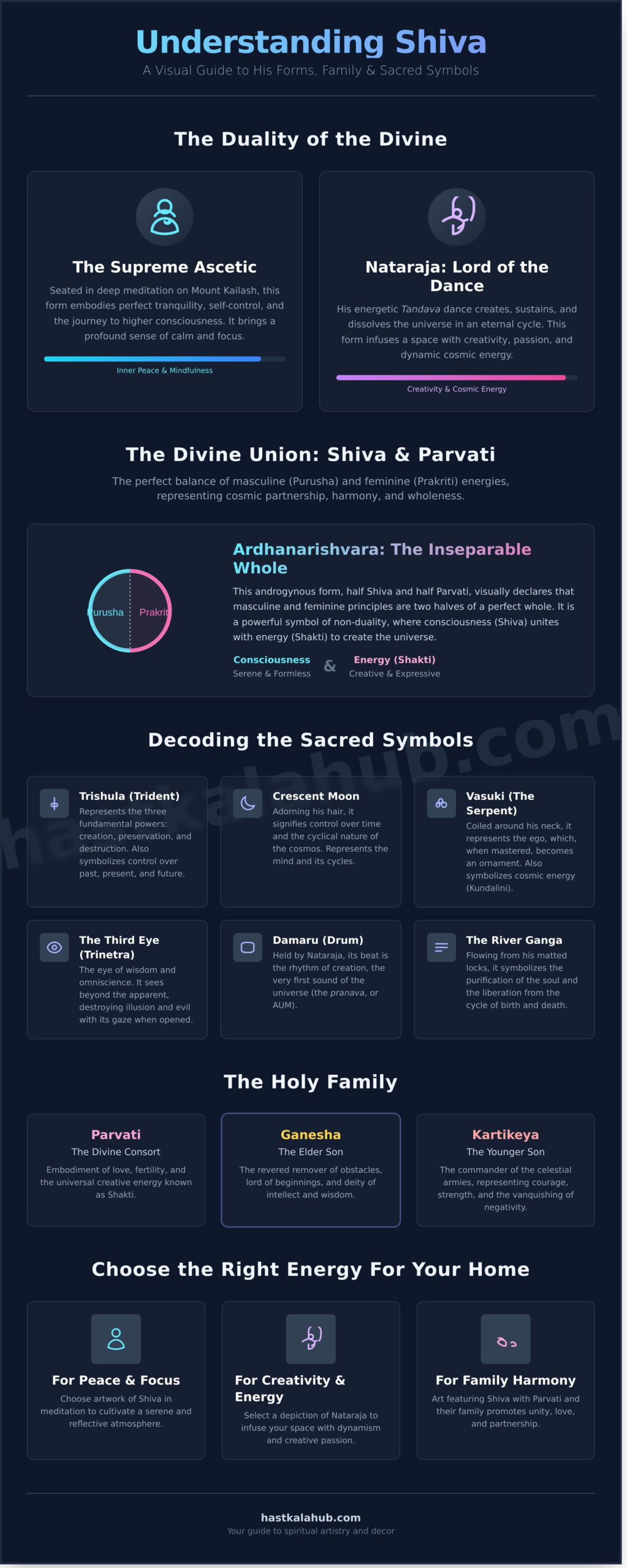
Perhaps the most iconic image of Shiva is of him seated in deep meditation atop the snowy peaks of Mount Kailash. With a serene expression, closed eyes, and the crescent moon adorning his matted hair, this form embodies perfect tranquility. It represents the power of self-control, inner peace, and the journey toward higher consciousness. This depiction of Shiva is an elegant and powerful choice for spaces dedicated to mindfulness, yoga, or quiet reflection, bringing a sense of profound calm to your decor.
Nataraja: The Lord of the Cosmic Dance
In vibrant contrast, the form of Nataraja reveals Shiva as the Lord of the Cosmic Dance. His energetic Tandava is the dance that creates, sustains, and ultimately dissolves the universe in an eternal cycle. Every element is symbolic: the drum in his hand beats the rhythm of creation, while the flame represents destruction. Surrounded by a ring of fire, Nataraja’s image is a celebration of cosmic energy and rhythm. An art piece featuring this form infuses any space with creativity, passion, and a dynamic, unstoppable spirit.
The Destroyer of Evil: Shiva’s Fierce Forms
While less common in home decor, Shiva’s fierce manifestations, like Bhairava, are artistically significant. These forms are not about malevolence but about the focused destruction of evil, ignorance, and negativity. They are protectors, vanquishing demons and removing obstacles from the paths of devotees. This powerful aspect of Shiv and his role as a guardian adds another layer of depth to his character, reminding us that transformation sometimes requires a formidable force to clear the way for peace and renewal.
The Divine Union: Shiva and Parvati, the Cosmic Couple
When one explores the world of Hindu mythology, the most profound answer to the query “shiv and…” is always Parvati. She is the divine consort, the embodiment of love, fertility, and unwavering devotion. Parvati, also known as Shakti, is the active energy and power of the universe. Their relationship is celebrated as the ideal balance of masculine (Purusha) and feminine (Prakriti) energies, a cosmic partnership where one cannot exist without the other. This sacred union symbolizes a fundamental truth: pure consciousness (Shiva) is serene and formless until it unites with divine energy (Shakti), which gives it expression and the power to create.
The Story of Their Love and Marriage
The timeless love story of Shiv and Parvati is a cornerstone of Hindu lore. After the self-immolation of his first wife, Sati, a grief-stricken Shiva retreated into deep meditation. Sati was reborn as Parvati, who undertook severe asceticism to win the heart of the reclusive god. Their eventual marriage is a celebrated event, symbolizing the triumph of love and devotion. This union coaxed Shiva out of his isolated asceticism and into the role of a householder, engaging with the world. Art beautifully captures this domestic bliss, often depicting the divine couple on Mount Kailash, radiating marital harmony and serene partnership.
Ardhanarishvara: The Union of Shiva and Parvati in One Form
Perhaps the most striking artistic representation of their unity is Ardhanarishvara-an androgynous form that is half Shiva and half Parvati. This powerful image visually declares that the masculine and feminine principles are inseparable, two halves of a perfect whole. The Ardhanarishvara form teaches a profound lesson in non-duality, showing that the universe is a synthesis of opposites. It is a vibrant, elegant symbol of wholeness, where seemingly contrary forces like creation and destruction, or serenity and power, merge into one balanced existence. While their union represents creative harmony, Shiva’s individual power is famously captured in other dynamic forms, such as the one detailed by The Met as Shiva as the Cosmic Dancer (Nataraja).
Symbolism in Shiva-Parvati Paintings
Paintings of Shiva and Parvati are rich with evocative symbols that tell a deeper story. Look for Nandi, the devoted bull and Shiva’s mount, symbolizing strength and dharma. Parvati is often accompanied by her mount, a lion or tiger, representing her fierce, protective nature as Shakti. The affectionate glances, gentle touches, and shared serenity in these artworks convey a deep sense of mutual respect and eternal love. Celebrate this sacred bond in your own space. Discover elegant paintings of Shiva and Parvati.
The Holy Family: Shiva with Ganesha and Kartikeya
While often revered as the supreme ascetic meditating in the Himalayas, Shiva also embodies the perfect householder. This beautiful duality is celebrated in depictions of the ‘Shiva Parivar’-the divine family. Here, Shiva is seen with his consort Parvati and their two sons, Ganesha and Kartikeya. These artworks are more than just religious icons; they are vibrant symbols of family unity, prosperity, and the collective strength to overcome any obstacle. They transform a house into a home filled with divine grace and harmony.
Shiva and Ganesha: The Remover of Obstacles
The relationship between shiv and Ganesha is one of mythology’s most cherished tales. The story of Ganesha’s creation by Parvati and his subsequent rebirth with an elephant head establishes him as the beloved son who earned his father’s respect. As the Remover of Obstacles and the god of new beginnings, Ganesha’s presence is essential for success. In art, their bond is depicted with tenderness and affection, showcasing a powerful father-son dynamic. A Ganesha painting with Shiva is a potent symbol for inviting wisdom and clearing the path to success in any new venture.
Shiva and Kartikeya: The God of War
Shiva’s elder son, Kartikeya (also known as Murugan or Skanda), is the personification of divine strength. As the commander-in-chief of the celestial armies, he represents unparalleled courage, focus, and the power to vanquish negativity. Artworks often portray him as a radiant, youthful warrior holding his invincible spear, the Vel. His presence alongside Shiva in family portraits symbolizes the protective strength and victorious energy that safeguards a family from harm.
Interpreting ‘Shiva Parivar’ Artwork
A painting of the Shiva Parivar is considered a complete spiritual package, bringing a confluence of divine blessings into your space. These pieces are highly auspicious and are cherished for their ability to foster a harmonious home environment. When choosing a piece for your decor:
- Look for compositions that feel balanced and evoke a sense of peace.
- Notice the expressions, which should radiate love and tranquility.
- Consider placing it in a central area, like the living room or entryway, to bless all who enter.
Decoding the Symbols: A Guide to Shiva’s Attributes in Art
A painting of Lord Shiva is a universe of meaning. It’s more than just a beautiful image for your wall; it’s a vibrant celebration of profound spiritual philosophy. Every element, from the crescent moon on his head to the tiger skin he sits on, tells a powerful story. Understanding these symbols transforms your viewing experience, allowing you to appreciate the art on a much deeper level. This guide empowers you to choose a piece that truly resonates with your spirit and elevates your space with intention.
The Third Eye and the Crescent Moon
The Third Eye, or Trinetra, centered on Shiva’s forehead, is a powerful symbol of spiritual wisdom and higher consciousness. It represents the power to see beyond the obvious and destroy the ego and ignorance with a single glance. The serene crescent moon adorning his hair signifies mastery over time and the cyclical nature of life. It’s a beautiful reminder of the calm, peaceful mind one can achieve through meditation and self-control.
The Trishula (Trident) and Damaru (Drum)
In his hands, Shiva holds two iconic attributes. The Trishula, or trident, represents his control over the three fundamental states of being: waking, dreaming, and sleeping. It is the divine weapon he wields to vanquish negativity and evil. The hourglass-shaped Damaru drum is the source of creation itself. Its vibrant rhythm is said to have produced the first cosmic sound, ‘Om’, setting the entire universe into motion.
The Serpent, Ganga, and Tiger Skin
The serpent, Vasuki, coiled around his neck, symbolizes mastery over fear and the ego-forces that he has tamed completely. The sacred River Ganga, flowing from his matted locks, represents the eternal flow of spiritual purity that washes away sins. When you see depictions of shiv and his powerful stance on a tiger skin, it signifies his absolute command over nature and all forms of primal energy, which he has conquered and transcended.
As you browse for the perfect Shiva painting, look for these powerful symbols. Each one adds a unique layer of energy and meaning to the artwork. Let this knowledge guide you to a piece that not only beautifies your home but also inspires your soul. Ready to find your masterpiece? Explore our curated collection of divine art and bring home a symbol of timeless power.
How to Choose and Place Shiva Artwork in Your Home
Understanding the rich symbolism of Shiva is the first step. Now, let’s bring that profound energy into your home. Choosing the right Shiva artwork is about more than aesthetics; it’s about setting an intention for your space. The form of Shiva you select can dramatically influence the energy of a room. Whether you prefer the intricate detail of a traditional Pichwai painting or a chic, modern abstract, matching the depiction to your intention is key to creating a truly vibrant and meaningful home.
For Peace and Meditation: The Ascetic Shiva
To cultivate a serene atmosphere, choose a painting of Shiva in a meditative pose. This form, the ultimate ascetic, is perfect for a study, home office, or a personal meditation corner. His tranquil presence encourages focus, deep introspection, and a profound sense of calm. This artwork transforms your personal space into a sanctuary for thought and peace, helping you disconnect from chaos and reconnect with your inner self.
For Harmony and Love: The Divine Family
Celebrate love and togetherness with an elegant painting of the divine family. A depiction of Shiv and Parvati, or the complete Shiva Parivar with Ganesha and Kartikeya, radiates warmth and unity. This artwork is ideal for the living room or main family gathering area, fostering an energy of deep connection and familial well-being. It serves as a beautiful, daily reminder of the power of love. Bring harmony to your home with a Shiva family painting.
For Energy and Protection: The Dynamic Forms
For spaces that demand energy and creativity, choose one of Shiva’s dynamic forms. A vibrant Nataraja painting, capturing the cosmic dance of creation, can invigorate a creative studio or performance space. Alternatively, a powerful depiction of Shiva with his Trishula placed near the entrance of your home can create a feeling of divine protection. These powerful forms are best placed where action, inspiration, and protective energy are desired.
Celebrate the Divine: Welcome Shiva’s Energy Into Your Home
From the cosmic dance of Nataraja to the serene meditation of the great ascetic, Shiva’s presence in art is a powerful celebration of life’s cyclical nature. We’ve journeyed through his many forms and uncovered how each symbol-the trident, the crescent moon, the serpent-tells a profound story of transformation and divine power. Understanding the divine union between shiv and Parvati, and his role as a loving father, allows us to connect with these artworks on a much deeper level. Choosing a piece of Shiva art is about inviting a timeless source of strength, tranquility, and inspiration into your personal sanctuary.
Ready to bring this divine energy into your home? Explore our vibrant collection of Shiva paintings, made with passion by Indian artisans. Discover authentic, handmade artworks in a diverse collection of styles, from the traditional to the contemporary. With our commitment to worldwide shipping and 100% risk-free shopping, finding the perfect piece to elevate your space has never been easier or more secure.
Celebrate your connection to the divine and let the power of Shiva transform your home today.
Frequently Asked Questions
What is the key difference between Lord Shiva and Lord Vishnu?
Lord Shiva is the transformer within the Hindu Trimurti, representing the powerful cycle of destruction and recreation. He is often depicted as a meditative ascetic, symbolizing detachment and cosmic consciousness. In contrast, Lord Vishnu is the preserver and protector of the universe, upholding cosmic order and righteousness (dharma). Artistically, this results in Shiva’s raw, dynamic imagery versus Vishnu’s serene and regal depictions, each celebrating a different aspect of divine energy.
Why is Shiva often depicted with a blue throat (Neelkanth)?
The story of Neelkanth, or ‘the blue-throated one,’ is a powerful tale of compassion. During the churning of the cosmic ocean, a deadly poison emerged that threatened all of creation. To save the world, Lord Shiva consumed it. His consort, Parvati, held his throat to stop it from spreading, which turned it a vibrant blue. This iconic image in art symbolizes his ability to absorb negativity and protect the universe, showcasing immense self-sacrifice.
Is it auspicious to keep a Shiva painting or statue at home according to Vastu?
Yes, it is considered highly auspicious. For attracting positive energy and peace, Vastu Shastra recommends placing an artwork of Shiva in a meditative or calm posture. The ideal location is the northeast corner of your home, also known as the Ishan corner, which is sacred and perfect for spiritual focus. It is best to avoid depictions of Shiva in his fierce (Rudra) forms in living spaces to maintain a serene and harmonious atmosphere in your home.
What does the ‘Om Namah Shivaya’ mantra mean?
‘Om Namah Shivaya’ is one of the most sacred mantras in Hinduism. ‘Om’ is the primordial sound of the universe-the vibration from which all creation emerged. ‘Namah Shivaya’ translates to “I bow to Shiva” or “adoration to Shiva.” Chanting this powerful mantra is an act of reverence that helps purify the mind, calm the senses, and connect the individual’s consciousness with the divine, celebrating the universal energy that Shiva embodies.
Who is Nandi, and why is the bull always depicted with Shiva?
Nandi is the sacred bull who serves as Lord Shiva’s divine vehicle (vahana) and his most devoted follower. As the gatekeeper of Kailash, he symbolizes immense strength, unwavering faith, and pure devotion. In art, Nandi is always shown facing Shiva, representing the ideal devotee whose focus is perpetually fixed on the divine. His presence is a powerful reminder that where there is steadfast devotion, the grace of the divine is always near.
Can someone who is not a Hindu appreciate and display Shiva art?
Absolutely! Art is a universal language that transcends cultural and religious boundaries. The powerful symbolism of Lord Shiva-representing transformation, meditation, and cosmic balance-resonates with people from all walks of life. Appreciating the art of Shiv and its profound themes is a celebration of human creativity and spiritual inquiry. Displaying Shiva art can be a beautiful way to honor its aesthetic elegance, rich history, and the timeless philosophical ideas it represents.



