
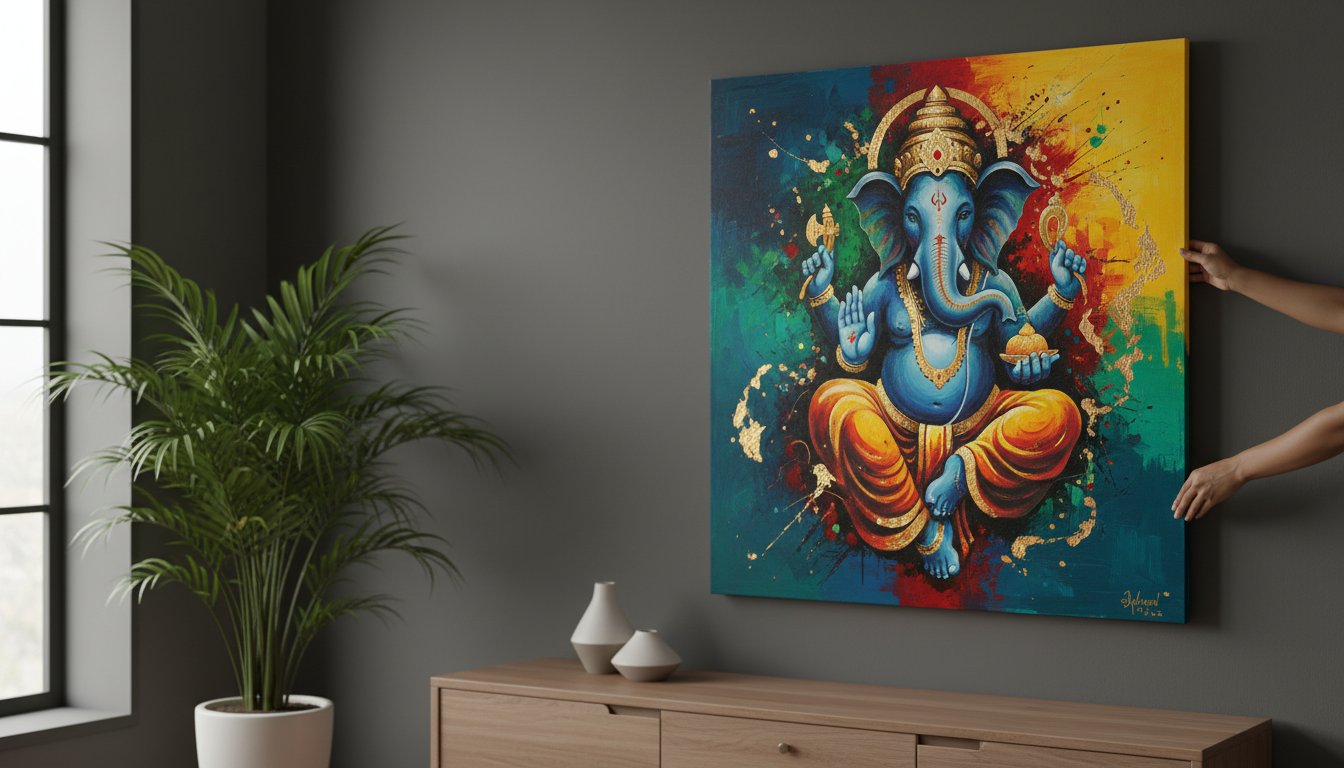
There’s a special magic in a ganesha painting. It’s more than just beautiful art; it’s a vibrant symbol of new beginnings and a powerful remover of obstacles. But have you ever felt drawn to a piece, only to hesitate? You might wonder which pose brings prosperity, what the intricate symbols truly mean, or where to place it to honor its cultural significance. This uncertainty can keep you from bringing this auspicious energy into your home and life.
Celebrate the fusion of divine art and personal style! This guide is your key to unlocking the profound stories behind these sacred artworks. We’ll help you distinguish between authentic art styles and generic prints, understand the meaning of every element, and feel confident in your choice. Prepare to transform your space into a sanctuary of positivity and elegance. Learn how to select and place the perfect piece to invite good fortune and clear the path to your goals.
Who is Lord Ganesha? The Beloved Remover of Obstacles
In the vibrant pantheon of Hindu deities, few figures are as universally cherished and instantly recognizable as the elephant-headed god of good fortune. Celebrated as the son of Lord Shiva and Goddess Parvati, Lord Ganesha is one of the most revered deities, worshipped by millions as the divine force that clears the path to success. His unique form is a powerful symbol of wisdom, prosperity, and the ability to overcome any challenge that lies ahead.
Ganesha’s appeal transcends religion, making him a global icon of auspiciousness and intellectual prowess. He embodies the perfect balance of strength and gentleness, action and understanding. Whether starting a new business, beginning a journey, or embarking on a creative project, his blessing is sought to ensure a triumphant and obstacle-free outcome. This divine patronage is why a beautiful ganesha painting is often the first piece of art to grace a new home or office, serving as a constant source of inspiration and positive energy.
The God of Auspicious Beginnings
In Hindu tradition, every significant event begins with an invocation to Ganesha. This practice stems from his most famous title, Vighnaharta, which translates to the “Remover of Obstacles.” He is believed to govern the gateways of fortune, clearing both material and spiritual hurdles. Placing his image in a space is a way to invite this protective energy, ensuring that new ventures are blessed with clarity, purpose, and a smooth journey toward success.
Ganesha’s Role as a Patron of Arts and Sciences
Beyond removing obstacles, Ganesha is the patron of intellect, letters, and learning. Legend tells of him acting as the divine scribe, breaking off one of his own tusks to pen the epic saga, the Mahabharata, as it was dictated by the sage Vyasa. This profound act positions him as a muse for artists, writers, and scholars. A ganesha painting is therefore more than just decoration; it is a celebration of creativity, knowledge, and the passionate pursuit of wisdom.
Decoding the Rich Symbolism in Every Ganesha Painting
A Ganesha painting is far more than a beautiful piece of art; it is a vibrant canvas of profound philosophical meaning. Every curve, color, and object depicted tells a story of wisdom, resilience, and spiritual guidance. To truly appreciate this sacred art, we must look beyond the surface and discover the timeless lessons embedded in Ganesha’s iconic form. Understanding this iconography transforms a decorative piece into a source of daily inspiration.
The Head, Trunk, and Tusks
The most striking features of Lord Ganesha carry deep significance, representing the qualities we can aspire to cultivate in our own lives.
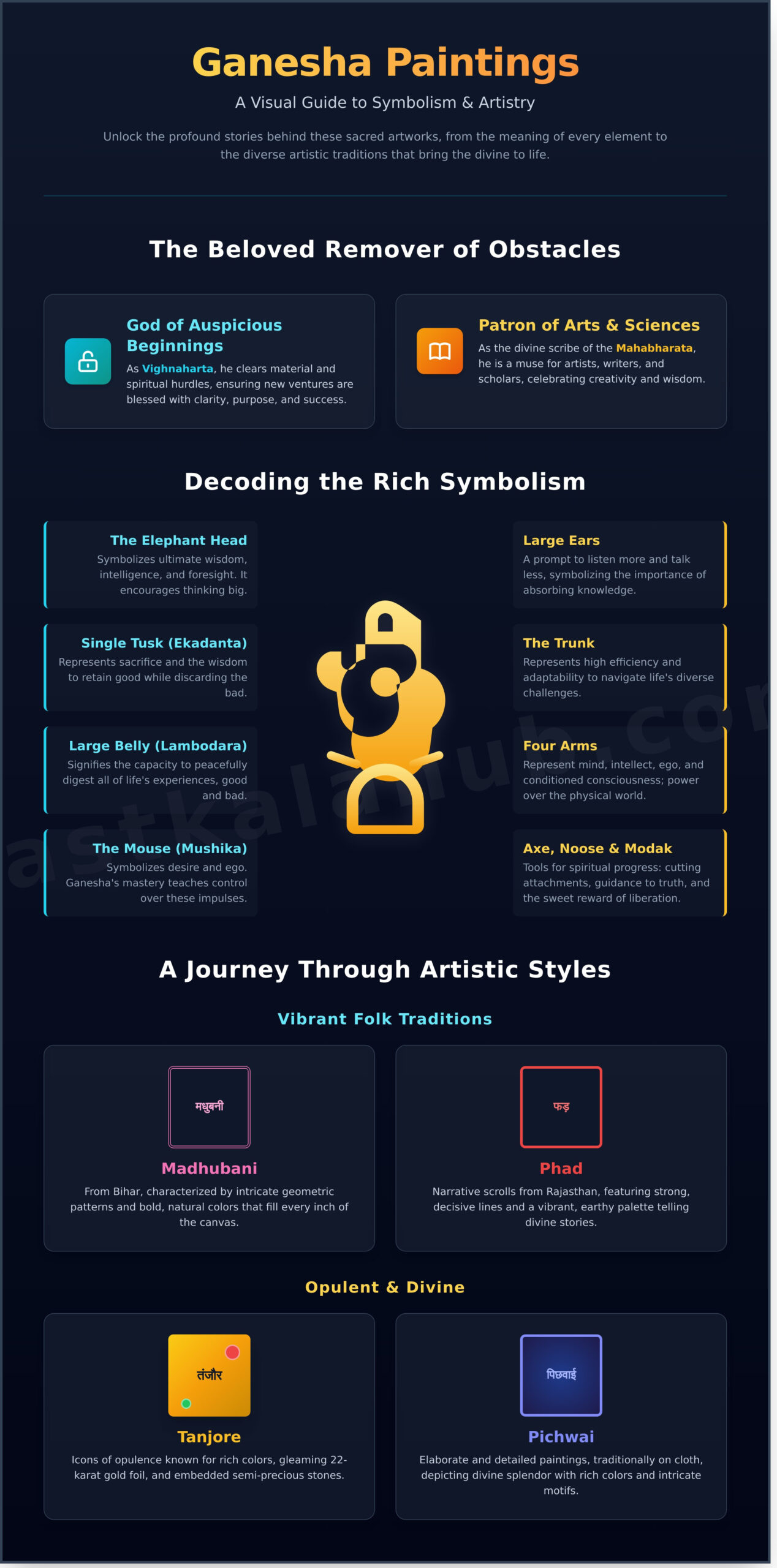
- The Elephant Head: This is the ultimate symbol of wisdom, intelligence, and foresight. It encourages thinking big and developing a deep understanding before acting.
- The Trunk: A marvel of nature, the trunk represents incredible adaptability and efficiency. It can uproot a tree or pick up a delicate flower, teaching us to be versatile in navigating life’s challenges.
- The Single Tusk (Ekadanta): Ganesha’s broken tusk signifies sacrifice. It is a powerful reminder to retain the good and discard the bad, whether in our thoughts, habits, or relationships.
The Body and Attributes
Ganesha’s divine body is a map to living a balanced and fulfilling life. Each attribute offers a lesson in self-awareness and inner peace.
- Large Ears: A prompt to listen more and talk less. They symbolize the importance of absorbing knowledge and paying attention to the needs of others.
- Large Belly (Lambodara): This represents the capacity to peacefully digest all of life’s experiences-both good and bad-with tranquility and acceptance.
- Four Arms: These represent the four inner attributes of the subtle body: mind, intellect, ego, and conditioned consciousness. The rich symbolism of Ganesha, as detailed by cultural institutions like the Asian Art Museum, explains how these arms represent his divinity and power over the physical world.
Symbolic Objects and Companions
The items Ganesha holds and the companion at his feet are central to the message in every ganesha painting. They are tools for spiritual progress.
- The Modak (Sweet): This sweet treat represents the ultimate reward of the spiritual journey-the sweetness of self-realization and liberation (moksha).
- The Mouse (Mushika): The tiny mouse at his feet symbolizes desire and the ego. By mastering this vehicle, Ganesha teaches us to control our own wandering desires.
- The Axe and Noose: He holds an axe (parashu) to cut worldly attachments and a noose (pasha) to gently pull devotees closer to the path of truth.
A Journey Through Artistic Styles: Ganesha in Indian Art
Lord Ganesha is a beloved muse across India’s vibrant artistic landscape. From the rustic villages of Bihar to the grand temples of the South, artists have depicted his divine form for centuries. Each style infuses the deity with a unique cultural flavor and aesthetic, transforming a simple canvas into a celebration of faith and artistry. Understanding these styles helps you choose a ganesha painting that truly resonates with your personal taste and home decor.
Vibrant Folk Traditions: Madhubani and Phad Paintings
Discover the earthy charm of India’s folk traditions. Madhubani art from Bihar brings Ganesha to life with intricate geometric patterns and bold, natural colors that fill every inch of the canvas. In contrast, Phad paintings from Rajasthan are narrative scrolls characterized by strong, decisive lines and a vibrant palette, telling stories of divine glory. These styles offer a rustic, authentic connection to India’s artistic soul.
Opulent and Divine: Tanjore and Pichwai Art
For those who seek accessible luxury and divine splendor, the classical forms of Tanjore and Pichwai are unparalleled. A Tanjore Ganesha is an icon of opulence, renowned for its rich colors, gleaming 22-karat gold foil, and embedded semi-precious stones. The sacred tradition of depicting deities in such magnificent forms, as explored in The British Museum’s exhibition on sacred Indian art, is perfectly captured in these works. Similarly, Pichwai art from Nathdwara is deeply devotional, often placing Ganesha in lush, festive scenes that radiate joy and sacred energy.
Modern and Abstract Interpretations
Contemporary artists continue to be inspired by Ganesha, reinterpreting his form and energy for the modern home. These works move beyond traditional iconography to explore his essence through fluid watercolors, bold oil on canvas, and minimalist abstract forms. A modern Ganesha painting is perfect for those who desire spiritual art that complements a chic, contemporary aesthetic, blending timeless symbolism with on-trend design.
Ready to find the perfect piece that speaks to you? Explore Ganesha paintings in a variety of artistic styles.
How to Choose the Perfect Ganesha Painting for Your Intention
Choosing a ganesha painting is a powerful statement of art and intention. Beyond its stunning aesthetics, each depiction of the beloved deity carries a unique vibration and symbolic meaning. Selecting the right artwork is about aligning its energy with your personal aspirations. Let this guide help you discover a piece that not only beautifies your space but also inspires your journey toward success and fulfillment.
Understanding the symbolism behind Ganesha’s different postures empowers you to make a choice that is both beautiful and meaningful. Align your environment with your goals by selecting a form that resonates with the energy you wish to cultivate.
Seated Ganesha (Lalitasana): For Peace and Calm
The seated Ganesha, often in the Lalitasana pose, represents a state of deep calm and meditative balance. This form radiates tranquility, encouraging a peaceful atmosphere free from stress. It is the perfect choice for spaces dedicated to relaxation and family connection, such as your living room or meditation corner, creating a serene sanctuary within your home.
Dancing Ganesha (Nritya Ganapati): For Creativity and Joy
Vibrant and full of life, the Dancing Ganesha, or Nritya Ganapati, is a celebration of creative energy. This dynamic form symbolizes the cosmic dance of creation and the joyful destruction of obstacles. It is an inspiring addition to an artist’s studio, a home office, or any area where you wish to spark innovation, passion, and a celebratory spirit in your daily life.
Standing Ganesha (Tribhanga): For Energy and Determination
The standing Ganesha, often depicted in the graceful Tribhanga posture, is a symbol of alertness, power, and forward momentum. This assertive form is ideal for energizing a space and promoting decisive action. It is a popular choice for business environments and workplaces, encouraging determination and the right attitude for achieving professional goals. Place it where you need a daily reminder of your own strength and potential.
Ultimately, the best ganesha painting for you is one that resonates with your heart and your goals. Whether you seek peace, creativity, or professional success, let the divine form of Ganesha guide you. Ready to find the piece that speaks to your soul? Explore our curated collection and bring home a symbol of good fortune made with passion.
Vastu Shastra: The Art of Placing Your Ganesha Painting for Positive Energy
A beautiful Ganesha painting is more than just decor; it is a powerful emblem of positive energy. To truly harness its auspicious vibrations, we turn to Vastu Shastra, the ancient Indian science of architecture and placement. Following these principles ensures you honor the deity and create a space filled with harmony, success, and divine protection.
Think of it as creating the perfect stage for good fortune to enter your life. Proper placement amplifies the artwork’s energy, transforming your home or office into a sanctuary of well-being. Here are the simple, elegant rules for the modern home.
The Best Directions for Ganesha
The most sacred and powerful directions to place your artwork are the North, Northeast, and East. The Northeast is considered the direction of the divine, linked to wisdom, clarity, and spiritual growth. The East, the direction of the rising sun, symbolizes new beginnings. By placing your art on a northern or eastern wall, you invite these vibrant energies into your space every day.
Ideal Placement in Your Home or Office
Welcome success into every part of your life by choosing the right room. Placing a Ganesha painting at the main entrance of your home acts as a guardian, welcoming positive forces while blocking negativity from entering. In the living room, it fosters peace and harmony among family members. For your workspace or home office, it becomes a beacon of inspiration, helping to remove obstacles and clear the path to professional success.
Where to Avoid Placing Ganesha Art
Just as important as where to place the art is knowing where not to. To maintain the sanctity of the deity and the artwork, avoid these specific locations:
- The South Direction: In Vastu, this direction is associated with the ruler of the netherworld, Yama, making it an inauspicious placement for divine art.
- Areas of Impurity: Never hang Ganesha art in or near bathrooms, laundry rooms, or cluttered spaces like under a staircase. These areas carry negative or transient energy.
- Shared Bathroom Walls: Avoid placing the artwork on any wall that is shared with a bathroom on the other side. This is considered disrespectful and can disrupt the flow of positive energy.
By following these simple Vastu principles, you celebrate the divine energy of Ganesha and fill your home with an abundance of good fortune. Ready to find the perfect piece to energize your space? Explore our curated collection of artisan-crafted art at hastkalahub.com.
Embrace Art, Symbolism, and Good Fortune
A ganesha painting is more than beautiful decor; it is a powerful symbol of new beginnings and prosperity. From understanding the rich symbolism in every brushstroke to choosing an artistic style that speaks to your soul, you now have the knowledge to select a piece that truly resonates. Placing your artwork according to Vastu principles further amplifies its positive energy, transforming your space into a sanctuary of success.
Ready to welcome this divine energy into your life? Each masterpiece in our collection is a celebration of Indian heritage, handcrafted with passion by skilled artisans. We are honored to share these timeless treasures with you. With worldwide shipping on all art, bringing home a symbol of devotion and style is simple.
Discover our vibrant collection of Ganesha paintings and invite good fortune home.
May the presence of Lord Ganesha fill your home with joy, clear your path of obstacles, and inspire every new venture you undertake.
Frequently Asked Questions
What is the significance of the direction Ganesha’s trunk is pointing?
The direction of Ganesha’s trunk holds deep symbolic meaning. A trunk turning to the left (Vamamukhi) represents calmness, peace, and success in worldly life, making it the most common and recommended choice for homes. A trunk turning to the right (Dakshinmukhi) is rarer and more powerful, symbolizing moksha (liberation). This form requires more specific rituals and is often found in temples. A straight trunk signifies that the Sushumna Nadi (central energy channel) is fully open.
Is it okay to gift a Ganesha painting to someone for their new home or business?
Absolutely! Gifting a Ganesha painting is considered one of the most auspicious and thoughtful gestures. It symbolizes your wish for the recipient to have success, prosperity, and the removal of all obstacles in their new venture. It is the perfect celebratory gift for housewarmings (Griha Pravesh), new office inaugurations, weddings, or any significant new beginning. It’s a beautiful way to share blessings and positive energy for their journey ahead.
What color Ganesha painting is best for attracting wealth and prosperity?
For attracting wealth and prosperity, a Ganesha painting featuring vibrant red or orange hues is considered highly auspicious. Red, particularly vermilion (sindoor), is strongly associated with the deity and symbolizes positive energy, action, and good fortune. Similarly, orange and saffron shades represent brightness and success. According to Vastu, a white Ganesha painting can also attract wealth, peace, and happiness, making it another excellent choice for your home or office decor.
Can I have more than one Ganesha painting or idol in my house?
Yes, you can certainly have more than one Ganesha painting or idol in your home. There is no rule against celebrating this beloved deity in multiple forms or artistic styles. The most important principle is to treat each piece with respect and reverence. Ensure they are placed in clean, honorable locations, preferably in the north, east, or northeast direction of your home. Avoid placing them in a way where their backs face each other or the main entrance.
What is the difference between Ganapati, Vinayaka, and Ganesha?
While the names are different, Ganapati, Vinayaka, and Ganesha all refer to the same revered elephant-headed deity. These names simply highlight different aspects of his divine character. “Ganesha” means ‘Lord of the Ganas’ (Shiva’s celestial attendants). “Ganapati” translates to ‘Master of the Ganas.’ “Vinayaka” means ‘the one who removes obstacles.’ Each name is a beautiful celebration of his power, wisdom, and role as the remover of difficulties.
How do I care for my Ganesha painting, especially a Tanjore or Pichwai piece?
To preserve the beauty of your artwork, keep it away from direct sunlight, high humidity, and extreme temperatures. For delicate pieces like Tanjore and Pichwai paintings, gentle care is key. Use only a soft, completely dry cloth for dusting. Avoid any chemical cleaners or water, as moisture can damage the gold foil, semi-precious stones of a Tanjore, or the natural pigments on a Pichwai cloth canvas. If your painting is behind glass, simply clean the glass.



