
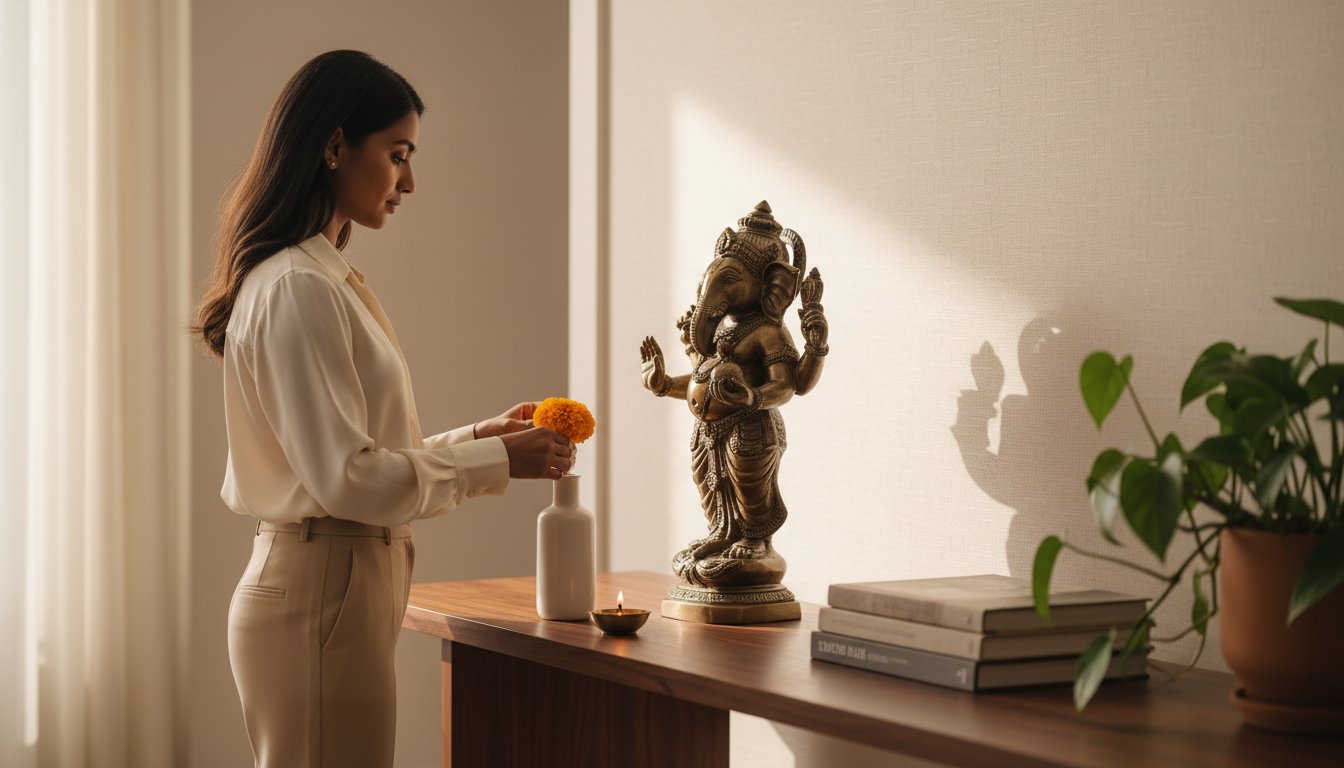
Have you ever been captivated by the vibrant beauty of a Ganesha statue or a Krishna painting, only to feel a wave of uncertainty? You’re drawn to the serene energy, but you’re unsure of the symbolism, overwhelmed by the styles, and afraid of placing a sacred piece disrespectfully. You are not alone in wanting to connect with this divine tradition in a meaningful way.
This is where the celebration of art and spirit begins. Choosing the right hindu artwork is more than just decorating; it’s an invitation for peace, prosperity, and profound energy to enter your home. It’s about finding an authentic piece, made with passion, that tells a story and deeply resonates with your own values and aspirations.
In this guide, we demystify the rich symbolism behind beloved deities. You will discover how to confidently select high-quality art that speaks to you and learn the principles of respectful placement. Get ready to transform your living space into a vibrant sanctuary of elegance and meaning, filled with art you truly understand and cherish.
Key Takeaways
- Learn why authentic hindu artwork is more than decor; it’s a vibrant expression of devotion that elevates your space.
- Match the energy of your room by learning which Hindu deities invite specific blessings like peace, prosperity, or protection.
- Style your home with confidence using our practical tips for creating a space that is both modern and spiritually resonant.
- Shop for divine art online like a pro and discover how to find authentic, high-quality pieces you’ll cherish forever.
What is Hindu Artwork? A Portal to the Divine
More than mere decoration, Hindu artwork is a vibrant expression of devotion, or bhakti. It serves as a sacred portal, translating ancient philosophies and scriptures into tangible forms you can see and feel. Each piece is designed not just to adorn a wall but to connect the viewer with divine concepts. The rich history of Hindu art reveals its ultimate goal: to evoke rasa-a profound aesthetic flavor or emotion that awakens a deeper spiritual consciousness. When you bring this art into your home, you’re inviting a piece of this sacred tradition into your life.
Core Themes and Sacred Symbolism
Hindu art is rich with symbolism, where every motif carries deep meaning. These ancient symbols transform a simple painting or sculpture into a powerful narrative of spiritual truth. Understanding them adds layers of appreciation to each piece.
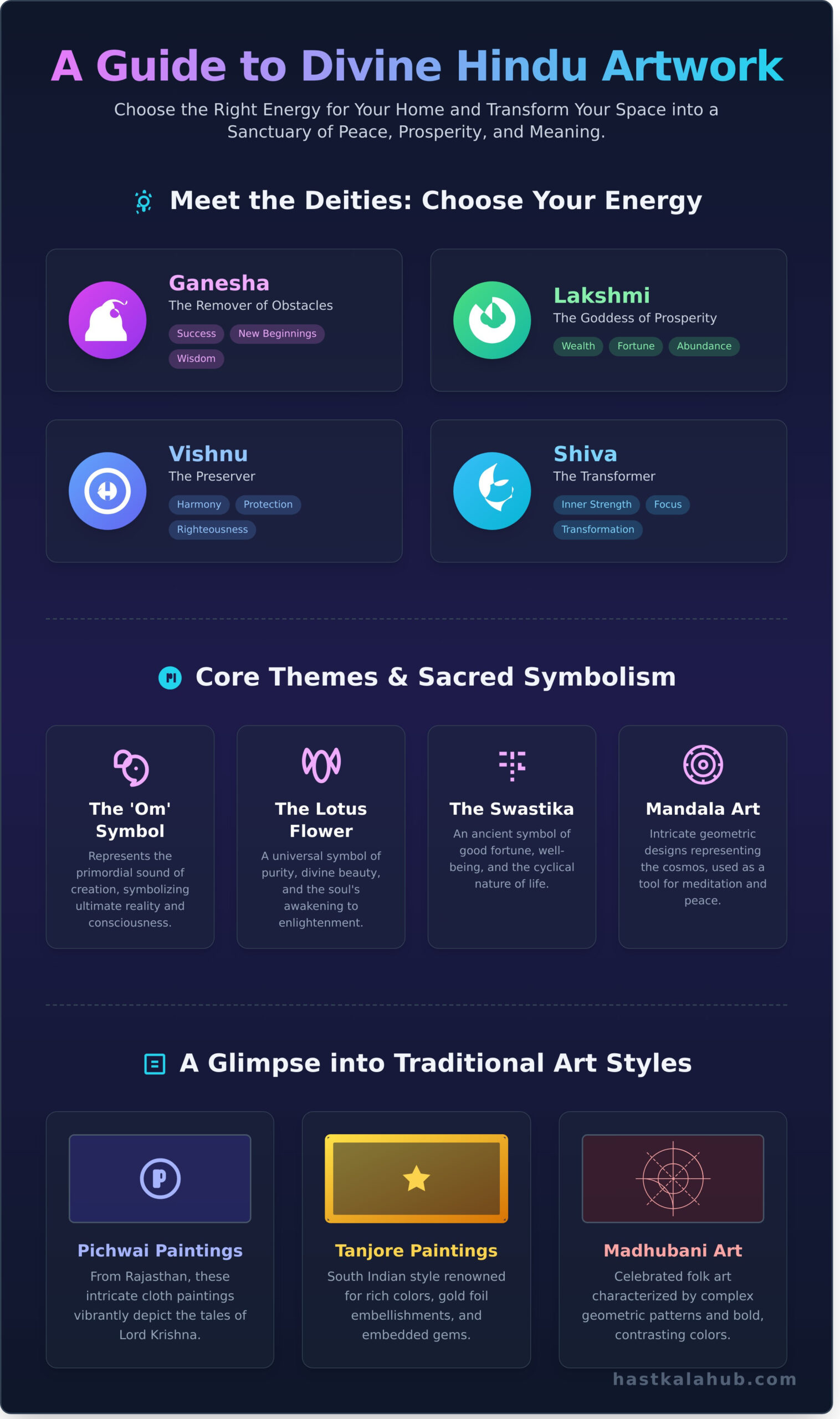
- The Lotus Flower: A universal symbol of purity, divine beauty, and spiritual awakening. It represents the soul’s ability to rise from the mud of materialism into the light of enlightenment.
- The ‘Om’ Symbol: This sacred syllable represents the primordial sound of creation. It is the vibration from which all the universe emerged, symbolizing ultimate reality and consciousness.
- The Swastika: An ancient and auspicious symbol in Hinduism representing good fortune, well-being, and the cyclical nature of life. Its four arms point to the four directions, signifying stability.
- Mandala Art: These intricate geometric designs represent the cosmos. Used as a spiritual tool, a mandala guides the viewer’s focus during meditation, leading to a sense of inner peace.
The Central Role of Deities
At the heart of most hindu artwork are the deities. Gods and goddesses like Krishna, Ganesha, Lakshmi, and Shiva are not just subjects; they are the very soul of the art. Each deity embodies specific virtues, energies, and cosmic powers. An image of Ganesha removes obstacles, while a painting of Lakshmi invites prosperity. These artworks are powerful icons for meditation and worship, acting as a focal point to channel your intentions and connect with divine grace.
A Glimpse into Traditional Art Styles
The diversity of India is reflected in its myriad art forms. Each style offers a unique window into the divine, celebrated for its distinct technique and cultural heritage.
- Pichwai Paintings: Originating from Rajasthan, these intricate cloth paintings vibrantly depict the tales of Lord Krishna, especially his childhood lilas (divine plays).
- Tanjore Paintings: A classical South Indian style renowned for its rich colors, gold foil embellishments, and embedded gems, creating a divine, three-dimensional effect.
- Madhubani Art: This celebrated folk art from Bihar is characterized by its complex geometric patterns and bold, contrasting colors, often telling stories from ancient epics.
Meet the Deities: Choosing the Right Energy for Your Space
Selecting a piece of hindu artwork for your home is more than an aesthetic choice; it’s an invitation to channel a specific divine energy into your life. The vast pantheon of Hindu deities offers a rich tapestry of symbolism, where each god and goddess represents a unique facet of the divine. As detailed in scholarly resources on Hinduism and Hindu Art, these depictions are imbued with spiritual significance, designed to inspire and elevate. This guide will help you choose a deity whose blessings align with your personal goals and aspirations.
The Trimurti: Creation, Preservation, and Transformation
At the core of Hindu cosmology is the Trimurti, the divine trinity responsible for the cosmic cycles of creation, maintenance, and destruction. Each brings a profound and foundational energy.
- Vishnu: The Preserver. Often depicted resting on a serpent or with his consort Lakshmi, Vishnu represents stability, order, and righteousness. His many avatars, like Rama and Krishna, showcase his role in restoring cosmic balance. His presence brings harmony and protection to a home.
- Shiva: The Transformer. Portrayed as a meditating yogi or the cosmic dancer, Nataraja, Shiva embodies inner strength, focus, and the power to overcome negativity. Art featuring Shiva is perfect for spaces dedicated to meditation and self-reflection.
- Brahma: The Creator. While less commonly worshipped in homes, Brahma is the source of all creation. His imagery symbolizes knowledge and the origin of the universe, representing the very foundation of existence.
The Tridevi: The Divine Feminine Power
The Tridevi are the powerful consorts of the Trimurti, representing the active, dynamic energy (Shakti) of the universe. Their presence celebrates the divine feminine in all its forms.
- Lakshmi: The Goddess of wealth, fortune, and prosperity. An image of Lakshmi, often showering gold coins, is ideal for an office, business, or near the entrance of a home to invite abundance.
- Saraswati: The Goddess of knowledge, music, and the arts. With her veena and sacred texts, she inspires creativity and learning, making her a perfect addition to a study, library, or creative studio.
- Parvati: The embodiment of power, protection, and motherly love. In her fierce forms as Durga or Kali, she is a powerful protector against evil. In her gentle form as Parvati, she represents a devoted partnership.
Other Beloved Figures in Hindu Art
Beyond the primary triads, some of the most cherished figures in hindu artwork bring specific, powerful blessings to a sacred space.
- Ganesha: The beloved elephant-headed god is the Remover of Obstacles and the lord of new beginnings. Place his image at an entryway to ensure a smooth path forward.
- Hanuman: A symbol of unwavering devotion, strength, and perseverance. His energy is inspiring for overcoming life’s greatest challenges.
- Radha Krishna: The embodiment of divine love, romance, and spiritual union. Their imagery fosters an atmosphere of love and harmony, making it beautiful for a bedroom or living area.
How to Decorate with Hindu Art: A Practical Guide
Moving beyond theory, let’s explore how to bring the divine energy of Hindu art into your modern home. The goal is to create a space that is not only visually stunning but also spiritually resonant. The most crucial element is your intention; each piece of hindu artwork you choose should reflect the energy you wish to cultivate. The symbolism within these pieces is deeply tied to religious beliefs and philosophy. For those who wish to explore this rich history, you can Learn about Hindu art from the Met, which offers a scholarly overview of its context. Ultimately, decorating with sacred art is a personal journey of creating a sanctuary that uplifts and inspires you daily.
Choosing Art with Intention
Selecting a deity is about inviting a specific energy into your life. Consider what you want to manifest in your home and choose art that aligns with that vision:
- For Prosperity & Success: Invite auspicious beginnings and abundance with vibrant paintings of Lord Ganesha, the remover of obstacles, or Goddess Lakshmi, the bestower of wealth.
- For Peace & Meditation: Create a tranquil atmosphere with art depicting a serene, meditating Shiva or the enlightened calm of Buddha. These pieces are perfect for spaces dedicated to mindfulness.
- For a Loving Home: Celebrate the divine bond of love and devotion with Radha Krishna paintings. Their imagery is ideal for fostering harmony in living rooms or bedrooms.
- For Knowledge & Creativity: Place art of Goddess Saraswati, who presides over learning and the arts, in your study, office, or creative studio to inspire wisdom and innovation.
Mindful Placement: Simple Vastu Shastra Tips
Where you place your art can enhance its energetic impact. While Vastu Shastra is a complex science, a few simple principles can guide you:
- The Entrance: A Ganesha painting near the main door is considered highly auspicious, welcoming guests with positive energy and protecting the home.
- The Living Room: This communal space is perfect for art that depicts community, joy, or love, such as a beautiful Radha Krishna canvas.
- The Study or Office: Enhance focus and intellect by placing images of Saraswati or other figures that inspire concentration and clarity.
- Important Note: To maintain respect, avoid placing any divine hindu artwork in bathrooms, near the floor, or in any location where it may be treated with disrespect.
Matching Art Styles to Your Interior
The beauty of Hindu art is its incredible diversity, offering a style for every home. Elevate your decor by finding the perfect match:
- Modern & Minimalist Homes: Clean lines and uncluttered spaces are beautifully complemented by minimalist line art of deities or abstract, geometric mandalas.
- Bohemian & Eclectic Decor: Embrace vibrant color and rich storytelling with traditional Pichwai or Madhubani paintings. Their intricate details and bold palettes add immense character.
- Classic & Traditional Spaces: An ornate, gold-leaf Tanjore painting can serve as a stunning, luxurious focal point, reflecting timeless elegance and heritage.
Not sure what fits your aesthetic? Browse our collections for inspiration.
Finding Your Perfect Piece: Buying Hindu Artwork Online
The digital world has opened a global gallery, connecting you with talented artisans and an unparalleled selection of devotional art. Shopping online allows you to discover unique styles and stories from the comfort of your home. However, it’s natural to have questions about quality and authenticity. With a discerning eye, you can confidently find a piece that truly resonates with your spirit and elevates your sacred space.
Originals vs. Prints: What’s Right for You?
Your choice between an original painting and a print depends on your budget and intention. An original handmade painting is a one-of-a-kind treasure, rich with texture and the artist’s direct energy. It holds both spiritual and monetary value. In contrast, high-quality prints are a more affordable and accessible way to bring divine imagery into your home, perfect for creating a gallery wall or decorating multiple rooms.
What to Look For in a Reputable Seller
To ensure a positive experience when you buy hindu artwork online, look for sellers who prioritize transparency and quality. A trustworthy source will always provide:
- Clear Product Details: Look for precise dimensions, materials used (e.g., canvas, natural pigments), and the art form’s name, such as Pichwai or Madhubani.
- High-Resolution Images: You should be able to zoom in to see brushstrokes, textures, and fine details clearly from multiple angles.
- Artist and Origin Information: Reputable sellers often share the story behind the art, connecting you to the artisan or the cultural heritage of the piece.
- Transparent Policies: Easy-to-find information on secure shipping, returns, and customer service provides essential peace of mind.
The Hast Kala Hub Difference: Art ‘Made with Passion’
At Hast Kala Hub, we believe that art for a sacred space should be as authentic as your devotion. We offer a vibrant, curated collection of artisan-crafted pieces that bridge timeless heritage with modern style. Each painting is selected for its quality, story, and spiritual resonance. Celebrate your space with art that inspires.
We are dedicated to preserving traditional art forms and supporting the artisans who create them. With a seamless global shopping experience and a commitment to quality, we make it easy to find the perfect piece. Discover art made with passion today.
Celebrate Your Style with Divine Art
Decorating with Hindu art is more than an aesthetic choice; it’s a personal journey into a world of sacred energy and rich storytelling. You’ve learned how to choose deities that resonate with your intentions and how to thoughtfully place them to create a sanctuary that is both beautiful and spiritually uplifting. This is your chance to turn your home into a true reflection of your spirit.
At Hast Kala Hub, our passion is connecting you with authentic, artisan-made paintings. We believe that the right piece of hindu artwork doesn’t just decorate a room-it completes it. Each piece in our curated collection is ‘Made with passion’, ready to bring grace and positive vibrations into your home.
With worldwide shipping and an easy return process, discovering your masterpiece is effortless. Celebrate in style! Explore our divine collection of Hindu artwork today.
Let your walls tell a story of tradition, beauty, and devotion.
Frequently Asked Questions
Is it disrespectful to have Hindu god paintings if I’m not Hindu?
Not at all! The beauty of this sacred art is universal, and its spiritual energy can be appreciated by everyone. The most important thing is to show respect. We recommend placing the artwork in a clean, honorable space in your home, such as on a prominent wall. Simply avoid placing it on the floor or near shoes. Celebrate its beauty and the positive energy it brings into your life and home.
What is the most powerful painting according to Vastu Shastra?
Vastu Shastra offers many powerful options to enhance your home’s energy. A painting of seven running horses is highly recommended to attract success, power, and momentum in your life and career. This dynamic image is believed to bring a positive flow of energy and financial stability. For removing obstacles and ensuring auspicious beginnings, a vibrant painting of Lord Ganesha is another immensely powerful and popular Vastu-approved choice for any space.
How do I properly clean and care for my canvas painting?
Caring for your canvas art is simple and ensures its longevity. To clean, gently dust the surface with a soft, dry, lint-free cloth or a feather duster. It is crucial to never use water, chemical sprays, or any abrasive materials, as these can permanently damage the paint and canvas. To preserve the brilliant colors, hang your painting away from direct sunlight and areas of high humidity.
Can I hang artwork of multiple different deities in the same room?
Absolutely! Creating a gallery of different deities is a beautiful way to celebrate the diverse aspects of the divine and create a powerful spiritual focal point. In many homes, it is common to see multiple gods and goddesses honored together. Arrange your chosen pieces in a way that feels visually balanced and harmonious to you. This turns your room into a personalized sanctuary filled with blessings and positive vibrations.
What Hindu god painting is best for the main entrance of a house?
For the main entrance, a painting of Lord Ganesha is the most auspicious and traditional choice. As the remover of obstacles, his presence is believed to protect the home and welcome positive energy, success, and good fortune. Placing this specific piece of hindu artwork near your doorway ensures that all who enter are greeted with blessings and that your home is shielded from negativity. It is a perfect start to your sacred decor.
What is the difference between Hindu art and Buddhist art?
While both traditions share symbols like the lotus flower, their focus differs. Hindu artwork celebrates a vibrant pantheon of gods and goddesses, like Shiva, Vishnu, and Lakshmi, often in dynamic poses that tell stories from epic scriptures. Buddhist art is typically more serene, centering on the life and teachings of the Buddha, Bodhisattvas, and symbolic mandalas. Its primary goal is to inspire peace, meditation, and the path to enlightenment.



