
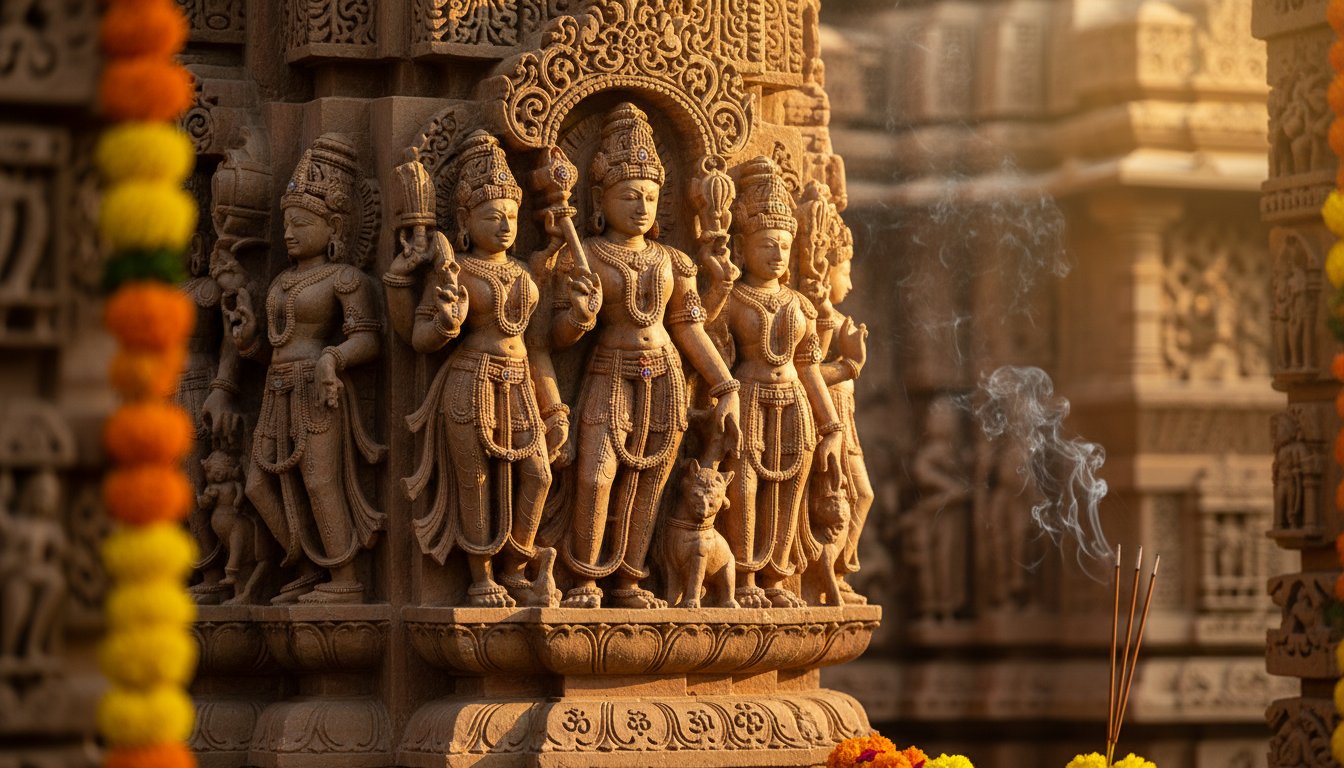
Have you ever been mesmerized by the intricate details of a vibrant painting or the powerful form of a divine statue, yet felt unsure of the deeper story? It’s a common feeling. The world of Hindu art is a rich universe of gods, goddesses, and sacred symbols, so vast it can seem overwhelming for a beginner. It’s easy to wonder, what are considered hindu art exactly, and how can I appreciate it without misunderstanding its sacred roots?
This guide is your invitation to celebrate this stunning tradition with confidence. Forget the fear of misinterpretation! We’ll journey together through the heart of Hindu artistry, uncovering the spiritual purpose behind each creation. You will discover the divine subjects, learn to read the hidden meanings in famous symbols, and begin to distinguish between different iconic styles. Prepare to transform your appreciation and feel inspired to choose pieces that bring timeless elegance and profound meaning into your home.
The Soul of Hindu Art: More Than Just Decoration
Step into the vibrant world of Hindu art, and you’ll discover it’s far more than aesthetic beauty. Unlike the Western concept of ‘art for art’s sake’, Hindu art is a sacred practice, a spiritual technology designed to connect humanity with the divine. To truly grasp what are considered Hindu art, one must see it as a conduit. This tradition, with its comprehensive history of Hindu art, is built on a foundation of faith where every sculpture, painting, and architectural detail serves a profound purpose.
At its heart is the concept of darshan-a powerful, interactive experience of seeing and being seen by a deity. The artwork is not merely a representation; it is a bridge between the material and spiritual realms, a focal point for storytelling, meditation, and elaborate religious rituals that bring philosophy to life.
Art as a Form of Worship and Meditation
In Hinduism, a consecrated image or sculpture (murti) is believed to house the divine energy of the deity it represents. These artworks become powerful focal points for prayer and meditation, allowing a devotee to visualize and connect with a god or goddess’s specific attributes-like Ganesha’s wisdom or Lakshmi’s abundance. The creation of the art itself is an act of devotion, and its viewing is an act of worship.
Visual Narratives: Telling Stories of the Epics
Hindu art is a stunning visual library of sacred stories. Temple walls, intricate paintings, and dynamic sculptures bring to life the epic tales of the Ramayana, the Mahabharata, and the Puranas. Scenes like Krishna lifting Govardhan Hill or Hanuman carrying the Sanjeevani mountain are not just dramatic illustrations; they are powerful tools for teaching moral (dharma) and philosophical lessons to people of all ages and backgrounds.
Reflecting the Four Goals of Life (Purusharthas)
The vast tapestry of Hindu art also reflects the four legitimate goals of human life, or Purusharthas. Temple carvings often showcase scenes of everyday life alongside the divine, celebrating:
- Dharma: Righteous conduct and moral duty.
- Artha: The pursuit of prosperity and economic well-being.
- Kama: The enjoyment of sensory and aesthetic pleasure.
These worldly pursuits are depicted as valid parts of the human experience, all ultimately guiding the soul toward the final goal: Moksha, or spiritual liberation.
The Divine Cast: Key Deities in Hindu Art
To explore Hindu art is to enter a vibrant world populated by gods, goddesses, and divine beings, each with a unique story and purpose. The Hindu pantheon is vast, and deities often appear in multiple forms, names, and avatars, reflecting the boundless nature of the divine. Understanding this divine cast is the first step in appreciating what are considered hindu art. Each sculpture or painting is a visual narrative, rich with symbolism. The objects they hold, their postures, and the animals they ride are all part of a sophisticated iconographic language. This deep connection between visual representation and philosophy is central to the tradition of Hinduism and Hindu Art, where art serves as a powerful conduit for spiritual understanding.
The Trimurti: The Forces of Creation, Preservation, and Destruction
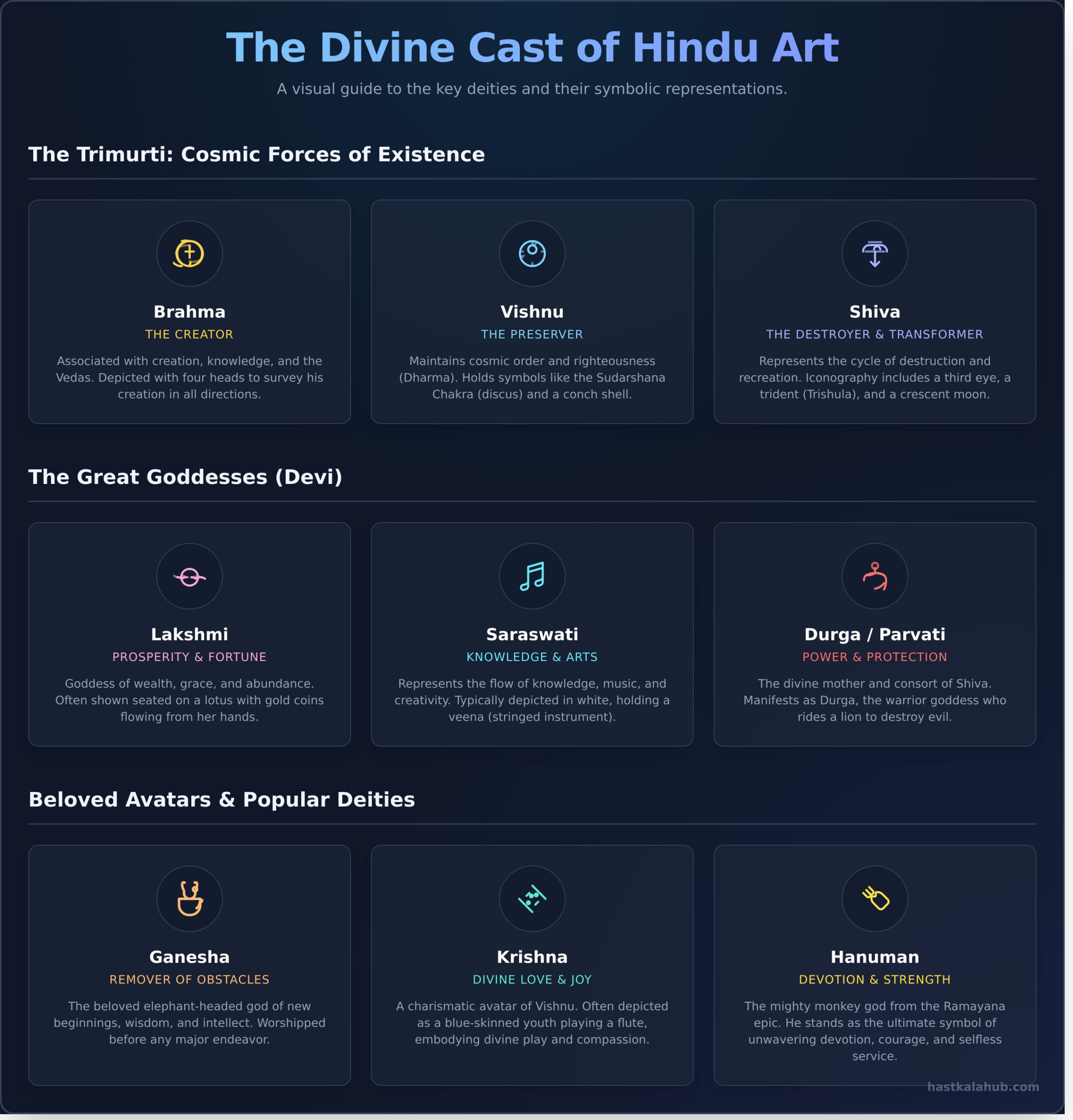
At the heart of the Hindu cosmos is the Trimurti, a powerful trinity representing the universe’s cyclical nature. This trio includes Brahma, the creator, often depicted with four heads to survey his creation in all directions. He is balanced by Vishnu, the preserver, who maintains cosmic order and is recognized by his regal crown and the symbolic discus (Sudarshana Chakra) and conch shell he holds. Completing the cycle is Shiva, the destroyer and transformer, a formidable ascetic often shown with a third eye, a trident (Trishula), and a crescent moon in his matted hair.
The Great Goddesses (Devi): Power, Prosperity, and Knowledge
The divine feminine, or Devi, is celebrated with equal reverence. Lakshmi is the radiant goddess of wealth, fortune, and prosperity, elegantly portrayed seated on a lotus flower with gold coins cascading from her hands. She is the embodiment of grace and abundance. In contrast, Saraswati represents the flow of knowledge, music, and the creative arts. She is typically shown in serene white attire, holding a veena (a traditional stringed instrument). The ultimate divine mother is Parvati, consort of Shiva, who also manifests in powerful forms like Durga, the warrior goddess riding a lion, and Kali, the fierce destroyer of evil.
Beloved Avatars and Popular Deities
Beyond the core figures, many other deities are central to the pieces that define what are considered hindu art. Perhaps most beloved is Ganesha, the elephant-headed son of Shiva and Parvati, who is worshipped as the remover of obstacles and the god of new beginnings. Another is Krishna, a charismatic avatar of Vishnu, often depicted as a charming, blue-skinned youth playing a flute, embodying divine love and joy. Finally, Hanuman, the mighty monkey god from the Ramayana epic, stands as the ultimate symbol of unwavering devotion, courage, and strength.
Decoding the Visual Language: Common Symbols and Motifs
Hindu art is a vibrant tapestry woven with layers of profound meaning. It is more than just aesthetic beauty; it is a visual scripture where every color, posture, and object tells a story. To truly appreciate what are considered hindu art forms, one must learn to read this symbolic language. Understanding these elements unlocks the narrative and philosophical depth embedded in each masterpiece, transforming the act of viewing into an act of discovery. This visual vocabulary is a hallmark of the tradition, and for a comprehensive overview of Hindu art and its rich history, encyclopedic resources provide an excellent foundation. Let’s explore three key categories that will help you decode these celebrated works: sacred symbols, divine gestures, and celestial vehicles.
Sacred Symbols and Their Meanings
Certain motifs appear consistently across paintings, sculptures, and textiles. These are not mere decorations but powerful icons carrying universal spiritual concepts. Learning them is the first step to understanding the art’s deeper message.
- The Lotus Flower: Symbolizing purity, creation, and transcendence. Just as the lotus rises unblemished from murky waters, it represents spiritual enlightenment and divine beauty.
- Om (Aum): This sacred syllable is believed to be the primordial sound of the universe. It represents the essence of ultimate reality and the unity of all creation.
- The Swastika: An ancient symbol of good fortune, well-being, and prosperity. It represents the eternal, cyclical nature of the universe.
- The Sri Yantra: A complex geometric design of interlocking triangles that symbolizes cosmic unity and the divine feminine energy, or Shakti.
Gestures of the Gods (Mudras)
Mudras are the elegant and symbolic hand gestures used by deities to communicate their powers and intentions. This silent language is incredibly expressive, conveying everything from blessing to protection.
- Abhaya Mudra: A gesture of reassurance and fearlessness, with the palm facing outward. It is a divine promise of protection and peace.
- Varada Mudra: A gesture of charity and wish-fulfillment, with the palm facing down. It signifies compassion and the granting of boons.
Divine Vehicles (Vahanas)
In Hindu iconography, major deities are often depicted with their vahana, or animal mount. These are not simple pets but divine vehicles whose attributes reflect the deity’s own nature and power, adding another layer to what are considered hindu art narratives.
- Nandi the Bull: The mount of Shiva, symbolizing immense strength, steadfast faith, and righteousness.
- Garuda the Eagle: The mighty vehicle of Vishnu, representing courage, speed, and the power to vanquish evil.
- Mushika the Mouse: The surprising steed of Ganesha, symbolizing cleverness and the ability to overcome huge obstacles with focused determination.
The Many Forms of Hindu Art: From Temples to Canvas
When exploring what are considered Hindu art forms, the answer is as vast and vibrant as the culture itself. It is not one single, monolithic style but a breathtaking collection of regional traditions expressed across countless mediums. From monumental temple complexes to intimate works on canvas, these creations are designed to connect the mortal realm with the divine. The three most celebrated forms that define this artistic legacy are architecture, sculpture, and painting.
Temple Architecture: Sacred Homes for the Divine
A Hindu temple is far more than a building; it is a sacred dwelling place (mandir) designed to house a deity. This divine architecture is a masterpiece of spiritual symbolism. Two prominent styles mark the landscape: the soaring, curvilinear Nagara style of northern India and the grand, pyramidal Dravida style of the south. Their walls are living tapestries, covered in intricate carvings of gods, celestial beings, and epic narratives that tell timeless stories in stone.
Sculpture: Giving Form to the Formless
Sculpture gives tangible form to divine concepts, serving as a powerful focal point for devotion. While artisans masterfully used materials like stone and wood, the bronze sculptures of the Chola dynasty are especially revered for their unparalleled grace and dynamic energy. These statues, or murtis, are central to temple worship, as they are believed to contain the very essence of the deity they represent, making them profound conduits for prayer and meditation.
Painting: Vibrant Stories in Miniature and on Cloth
Hindu painting brings sacred stories to life with dazzling color and exquisite detail, transforming homes and temples into galleries of divine lore. This diverse category includes many timeless traditions, each with a unique and elegant aesthetic.
- Pichwai Paintings: These are elaborate cloth paintings from Rajasthan, traditionally hung behind the idol of Shrinathji (a form of Krishna) to celebrate his legends and seasons.
- Tanjore Paintings: Hailing from South India, these iconic works are known for their rich colors, dense compositions, glittering gold foil overlays, and inlaid glass beads or gems.
- Madhubani Art: A vibrant and cherished folk style from the Mithila region, characterized by its complex geometric patterns, symbolic imagery, and bold, confident lines.
These artistic traditions are not just relics of the past; they are living arts that continue to inspire. Discover authentic Pichwai paintings made with passion.
Bringing Hindu Art into Your Home
Hindu art is not a relic of the past; it is a vibrant, living tradition that continues to evolve with breathtaking creativity. Contemporary artists are constantly reinterpreting its timeless symbols and narratives, making these profound pieces more accessible than ever for modern interiors. The beauty of what are considered hindu art forms is their ability to transform a house into a home, infusing your personal space with meaning, color, and spiritual energy. Bridging the gap between sacred expression and modern aesthetics is about celebrating a rich heritage in a way that feels authentic, stylish, and deeply personal.
Choosing Art with Personal Meaning
The most powerful decor tells your story. When selecting a piece, consider the energy you wish to cultivate in your life and home. By understanding the symbolism behind what are considered hindu art, you can choose a deity or motif that deeply resonates with your personal aspirations and values.
- Ganesha: Invite success and clear away obstacles for new ventures by placing a Ganesha statue or painting in your entryway or office.
- Lakshmi: Welcome abundance, wealth, and prosperity with an elegant depiction of the goddess Lakshmi in your home or place of business.
- Radha Krishna: Celebrate divine love, passion, and partnership with a romantic Radha Krishna painting, perfect for a bedroom or living space.
Tips for Respectful Display
To honor the sacred nature of these pieces, display them with intention and care. Place divine art in a clean, well-lit, and respected area of your home, such as a living room, study, or dedicated meditation corner. It is traditional to avoid placing deities directly on the floor or inside a bathroom. Creating a focal point with a single, stunning piece allows its spiritual and aesthetic qualities to radiate throughout the space, commanding attention and admiration.
Blending Tradition with Modern Style
Infusing your home with Indian artistry is a chic way to express your unique style and create a truly memorable interior. The key is balance. You don’t need to redesign your entire home; a single, well-chosen piece can create a stunning visual dialogue between ancient craft and contemporary design. Consider these elegant ideas:
- Make a vibrant Tree of Life painting the stunning centerpiece of your main living area, symbolizing growth and connection.
- Pair minimalist, neutral decor with a single, opulent Tanjore painting for a dramatic and luxurious contrast.
- Create a unique gallery wall by framing a series of intricate Madhubani paintings, telling a colorful, folk-art story.
Ready to elevate your space with art that inspires? Find a timeless piece for your modern home in our collection.
Bring the Sacred Story Home
As we’ve explored, Hindu art is a profound spiritual journey captured in visual form. It is more than mere aesthetics; it’s a rich tapestry of devotion, symbolism, and storytelling woven through depictions of deities and sacred motifs. Understanding what are considered hindu art opens a door to a universe where every color and line has a deeper meaning, connecting the mortal to the divine and transforming spaces into sanctuaries.
Ready to invite this vibrant energy into your life? Hast Kala Hub is a curated paradise for artisans and art lovers, offering authentic pieces made with passion by skilled craftsmen. Each artwork is an invitation to connect with centuries of tradition. Celebrate in style with our vibrant collection of Indian art.
With a secure payment and easy returns process, discovering your perfect piece is a joyful and risk-free experience. Start your collection today and let these timeless stories illuminate your world.
Frequently Asked Questions
What is the main purpose of Hindu art?
Hindu art is more than just decoration; it is a vibrant expression of devotion and spirituality. Its primary purpose is to create a powerful connection between the viewer and the divine. Each piece tells a story, depicting gods, goddesses, and epic myths to inspire contemplation and worship. This sacred art serves as a beautiful bridge between the material world and the spiritual realm, making divinity accessible and visually stunning in temples and homes alike.
What is the difference between Hindu art and Buddhist art?
While they share cultural roots and symbols like the lotus, their focus creates a distinct style. Hindu art is often dynamic and celebratory, showcasing a rich pantheon of deities like Shiva, Vishnu, and Devi in their many powerful forms. In contrast, Buddhist art is typically more serene and contemplative. It focuses on the tranquil figure of the Buddha, Bodhisattvas, and visual narratives that guide followers on the path to enlightenment, emphasizing inner peace over divine action.
Can anyone own or display Hindu art, even if they are not Hindu?
Absolutely! The beauty and intricate craftsmanship of Hindu art are celebrated globally. Owning and displaying these pieces is a wonderful way to honor a rich cultural heritage and bring timeless elegance into your space. We encourage everyone to appreciate this art. All that is asked is to display pieces, especially those of deities like Ganesha or Lakshmi, with respect. It’s a chic way to invite positive energy and global style into your home.
What are the ’64 Arts’ (Chaturanga Kalas) mentioned in Hindu texts?
The Chaturanga Kalas, or 64 Arts, are a celebrated guide to a refined and creative life mentioned in ancient texts. They encompass a wide range of skills beyond just painting and sculpture, including music, dance, poetry, and even the art of floral arrangement. These arts were seen as essential for developing a sophisticated and well-rounded personality. They represent a beautiful fusion of artistic skill and elegant living, a philosophy that continues to inspire artisans today.
How can I tell if a piece of Hindu art is authentic?
Authenticity shines through in craftsmanship and materials. Look for the unique touches of a handmade piece, such as slight imperfections, and the use of traditional materials like bronze, wood, or natural pigments in paintings. When you ask what are considered hindu art pieces of value, note the iconography-authentic works follow specific rules for depicting deities. Purchasing from reputable artisans or trusted curators ensures you are investing in a genuine piece made with passion and skill.
Are there specific colors that are important in Hindu art?
Yes, color is a vibrant and symbolic language in Hindu art. Saffron represents sacrifice and purity, while red signifies auspiciousness, power, and celebration. Blue is often used for gods like Vishnu and Krishna to symbolize courage and the infinite. When you explore what are considered hindu art forms, you will see this rich palette is used intentionally to convey emotion, tell stories, and bring the divine figures to life with breathtaking energy.



