Have you ever admired a dazzling Indian ensemble, with its flowing skirt and intricate blouse, only to pause and wonder: is this a lehenga or a chaniya choli? You’re not alone. While these two glorious outfits share a similar silhouette, they tell very different stories rooted in unique cultural traditions. Choosing the right one isn’t just about style; it’s about honoring the spirit of the occasion, whether it’s the electrifying energy of Navratri or the regal elegance of a wedding ceremony.
Get ready to celebrate in style and with confidence. This guide is your key to finally understanding the beautiful distinctions between these iconic garments. We’ll explore their regional origins, signature fabrics, and the artistry that makes each one special. By the end, you’ll not only spot the difference with an expert eye but also feel empowered to select the perfect, culturally-rich outfit for any celebration that comes your way.
What is a Chaniya Choli? The Soul of Festive Folk Dance
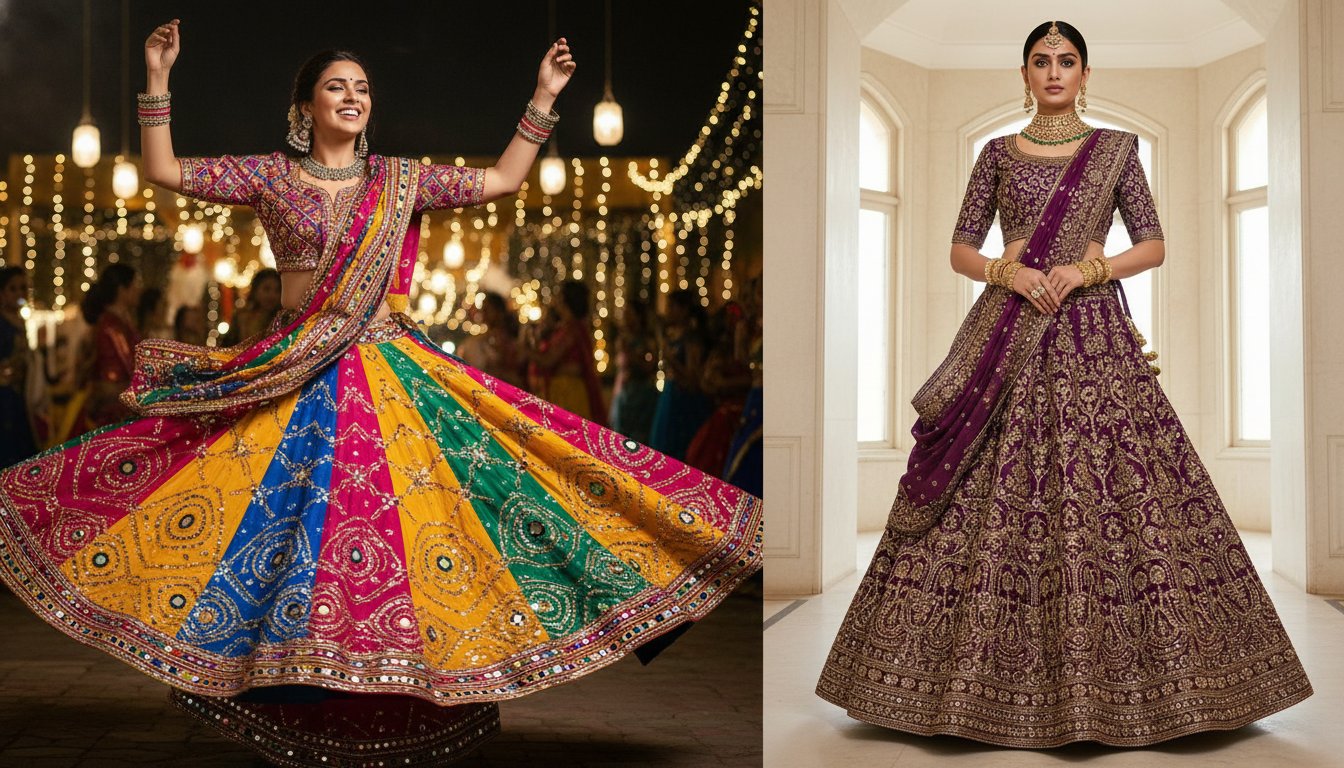
Imagine the vibrant, energetic twirls of a Garba dance under the festive lights of Navratri. The outfit that makes this mesmerizing motion possible is the chaniya choli. Deeply rooted in the cultural fabric of Western India, particularly Gujarat and Rajasthan, this traditional three-piece attire is more than just clothing-it’s a celebration of life, heritage, and joyful movement. This traditional ensemble, part of the broader family of Ghagra choli (also known as lehenga choli and chaniya choli), is defined by its rustic charm and a design built for dance. Its soul lies in its voluminous skirt, which creates a breathtaking spectacle with every spin.
The Three Core Components
A traditional chaniya choli is a symphony of three distinct yet harmonious pieces, each playing a vital role in its iconic silhouette.
- The Chaniyo: This is the heart of the outfit. It’s a flared, ankle-length skirt, often crafted with a massive circumference to allow for maximum flair and movement during folk dances like Garba.
- The Choli: A fitted, cropped blouse that complements the voluminous chaniyo. It is often backless or features an intricately decorated back, adding a touch of bold elegance.
- The Dupatta/Odhni: A long, flowing scarf or veil. It’s draped in various traditional styles, often tucked into the skirt and draped over the shoulder, completing the look with grace.
Signature Fabrics and Embellishments
The beauty of this attire is in its authentic, handcrafted details. The fabrics are chosen for comfort and visual appeal, typically featuring breathable cottons perfect for long nights of dancing. Vibrant bandhani (tie-dye) and bold block prints are classic choices that tell a story of regional artistry. The embellishments are the true showstoppers: dazzling mirror work (abhla), intricate and colorful threadwork, and playful tassels made of shells or pom-poms that jingle with every step. The overall aesthetic is unapologetically rustic, energetic, and celebratory, designed to shine in the heart of a festival.
Understanding the Lehenga Choli: A Pan-Indian Classic
The Lehenga Choli is more than an outfit; it’s a statement of celebration. This iconic three-piece ensemble has graced Indian fashion for centuries, evolving from the opulent courts of Mughal royalty to become the quintessential choice for modern brides, wedding guests, and festive connoisseurs across the nation. It embodies elegance, grace, and a regal sensibility that captures the spotlight at any grand event.
While it shares a structural similarity with the traditional chaniya choli, the lehenga’s purpose is distinctly different. It is crafted not for the high-energy twirls of folk dance, but for the poise and splendor of a grand entrance. It is a canvas for showcasing luxurious style and sophisticated craftsmanship, designed to make you feel like royalty.
Anatomy of a Lehenga Ensemble
Every lehenga tells a story through its three core components, each offering a universe of stylistic possibilities:
- The Lehenga: The magnificent skirt is the heart of the look. It flows in various cuts, from the classic flare of an A-line to the dramatic sweep of a circular (or kalidar) style, and the modern silhouette of a mermaid cut.
- The Choli: This is the fitted blouse, which has transformed over time. It can be a traditional, modest blouse or a chic, contemporary crop-top, often featuring intricate necklines and sleeve designs.
- The Dupatta: Far from an afterthought, the dupatta is a versatile stole that completes the ensemble. Often heavily embellished, it can be draped in countless ways to add a final layer of grace and drama.
Luxurious Fabrics and Intricate Craftsmanship
A lehenga’s grandeur comes from its material and artistry. Designers favor rich, flowing fabrics like regal silks, plush velvets, airy georgettes, and shimmering organza to create a look of pure opulence. These textiles become the foundation for breathtaking craftsmanship. The intricate work of zardozi, the sparkle of sequin and stone work, and the timeless shimmer of gota patti are just a few of the celebrated traditional textile techniques that adorn these masterpieces. This dedication to detail results in a sophisticated and formal aesthetic, positioning the lehenga as a symbol of timeless Indian luxury, distinct from the more rustic charm often found in a regional chaniya choli.
The Ultimate Showdown: Chaniya Choli vs. Lehenga at a Glance
At first glance, the chaniya choli and lehenga choli might seem like sartorial twins. Both are stunning three-piece ensembles that celebrate feminine grace with a flowing skirt, a fitted blouse, and a beautiful dupatta. Yet, their true beauty lies in their unique stories. The difference isn’t just in the details-it’s in their cultural origin, their primary purpose, and their entire design philosophy. Let’s dive into a direct comparison to help you choose the perfect silhouette for your next celebration.
The Definitive Comparison Table
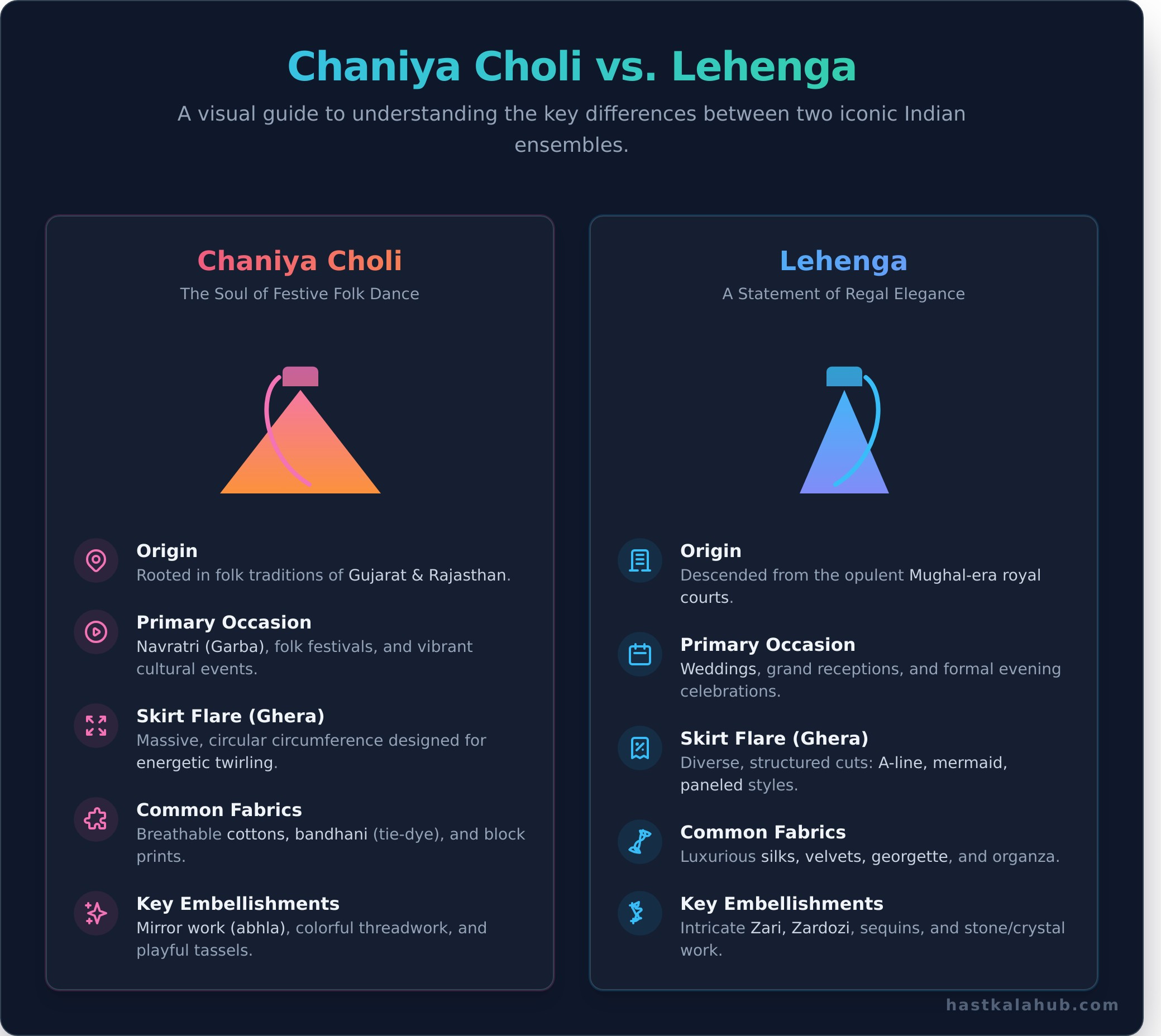
| Attribute | Chaniya Choli | Lehenga Choli |
|---|---|---|
| Origin | Gujarat & Rajasthan, rooted in vibrant folk traditions. | Mughal-era royal courts, a historic symbol of opulence. |
| Primary Occasion | Navratri, Garba, folk festivals, and daytime cultural events. | Weddings, grand receptions, and formal evening celebrations. |
| Skirt Flare | Massive, circular flare (ghera) designed for energetic twirling. | Diverse cuts: A-line, paneled, mermaid, and straight styles. |
| Common Fabrics | Breathable cotton, bandhani, ajrakh, and gamthi prints. | Luxurious silks, velvets, georgette, brocade, and organza. |
| Key Embellishments | Vibrant threadwork, mirror work (abhla), and Kutchi embroidery. | Intricate Zari, Zardozi, sequins, and stone or crystal work. |
The Silhouette Story: Flare and Cut
The soul of a traditional chaniya choli is its incredible, dramatic flare. Designed with a vast, circular cut, its ‘ghera’ is made for the energetic and joyful twirls of Garba, creating a mesmerizing kaleidoscope of color with every spin. In contrast, the lehenga tells a story of structured elegance. Its silhouette is far more versatile, ranging from the classic, flattering A-line to the contemporary, form-fitting mermaid cut, each crafted to create a specific, sophisticated look for grander occasions.
A Tale of Two Textiles: Fabric and Feel
Feel the fabric, and you’ll instantly understand the difference. A chaniya choli often sings with the earthy comfort of breathable cotton, perfect for dance and festive movement. Its texture is rustic yet vibrant. The lehenga, however, whispers tales of pure luxury. It drapes in rich silks, opulent velvets, and flowing georgettes-materials chosen for their regal sheen and graceful fall. This conscious choice of textile is a key part of the evolution of Indian fashion, where designers now blend traditional weaves with modern fabrics to craft masterpieces for today’s fashion-forward woman.
A Guide to Occasions: When to Wear Which Ensemble
Choosing between a vibrant chaniya choli and an elegant lehenga is all about matching the outfit to the energy of the event. Each ensemble is designed for a unique experience, telling a different story through its fabric, flair, and feel. This guide provides practical advice to help you select the perfect attire with confidence, ensuring you look and feel your absolute best for every celebration.
For the Dance Floor: Choosing a Chaniya Choli
When the occasion calls for movement, music, and unrestrained joy, the chaniya choli is your perfect partner. Its design is rooted in celebration and dance. The typically lightweight fabric and signature voluminous flare are engineered for twirling, making it the undeniable choice for high-energy events where you’ll be on your feet. You can dance for hours with complete freedom and comfort, fully immersing yourself in the festivities.
- Ideal for: Navratri and Garba nights, Sangeet ceremonies, folk festivals, and vibrant mehndi parties.
- Key Benefit: Its focus on mobility and vibrant expression allows you to participate in the celebration without feeling weighed down.
For Grand Entrances: Selecting a Lehenga
For moments that demand a touch of majesty and glamour, the lehenga stands unparalleled. It is the epitome of grace and opulence, designed to make a grand statement. The structured silhouette, often crafted from luxurious fabrics like silk, velvet, or brocade, creates a regal and sophisticated look that is perfect for life’s most momentous occasions. From heavily embellished bridal designs to chic, contemporary party wear, the lehenga offers a vast spectrum of styles to capture the spotlight.
It’s the ensemble you choose when you want to create an unforgettable impression. Ready for your next big event? Explore our Lehenga collection and find the perfect piece to celebrate in style.
How to Style Your Chaniya Choli and Lehenga
An outfit truly comes alive with the right accessories. Whether you’re donning a vibrant chaniya choli for a festival or a regal lehenga for a wedding, styling is your final, personal touch. It’s how you celebrate your unique style and bring the entire ensemble together. Let’s explore how to perfect each distinct look.
Accessorizing Your Chaniya Choli
The beauty of a chaniya choli lies in its earthy, folk-inspired charm. Accessories should complement this authentic vibe, focusing on traditional craftsmanship and comfort, especially for festive celebrations like Navratri.
- Jewelry: Embrace the rustic appeal with oxidized silver jewelry. Think chunky necklaces, large jhumkas, and stacks of colorful bangles or a traditional chooda. These pieces enhance the outfit’s vibrant, celebratory feel.
- Footwear: Comfort is key for dancing! Opt for traditional mojris, embroidered juttis, or embellished flats that allow you to move freely and enjoy the festivities all night long.
- Hair & Makeup: A classic braid, perhaps adorned with flowers or a parandi, is the perfect hairstyle. Keep makeup fresh and radiant, with kohl-lined eyes and a bright lip to match the energetic mood.
Completing Your Lehenga Look
A lehenga is all about elegance, glamour, and sophistication. Your accessories should reflect this, adding a touch of luxury and polish to create a show-stopping ensemble perfect for weddings and grand events.
- Jewelry: Elevate your look with exquisite jewelry sets. Intricate Kundan, timeless Polki, or sparkling diamond pieces pair beautifully with the rich fabrics and detailed embroidery of a designer lehenga.
- Accessories: A chic clutch or an embellished potli bag is perfect for carrying your essentials. Complete the silhouette with a pair of stylish heels, whether they are elegant stilettos or comfortable block heels.
- Draping the Dupatta: This is where you can make a major style statement. A lehenga dupatta can be draped like a saree pallu, pleated neatly over one shoulder, or worn as a regal cape to transform your entire look.
Ultimately, styling is about self-expression. The right accessories not only complete your outfit but also tell your story. Whether you lean towards traditional charm or modern glamour, celebrate your style with confidence. Explore our curated collections at hastkalahub.com to discover pieces made with passion.
Celebrate Tradition, Your Way
While both the Lehenga and Chaniya Choli radiate timeless elegance, the true difference lies in their cultural soul and intended occasion. The Lehenga offers regal, pan-Indian glamour perfect for weddings and grand receptions, making a statement of sophisticated grace. In contrast, the vibrant chaniya choli captures the energetic, free-spirited joy of folk festivals like Navratri, designed for movement and communal celebration. Ultimately, your choice is a beautiful reflection of your personal style and the story you wish to tell.
Ready to find the ensemble that speaks to you? At Hast Kala Hub, each piece is a masterpiece. Our collections are handcrafted by skilled artisans and ‘Made with passion’, bringing authentic, vibrant designs to life with a modern flair. We believe in a seamless experience, which is why we offer secure payments and an easy returns process, so you can shop with complete confidence.
Celebrate in style. Discover our authentic Chaniya Choli and Lehenga collections. Step into your next event feeling radiant and culturally proud. Your perfect look awaits.
Frequently Asked Questions
Is a Ghagra Choli the same as a Chaniya Choli or a Lehenga?
While these elegant terms are often used interchangeably, they have subtle cultural distinctions. ‘Ghagra Choli’ is a traditional, overarching name for the three-piece attire. A Lehenga is its modern counterpart, often crafted from luxurious fabrics for weddings. The Chaniya Choli is a specific regional style from Gujarat and Rajasthan, celebrated for its vibrant colors and mirror work, making it the quintessential outfit for Garba and festive dances. Celebrate tradition with this iconic style.
Can I wear a heavy Lehenga for a Garba dance night?
While a heavy lehenga is stunning, it’s not ideal for the energetic twirls of Garba. The weight and restrictive fabric can make dancing difficult and tiring. For a truly joyful experience, we recommend a traditional Chaniya Choli. Its lightweight fabric and voluminous flare are specifically designed for freedom of movement. This allows you to celebrate the night with effortless grace and vibrant energy, just as the tradition intends. Find your perfect dance partner in our collection.
What is the best way to clean and store a Chaniya Choli with mirror work?
To preserve the dazzling artistry of your mirror work outfit, professional dry cleaning is essential. Avoid machine washing, as it can damage the delicate mirrors and intricate embroidery. For storage, gently fold the garment with the embroidery facing inwards. Placing a layer of soft muslin cloth between the folds will protect the mirrors from scratching and keep your treasured outfit looking spectacular for every celebration. Treat it with the care it deserves to ensure it lasts.
Which style is generally more expensive, a Chaniya Choli or a Lehenga?
The price depends more on the craftsmanship and materials than the name itself. A bridal lehenga made with heavy silk and zardozi work will typically be more expensive than a traditional cotton Chaniya Choli. However, a designer chaniya choli featuring extensive, authentic mirror work and hand-embroidery can also be a significant investment. We offer a beautiful range of both styles to fit every budget and occasion, ensuring accessible luxury for all our customers.
How do I choose the right size when buying a Chaniya Choli online?
Finding your perfect fit online is simple! Start by checking the detailed size chart located on each product page. Use a measuring tape to get your exact bust and waist measurements for the most accurate sizing. Many of our Chaniya Cholis come in semi-stitched or unstitched options, offering you the flexibility to get a custom fit from your local tailor. This ensures your outfit is not just beautiful but also perfectly comfortable for celebrating in style.
What is Bandhani and why is it common in Chaniya Cholis?
Bandhani is a traditional Indian tie-dye textile art that creates vibrant, intricate patterns. This beautiful craft originates from Gujarat and Rajasthan, the very heartland of the chaniya choli. Its small, repeating dot patterns and brilliant colors perfectly capture the festive, celebratory spirit of occasions like Navratri. Using Bandhani fabric is a way to honor the rich textile heritage of the region, making each piece a true masterpiece of cultural artistry and style.



